
I’ve had a few people ask me recently, “just why is it so important to have a business plan?”
Well, a business plan serves two crucial core purposes; it provides a financial validation and it also serves as a roadmap to keep you on track all year.
By financial validation, I mean that your plan gives both you and any outside funding institution you may need for loans etc. a strong indication as to whether your business venture will be a success. If you are doing a business plan for this purpose you would add in specific detail regarding how you run your business and whether you will get a return on any investment that, say a bank, will loan you and of course that you are financially viable enough to be able to afford loan repayments.
The second core purpose, the roadmap, is the area I will be looking at in more detail as this is what most small businesses (who don’t necessarily need financial input) think that a plan is not a necessity. And some small businesses manage completely fine without a plan, but I feel it is important as it lays out your action plan; details all the milestones and successes you have established and gives timescales for when you expect to complete certain tasks. It gives you a clear path to follow and keeps you focussed on achieving the goals that you have set for your business.
So, I’m going to focus on what a business plan does for your business and why it’s important.
To demonstrate that you’re serious about your business. This just puts it down in writing that you are committed to building your business and how you’re going to go about making it a success.
 To ascertain your business goals or milestones. Your business plan will make you think about what you want to achieve with your business and where you see yourself in a year’s time… in five years’ time or more. You can plan not only your long-term goals, but also some quick wins and short term plans. They are significant events that you want to achieve, such as building a website, launching new products/services, producing a brochure and also things like getting your first 100 or 1000 followers on social media.
To understand and know your competition. A business plan forces you to look at your competition – analyse how they work, what they do that makes them stand out in the crowd, look at their products and how they advertise them, package them etc.
 To understand and know your customers. Planning makes you look at your customers; who are they? Why do they buy your products and why do they buy when they do? Do they belong to an average age group or geographic region? An in-depth customer analysis will help you understand what makes your customers tick and how you can better serve them and give them what they want.
To assess the feasibility of your business. Is your business viable? A feasibility study involves researching your target market and your competitors and will let you know if your business venture is likely to be a success.
 To determine your financial needs. Do you need to raise money to buy stock and how are you going to do this? Are there training opportunities for you, so you can learn more about what you do, that incur a cost? How will you factor this in? If you need a big financial injection, you will need to look at loans or investors…your plan will then need to be very specific around how you will be able to afford this kind of investment and what your return will be.
To reduce the risk of looking at the wrong business opportunity. If you do all your research, you will be able to clearly see if a particular business opportunity is going to be feasible, if there is a market for your products/services or whether an alternative route/opportunity might be better for you.
To push you to research your market and really get to know it. Researching your market will help you understand the latest trends in your particular area. Is this market growing or receding? What is the biggest threat to your business/industry? What is the size of your target market and how do you get your products/services in front of them? Your business plan will help you gain a greater understanding of the ‘what, when, where, who and how’ of what your business will face.
 To pinpoint your brand. Creating a business plan makes you focus on what your brand is; helps you describe your business succinctly and decide how you will position your brand to your customers and target market.
To measure the success of your business. This is the bit that most of us forget about when running a business. It’s important to have measures in place so you know if a particular product or strategy is working. It gives you the option to change your strategy or break it down to make it easier to manage. By writing down the goals you want to achieve, you can look at them every month or quarter to see how you are doing against what you wanted to achieve at the beginning of the year…and adjust things accordingly – this might include removing certain goals, changing them or adding new ones. But if you don’t measure, you don’t know!
Your business plan is about what you want to do. It’s always a work in progress and once you have one and use it, you will wonder why you didn’t do it before!
Find out more about what to include in your business plan in more depth and how to do it …10 essential tips in making a good business plan
And click on this link for your free basic business plan template/instructions Business Plan
If you need any help or advice, please feel free to get in touch.


 SEO – or search engine optimization. This is the process of increasing traffic to your website. This includes using the right keywords, your social media presence, references to your website from external sites, to name a few. In 2020, this is going to be vital to keep ahead of your competition.
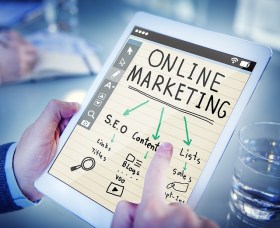 Content marketing – this is about blog posts, e-books, infographics, videos etc. that you share digitally. The goal of content marketing is to entice users to view your content and take action, clicking your call to action button. For example, you might write a blog post about ‘How to insulate your house for winter’. The call to action button might be ‘Contact us to get a free quote to insulate your house this winter.’ And research is showing that rather than having lots of short blog posts, people prefer longer, more relevant information that answers their questions and is of value to them.
 Voice Search – By 2020 it is expected that voice search will account for half of all Google searches. So how do you make sure your business is found? Good SEO will help, but it might be a good idea to create an FAQ page on your website answering questions that people might ask about your products or services. Make the questions sound the way that people talk. For example, if you own a fish and chip shop, people are more likely to ask ‘what chip shop is open right now?’ rather than the way they’d type a search into a search engine…opening times of fish and chip shop.
 Online Video – Today’s generation prefer to view video footage to get answers to everything they want to know. YouTube is the second most popular website, pipped at the post only by Google. Videos that show someone how to do something, help solve their problems, etc. is definitely the way to go in 2020.
 No matter what channel you use, have a business page and plan what you are going to do and when. Try and plan a host of different posts to keep your customers coming back for more. Use video, audio with pictures, product posts, competitions, polls, quotes, funny stuff and serious stuff. Make things as visual as possible and plan to post regularly and consistently. You can look at your insights to find out who looks at your posts and when is the best time for you to post. Plan to post at least three times a week, more for visual channels like Instagram.
 Christmas is the season of giving and all over the world, people get excited about everything that surrounds this magical time of year. So, let FB be your ‘Santa’s little helper’ and get started now on your Christmas campaign.
 You will have your unique brand for your products or services, but it’s a good idea to look at branding your products for Christmas and apply that branding to your FB posts and your website/blog. Famous brands do this every year, for example, television programmes such as Dr Who, will have a Christmas special episode, fast food outlets will use Christmas themed wrappings for their burgers, pizza etc. and there will always be a popular musician who will release a Christmas album, such as Cliff Richard! Everyone jumps on the bandwagon at Christmas, so why shouldn’t you too?
 Offer gift cards so customers can buy a gift card to give to family and friends.
 example, if you are a restaurant, you could share your Chef’s favourite Christmas dish, dessert or menu; Hairdressers can share easy to do hairstyles for Christmas parties; Beauticians can offer special packages so your body/face/nails/feet etc. are ‘Christmas ready’!; If you sell make-up, you can push your glittery make-up or maybe publish a video on how to do your Christmas party make-up. You get the idea!


 The CTA is really important as it’s your opportunity to get your reader to stay in touch with you, stick around, and come back to your site again. So you need to give them a reason to do this. Asking them to subscribe to something ensures that you can keep in touch with them. If you send out a newsletter, this is a great way to let them know about your business on a regular basis, tell them about new blogs, new products or services, special offers etc. etc. But please don’t do what a lot of people do and bug your readers with emails two or three times a day. When I subscribe to a website, I’ll soon unsubscribe if they bombard my inbox with the same email over and over again. I don’t mind having an email trying to sell me a course that is relevant to me, of course I don’t, but to have the same course being pushed day after day, with just slightly different wording, really irritates me. Maybe an email once a week for the first few weeks, then I’m happy with once a month. I find that if I get something once a month, I’m more likely to read it and click on any links. If someone bombards me every day, they become wallpaper and I end up just deleting them without even reading them.


 Have a go yourself, just log into Google and type in ‘Images of cats’ for example…then click on one of the images. Yes, you can copy and paste the image…it doesn’t stop you from doing so, but it is illegal. If you look at the image you have clicked on, there is a caption under it saying, “Images may be subject to copyright.” It is up to you to check before you use anyone’s photo. However I found this was a bit of a hassle, because it can take a lot of research, going to page to page, until you find the information you are after.
 These are the kind of images I now use on my blog and for some of my website images.
 doesn’t necessarily mean work/life balance, although I’m sure that is part of it, but also focuses on mental health, the community and the environment.
 holidays; you don’t have to sit on a motorway, or get stuck in traffic every morning/evening; the world is your oyster, you can do what you want, when you want. But…well…it doesn’t always work out that way. These things are definitely a plus and whoever you work for might get increased productivity, a lower turnover and lower overall costs if you work from home, but there are some downsides. And it’s vitally important to maintain a work/life balance, as when you are working from home, with little distraction, it’s all too easy to work much longer hours than you would if you were employed.
 Most of the time, you will be alone…little interaction with other co-workers, no team to talk to, no one to bounce your ideas around with. In fact, a
  You can work anywhere, so long as there is Wi-Fi. We all tend to huddle in our home offices, but it is just as easy to go to a local café, or even take a break away to a different town…and still work. It is a distraction to be isolated from others, so working from a café or other location, you will meet other people or just be around other people.
 Plan a break into your day. Try and get out of the house and your office space once a day. Maybe take a yoga class…you just have to plan it into your day, so you could start a bit earlier on that day, or work a bit later. You could go shopping for meet a friend for a coffee during your break. It will definitely make a difference and a change from the same four walls.
 Have a working break. Arrange to have a few days away. Sometimes a change of scenery is invigorating and brings out your creative side. Go to a nice B&B or hotel and enjoy working in a different environment. You could even take a working break in another country, factor in some holiday time whilst you’re there and have the best of both worlds.
 Have a virtual meeting. If you work as part of a virtual team, or work for a particular person, it’s usual for any interaction to be via email or online chat. So why not arrange a Skype or Face-time meeting. These are great as you can interact with the person on video and it’s like being in the same room.
  For me, yes…it can be lonely at times, but I make time every couple of weeks to meet with friends for coffee during the day, or a friend comes to me to lunch or vice versa. I also sing in a band, so I have the weekly evening rehearsal to look forward to and gigs some weekends, so that kind of takes care of my social life. I’d be lying if I said I never wonder what it would be like to go back to a 9-5 office job and, for some it might be an option to do a part time job and work from home too. It’s got to be right for you and your well-being and it’s so important for your mental health to have a work/life balance.

 extended support for Windows 7 ends next March, there will be no more security updates.
 I also strongly recommend that if you PC came with Windows 7 on it when new, it is probably worth considering getting a new PC as this will come with Windows 10. It is then a relatively simple task to migrate the data from your old PC and load the latest versions of the programs you use. You will be pleasantly surprised how friendly Windows 10 is and after a few weeks, will wonder why you did not do it sooner!






 My last blog post talked about how to get more ‘likes’ on Facebook, so this is a follow-up with information on the different types of posts you can use to engage your audience.
 Ask a question…this doesn’t have to be linked to your business. People like to talk about themselves and this is a good way to get a conversation going in your Facebook post…just be careful that the question you ask isn’t too controversial!
 Something personal (make it interesting)
 the day, so are checking their Facebook before they go to work and then again, once they’re home, had dinner and relaxing in front of the TV.
 It is estimated that there are around 40 million people on Facebook, many of them small businesses who use Facebook to promote their business and brand and connect with their customers. So, with this many people out there, why is it hard to attract ‘likes’ to your page? You could go the route of using paid ads, but I’d like to take you through some ideas that don’t cost any money.
 Make images a regular feature of your posts…captivating and relevant images can increase engagement and reach on your page and posts. Research has shown that posts with multiple images get more interest, so definitely worth giving that a go.
 People like to see the face behind a name, so make sure that you use a good profile picture of yourself.
 Above all, try and post regularly, so your name keeps popping up on your followers pages – their friends may see your name a few times and decide to take a look at your page.
 There are loads of different kinds of posts to keep your followers engaged, for example, promoting your blog post, inspirational quotes, top tip, competition and photos of your products.
 The Write Way