My last blog post looked at why an email list is important to your business. It’s all very well having an email list, but how do you get people to subscribe? You might think that it’s enough to have an opt-in box on your website, saying ‘sign up to my email/newsletter.’ But really? Would you do that? I’m betting that the answer is ‘no.’ You want something in return – an incentive to make you want to join.
Here are a few ideas that may help you persuade more people who visit your website to opt-in to your email list.
Trust in your brand
Your subscribers need to know that they can trust you, and the only way to gain that trust is through your brand. For example, I publish a weekly marketing blog with lots of information about marketing for small businesses. This shows my audience that I know my stuff and am an expert in my field. As with everything else in marketing, the key is to be consistent. I’ve been writing my blog for a number of years, but I only started to take it seriously during lockdown. That’s when I started blogging regularly, once a week, so that my followers knew what to expect and when. It has grown hugely in the time since then and I get valuable feedback when I share my post on social media, as well as getting comments on my blog posts.
Because my blog offers lots of value, my followers feel more inclined to subscribe to my email as they know they’ll get lots more.
Give your subscribers something in return
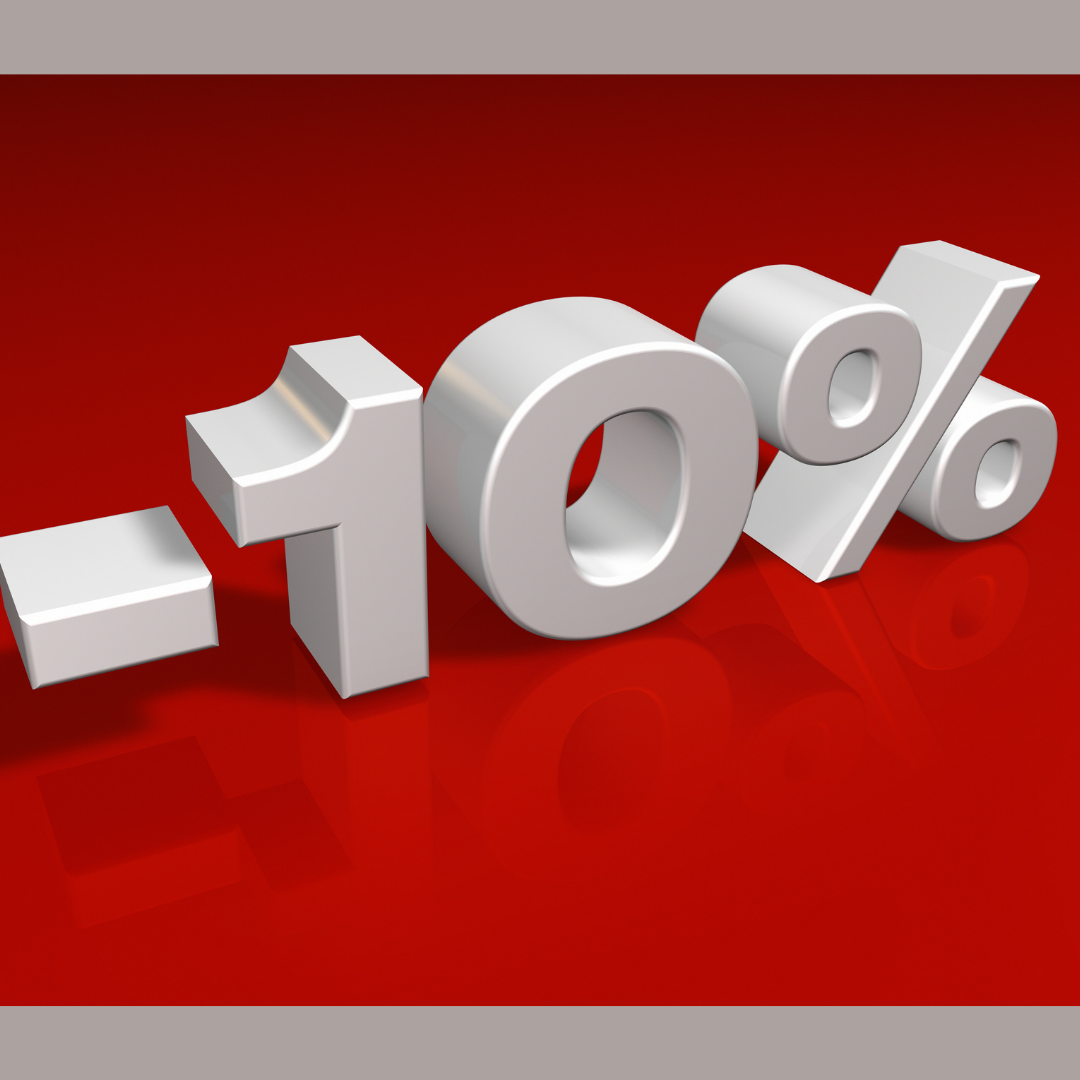
This is also known as the ‘welcome discount’ strategy. If you have an online shop for example, you could offer a discount code for 10% off in exchange for their email address. Once they are part of your email list, you can use that email to promote your business, let them know when something new is coming, tell them about offers for special holidays, such as Valentine’s Day, and include the link to your shop.
If you’re a service-based business like me, you could offer them a digital product. I offer a free Marketing Strategy Workbook, which works well.
And once they’re in your email list, you can also use it to ask questions and find out information about them – your target audience. You can ask their opinion, include polls or surveys. The possibilities are endless.
Exclusive offers
This is not something that your subscribers would receive immediately. You can tell potential subscribers that if they are a part of your email list, they will be offered exclusive discounts, bundles or whatever you decide on. It’s like having a VIP status – if they want to be the first to learn of your new products or services, and be offered exclusive discounts, they need to give you their email address.
The only stipulation of course, is that you DO IT! You can’t promise something and then not deliver or that will damage your reputation and business.
A giveaway
Another idea is a monthly giveaway. This might sound a bit extravagant, but you can have a free giveaway (only has to be something small – could be a product that you have a lot of, or if you sell skincare or wax melts for example, you could give away a sample pack each month. But people must be in it to win it. This is a surprisingly great strategy that really helps build your list. People love the suspense of who’s going to win that month – and you can make a big thing of this each month with a ‘live’ on social media. Use a random online name generator, or simply pick a name out of a hat. This creates excitement around your products and business. And at the end of the ‘live,’ you can tell viewers that if they’d like to be in with a chance to win next month, they just need to sign up to your email…and pop the link in the comments.
A free guide, pdf, or video
You might think I’m talking about service-based businesses here, but this is applicable to all businesses, product or service-based.
You are offering a guide/pdf about what you do or sell, or an instructional video.
If you sell products you need to think outside the box. For example, if you make and sell jewellery with gemstones, you could have a free guide on what each gemstone means. People often buy jewellery randomly, just because they like it, but some also like to have a particular colour stone – it would be useful to them to know what each gemstone signifies. Another idea would be how customers can stack their jewellery, such as multiple bracelets – what goes well together. This could be a short video showing your products in this way.
I’m a service-based business, so I offer checklists to help people with their marketing or hashtag lists…things that are useful, so my followers don’t have to the spend the time looking how to do something or where to find hashtags.
Free shipping
You could offer free shipping to your email subscribers if they spend over a certain amount. You’d give them an exclusive code, so you know they are your email subscribers.
Free gift
Another idea is that you offer a small free gift with your email subscribers’ first order with you. This is great for subscribers who have not bought from you before…and a good incentive to sign up for those people.
Have visible CTAs
CTA means call to action. Just because someone is on your website, it doesn’t mean they know where to go or what to do next. A call to action does exactly that and tells them that the next thing they need to do is to sign up to your newsletter or email.
You can simply have a button that sends your subscribers to a landing page that gives more information, such as what’s in it for them? This where you can sell your email, such as it being a VIP space. If it sounds exciting and worthwhile and they’ll get value from it, they’ll sign up.
Conclusion
An email list is such a valuable tool, and you own it. I bang on about this as I’ve seen several businesses over the last few months, who’s social media accounts have been closed down with no notice. They aren’t told why, and in an instant, they’ve lost all details of their followers. Some of the businesses had thousands of followers. It’s devastating, but it does happen. The difference with your email list is that you own it. It’s yours and no one can shut it down or delete it.
It’s such an easy way to market to your customers and, with a little bit of thought and planning, you can grow your list quite quickly. And you know that your content is reaching your target audience. They have chosen to be there, so want to hear from you. Keep it engaging and they’ll stay.
As always, if you have any questions, please feel free to contact me.
As a marketer, I always talk about goal setting and how important it is to achieve what you want. But, in order to accomplish your goals, you can’t just set them and expect them to happen. It’s about thinking carefully about what you want to achieve…and then work out what you need to do to get there. Each goal needs hard work and goals need to have specific steps to follow.
So, it’s important to set goals that will actually make a difference to your business and help you push your business forward, be that achieving more customers, selling more products or goals set around gaining more engagement or followers on social media.
Set goals that motivate
It’s crucial to have goals that motivate you. Motivation is what will help you achieve them. Make sure that your goals are focused specifically on what you want from your business. Each goal needs you to commit to them so that you can make them a reality.
When writing down your goals, include a sentence about why each goal is valuable to your business and important to you. If I asked you to share your goals with me, could you convince me that each one is worthwhile? You need to know your ‘why.’
SMART Goals
I’ve talked about SMART goals in previous blogs and on social media, but it’s a valuable way to make sure your goals are viable.
They should all be…
Specific
Measurable
Attainable
Relevant
Timely
For example, if you have a goal that is to ‘lose weight in 2022’. This is not a SMART goal. If it were SMART, it would say…
I will lose 2 stone by Christmas 2022 and will weigh myself once a month to keep on track.
This is specific (2 stone); Measurable, (as you can easily keep track using scales to measure how you are doing against your goal; Attainable, (2 stone in a year is perfectly achievable); Relevant, (because this is where you want your weight to be and can give the focus to your goal with a sensible timeline); Timely (12 months to lose 2 stone is timely, as it is a goal of losing less then 1lb per month).
Write your goals down
When you write them down, it makes them real and holds you accountable. You can’t forget about them if you write them down.
Be positive with the language you use when writing down your goals. Don’t use words like, ‘I would like to ….’ Use positive language, such as ‘I will…’
Keep your goals somewhere visible so you can refer to them on a regular basis. It’s no good writing them in a word document, saving it and not looking at it again until the end of the year.
Set deadlines for your goals
You may have a goal that can be achieved within a month or two – set a deadline for each of your goals, or at least a deadline for achieving part of them. This helps to keep you accountable. If your deadlines are realistic, then you know that you will be able to achieve them with a bit or hard work and dedication.
Have an action plan
Once you have written down your goals, now spend some time thinking about exactly how you will achieve that specifically. If a goal is particularly big, you could break it down into more manageable chunks, or mini goals. Your action plan is your step-by-step guide, so you know exactly what you need to do. It gives you a structure to follow.
Put reminders in your diary
Once you have your action plan, go to your diary, and make regular time slots each month to review how you are doing. This enables you to tweak your goals if you need to and to ensure you are keeping on track. This will help you avoid the overwhelm and the last-minute panic at the end of the year.
Think about obstacles
Have a good look at your goals. Can you foresee any obstacles that would stop you from achieving them? This is a kind of risk assessment. What might stand in your way? And how will you overcome that?
Celebrate your small wins
With every goal, there will be small wins along the way. When you achieve a goal, or even achieve some of the small steps to that goal, celebrate! It’s hard to stick to your goals 23/7 and there will be times when you go way off course or procrastinate…or you might succumb to imposter syndrome. These can all help to scupper your plans, so be aware of these things. When you do achieve something small and celebrate, it will motivate you more to carry on achieving the bigger picture.
Conclusion
Setting goals is about seeing what we want for ourselves and our businesses in the future. I find goal setting an exciting venture, not a chore. If I work hard, I can achieve them and so my business will be more successful.
It’s important to be motivated and yes, EXCITED about where you want to take your business. All you need to do is to prioritise your time, energy and focus to make sure that you have a relevant action plan, with formal steps or a path to achieving what you want.
Be committed, believe in yourself and what you can achieve, take yourself out of your comfort zone…and most of all be confident.
I’ve always told myself and my children that they can achieve anything they want to – there are just blank pages ahead and it’s up to them to fill them with what they want. They just need to focus and go for it. Be confident, and with a sustainable action plan, you can achieve whatever you want.
Once you have this plan in place and you can see it working, you will always want to have one in place for your business.
As always, if you need my help and would like to have a 1:1 session on setting your goals and pulling together an action plan for your business, please contact me.
I’ve been hearing more and more about imposter syndrome and the devastating effects it can have on your business. But what is it and how can you deal with it and beat it?
What is imposter syndrome?
According to Wikipedia, the definition of imposter syndrome is…
“A psychological pattern in which an individual doubts their skills, talents, or accomplishments and has a persistent internalised fear of being exposed as a ‘fraud.’ Despite external evidence of their competence, those experiencing this phenomenon remain convinced that they are frauds and do not deserve all they have achieved.”
This might be on the extreme side of imposter syndrome, but I understand the sentiment. It is REAL and everybody has experienced it in one way or another. There are some who feel that their success is due to ‘a stroke of good luck’ or good timing. And it can pop up when you least expect it.
I think for me, it reared its ugly head about a year after I started my own business. I had emigrated to a different country, but I worked online in my own language. I was doing well and had a few clients who I regularly wrote articles or blogs for. Then I started looking at other articles and other peoples’ work online and started to feel that I didn’t measure up. This worried me and I thought that my clients would be thinking ‘who does she think she is?’ I started to doubt my own ability, even though I knew that I was competent and knew what I was talking about! Does this sound familiar? This feeling creeps up on you and dents your confidence.
How can you deal with imposter syndrome?
Imposter syndrome really is a thing and can have a devastating effect on you and your business, BUT I also recognise that it is unavoidable. The reason you suffer from it is because you are pushing yourself to do better, pushing your business to grow, and working hard to make a success of what you do.
If I look back to when I started my business in 2013, I knew that I still had a lot to learn, and I knew that I would make mistakes, and that there was a likelihood that I wouldn’t succeed. It wasn’t that I wasn’t going to succeed, it might just be that I wouldn’t get it right the first time…and I didn’t!
But do you know what? That gets better as you progress in your business, and your confidence grows in what you can do.
Now, I feel that I know my business inside out. I know that I can help my clients and that they like and appreciate what I do.
OK, so there are a couple of things you can do to deal with this monster lurking in the room. .
Understand that imposter syndrome is a normal feeling to have – you are going to have these feeling when you are growing your business. Try and embrace those feelings. They mean that you are pushing yourself to newer and better things.
Take a good look at what you’re doing at the moment – are you doing a good job? Do your clients like what you do? You’ll find that the answer is ‘yes’, so you can then recognise your feelings as those of imposter syndrome and choose to not let it affect you and your business growth.
There will be things that you don’t know or that you still need to learn about. Give yourself a break! We can always learn more about what we do. Be honest with yourself about what you do know and don’t concentrate on what you don’t know. Now, I don’t mean that you ignore what you don’t know – of course it’s important to recognise that, so you can continue to grow, but try and focus on the experience you do have and what you’re proud of.
Sometimes you just need to let go of being a perfectionist, as this can feed your imposter syndrome tendencies. If you set yourself really high, ‘perfectionist’ standards, you will be putting yourself under a lot of pressure to achieve them. This is when self-doubt can creep in, so try and set yourself standards or goals in chunks that are more achievable.
If you keep a record of your successes, with details of what you did to get there, you can refer to this when you feel that imposter monster looming. Be kind to yourself and celebrate your wins, no matter how big or how small
Imposter Syndrome Survey
A few years ago, Kajabi, an industry-leading knowledge platform released a first of its kind study on the impact of imposter syndrome on entrepreneurs and small business owners. Although conducted a while ago, the results are still relevant. They recognised that it could keep businesses from reaching their potential and wanted to find out how businesses deal with these feelings.
Orlando Baeza, CMO of Kajabi commented, “Imposter syndrome can be such a heavy subject and barrier to success for many people. And since it’s perceived as taboo by many, people dealing with imposter syndrome simply don’t feel comfortable talking about their struggles with it. The biggest downside is feeling isolated and as though you don’t have a community to turn to or resources for how to move past it.”
Kajabi observed that imposter syndrome can be a real barrier for small business professionals, especially those who take big risks in the name of pursuing their dreams.
If you’re interested in reading the fully survey results, you can go to their website
Conclusion
We all know that imposter syndrome exists. We know what it feels like and that we are not the only ones who suffer from it.
I hope that now you understand a bit more about it, that you can recognise it for what it is and learn ways to deal with it, and to not let it rule the roost.
This is the most frustrating thing about being on social media – the algorithm. It seems to me that it is constantly changing and always throwing up something new to deter our audiences and our posts! But there are ways to try and beat it.
What is the Facebook Algorithm?
Very basically, the algorithm looks at decides which posts everyone sees every time they check on their newsfeed…and also the order that those posts show up.
Facebook tells us that there are several layers to the algorithm, and the machine learns how to predict which posts will be the most valuable and meaningful to individuals over the long term. Gobbledegook!
What this means in simple language with that Facebook does not present posts to you in chronological order. It looks at the posts available and then puts them out in descending order of interest for each user. We don’t know exactly how it decides what to show us, and more importantly, what NOT to show us, but this process happens every single time we log in. But we do know that its aim is to keep us scrolling so that we see more ads!
For small business brands, this means that if you want more organic reach, you need to post content that people will engage with. What you post will depend on what your business is…and what you want to achieve with your posts.
Facebook content
What are your goals for your posts? Is it to get followers to visit your website or your online shop? It might be that you want people to sign up to your email subscription. And sometimes, it might just mean you want to engage with your audience and get to know them better.
If you want people to visit your website or online shop, content needs to be valuable. Blog posts with helpful information for example, or interactive guides and video content.
To get more people to your shop, you could give them features that make their shopping experience more enjoyable. This could be in the form of vibrant images, buyer testimonials and, if you make something, a video showing you making something from start to finish. You can do the same with images – showing a step-by-step process. For example, if you are an artist, you can show your work progressing over the course of a week, with a series of photos. This is great as it encourages your audience to look for you every day to see how the work is coming along.
If you want your audience to sign up to your email or newsletter, make sure that you make the content of your email appealing and give little tasters on your Facebook post about what they can expect, which will encourage them to join you.
Start a conversation
Get your audience talking to you and to each other on your posts. Social engagement is one of the key areas that will help your posts rank higher, and so be shown to more of your followers.
Encourage conversations by asking questions. The way you interact with your followers in conversations needs to be genuine and encourage two-way interaction for a couple of replies.
You can use several strategies to start conversations. As I said, you can ask questions. You can also be funny or entertaining – talk about something current or share something that you have seen that you find amusing.

You might be someone who likes to share interesting or inspiring facts or topics – or maybe something a little bit controversial. All these posts will spark interest and get noticed by the algorithm.
Keep your audience in mind
When you are crafting your posts, always think about your target audience and write it with them in mind. What do they like to see? What topics do they engage with? What kind of images to they like?
Local content is also good – if you have something going on in your area, and you have followers locally to you, talk about an event that is happening that they might be interested in. If you’re a creative who makes things, it could be sharing a market or stall you are setting up for a weekend event. Don’t just advertise the event – make sure you take photos and post them in real time to encourage people to engage and even pop along and meet you.
Facebook insights
This leads nicely into insights. How do you know who is following you? Where are they from? What kind of posts are popular?
To help you beat the algorithm, you need to know how your content performs and who your audience is. Your insights will tell you what works best and what doesn’t work; they show you your top ranking and bottom ranking posts, what time of day is best for your engagement and where your audience are from – the demographics.
It’s well worth tracking your insights on at least a weekly basis, so you can decide how best you can beat the algorithm.
Timing is everything!
From your insights you can see what time is best for you to post – it makes sense to post your content when you target audience is online.
It’s best to post at your peak engagement times – this might not be at the same time every day…and will not be at the same time as other businesses. If you’re really not sure what time is best for you, try posting at various times of day and track your posts’ performance over a week – then you’ll be able to see on your insights when is the peak time for your business.
Banned content
This is something that I’m sure we’ve all experienced. Facebook deems that certain content is not suitable or goes against their standards. This includes fake news, anything that makes health claims or misleading information, for example, you’re guaranteed to lose weight.
Sometimes it feels like you are being targeted – I know I felt like this when I had a few posts banned and I really wasn’t sure why. I appealed and Facebook did reply to say why – it turned out it was a particular word that I used in my caption description!
Video
Facebook loves video content, so this will be pushed as a priority, so things like ‘lives’ and pre-recorded video will be shown to more of your followers. This kind of content doesn’t have to be perfect or need to use professional equipment; you can simply use your phone.
User generated content
UGC, or user generated content is as it says on the packet. It’s content which is generated by your customers – this could be in the form of a video from a customer showing how they use your product, a photo of a customer with your product, or maybe a podcast where your product is discussed. In fact, anything that your customers or followers produce for you about you or your products.
Be consistent
I often see marketers advocate the need to post every single day…or even several times a day in order to engage your audience. This is not necessarily true for all brands. You will know what works best for you and your business. I always post every morning on Facebook, but I don’t post on Instagram until late afternoon/early evening, as my analysis of my insights tell me that’s the best time. I rarely post on a Sunday, but when I do, it doesn’t make that much difference to the engagement I get, so it can be a bit hit and miss.
However, you do decide to post, ensure that you post consistently. So, if you post seven days a week at 8am, stick with that if your insights tell you that’s the best time of day. Your customers will learn what time you post and will expect to see your posts at that time.
If you decide you only post three times a week, that’s fine too…so long as you post consistently. Consistency is what wins the race!
Facebook groups
I’m sure that all of us are members of Facebook groups. I belong to several groups and post regularly on at least two of them every day. Facebook likes groups and they do push the advertising of groups.
At their 2019 F9 Conference, Facebook said that people “might see more content from groups in their newsfeed.”
This means that it is recommended that you join relevant Facebook groups. By relevant, I mean groups that are relevant to your business and your brand. It’s not usually encouraged to be all ‘salesy’ in groups, but normally the admins will have different things happening on each day of the week. So, you could be joining in with engagement and conversations on an ‘Introduce yourself Monday’ post, or a group admin might ask for posts around specific themes, such as the recent ones I’m seeing – show me something that you sell or offer beginning with a certain letter of the alphabet. You can get really creative with this and make it fit your business! There will be posts to share your blog, share a link to your shop or website. These posts not only help small businesses, but they also get conversations started, help participants meet other, like-minded people, as well as educate and solve problems.
The only thing I would really advise against is to join in with ‘follow for follow’ posts. In my opinion, these serve no purpose whatsoever. You will pick up new follows and likes, but they won’t necessarily be your target audience and if they’re not, they won’t engage with your posts and so will ultimately affect your algorithm as it will show followers that don’t engage. I avoid these at all costs.
Engagement bait
Facebook absolutely hates engagement baiting. Although it’s not advised to explicitly ask for comments, such as ‘comment below,’ you can ask for comments by using open-ended questions. This works well if you use polls.
Facebook also sees ‘follow for follow’ as engagement bait, so if you do get involved with these, your algorithm will suffer.
Keep your posts unique
Producing unique posts every single day of the week is difficult to do. It’s something I hear all the time as a marketer – ‘I’ve run out of content,’ or ‘I don’t have any more ideas for posts.’
There are lots of ways to help you with unique posts.
Repurposing content you’ve posted before or elsewhere is one of them. If you write a weekly blog for example, you can get loads of posts from that content. It could be a list of tips, a video, a podcast, or using images to illustrate a point you’ve made in your blog. You can also look at relevant quotes around the subject you’ve blogged about.
Other places to get inspiration for posts are website such as Pinterest, Ask the public, Quora, Reddit and BuzzSumo to name a few. You just log into these websites and write a question in the search box relating to your niche or business. There will be loads of ideas or questions that pop up. You can use this to write blogs, content for posts etc. You can also see commonly asked questions about your niche, and see what pain points your target audience has – use this to your advantage and answer those questions using your products or services.
Get verified on Facebook
You should aim to have around 500 followers before trying to get officially verified. Being verified just proves to your audience that you a bona fide business. There are so many fake businesses and accounts out there, this is a way to prove you are authentic. Because of this, Facebook do make you jump through a few hoops to get this status.
But when your page is verified, you’ll receive a blue checkmark or tick next to your name.
Verification is free and you’ll need to provide a cover photo, a profile photo, a name that follows Facebook’s guidelines and content posted to the account. Visitors must be allowed to follow you and you must also provide a government issued I.D, such as a driving license or passport. You’ll also be asked to provide a document with a watermark, for pages not representing a person (so representing a business). This would be a company utility bill or tax document for example. Here’s a link to the relevant Facebook article that tells you exactly what to do to get verified.
Hashtags
We all know about hashtags these days and they are used on every post on Instagram. But hashtags can also be good for your marketing success if you use them on Facebook. Using hashtags helps you to connect and reach people you haven’t reached before when they search for related topics.
Always keep your hashtags relevant to your post and relevant to your brand. Don’t overuse them – you don’t need to have them on every single post and only use a few. You can use the same hashtags that you use on Instagram or Twitter, and you can create your own hashtag that is relevant to your business if you want to.
Always reply to your audience
This is obvious, but always reply to messages. Always reply to comments made on your posts and reply to any questions asked. It’s important to let your followers know that they are being heard and that their comments are valuable.
It also shows your followers that you are genuine and that you care about what they have to say.
Paying for advertising
Facebook ads are relatively low cost and can really help you target a particular audience. I have had mixed experience with ads, and don’t tend to need to use them, but I know lots of businesses who find paid ads invaluable to getting more customers and helping them to grow their business.
Conclusion
Facebook is one of the easiest social media platforms to use and has the highest number of members. As a business, it’s crucial to establish your presence on Facebook, understand who your customers and target audience are…and how to reach them. Facebook does help you with this through insights.
Although the algorithm and its constant changes can be very frustrating, Facebook is still one of the best ways to connect with your target audience. It’s important to just try and keep on top of all the changes and adapt your posts and habits accordingly.
But the way to beat the algorithm is to be consistent, have meaningful conversations, post a variety of posts including video, and give your audience great value by being interactive and interested in what they have to say when they connect and interact with you.
I really hope this has helped you understand the algorithm a bit more. Which tip is your favourite? And what’s the one thing you’ll take away from this blog post?
An effective marketing campaign will engage new or potential customers, boost your sales, and build and strengthen relationships with your existing customers.
Your customers are primed and ready to start spending, so make sure you are not missing out on the action. Although we’re already just into November, there will be plenty of customers out there; some will already have done most of their shopping and will be looking for last minute bits; at the other end of the spectrum, (like me), some won’t even have thought about Christmas shopping yet, so will be looking avidly over the next few weeks.
Planning your marketing strategy for the holiday season will ensure your business grows and puts you in a great place to start the New Year.
So how do you get started? It’s simple…
Define your SMART goals
I know, everyone talks about goal setting, but for this time of year, (or in fact any time of year), goals are what keeps your business growing, learning, and improving. These goals need to be specific for your Christmas campaign and SMART, (specific, measurable, achievable, relevant, and timely). LINK
For example, your main goal might be that you want more sales. Your SMART goal would be, ‘To increase my sales and profits between now and the end of 2021 by 20%, compared to the same time last year.’
This is specific, it’s definitely achievable, it’s relevant as it’s Christmas and people typically spend more money, and it’s timely, for the same reason – it’s a holiday time when people are spending more.
Once you have your goals in place, so you know what you’re aiming for, now you can think about the marketing – HOW are you going to achieve those goals?
Here are a few ideas that could help ramp up your sales this year…
Customise your packaging
Having customised packaging is important for your brand and creates a great ‘unboxing’ or ‘unopening’ experience for your customers…and it’s all about the customer experience! If you have unique packaging with the name of your business, it adds a bit of class and feels more luxurious to your customers.
Exclusivity
Following on from customising your packaging, you could produce a special Christmas edition of your product, and your packaging could reflect this.
Create an online catalogue
Christmas is the perfect time to revise and refresh your marketing materials. With the many great, free resources available these days, creating a digital or online catalogue is relatively easy to do. Canva is one tool you can use to help you do this…and they have some very professional templates.
I remember my children browsing through the Argos catalogue and putting circles around the things they’d like for Christmas or birthday. But with printed catalogues almost outdated, digital is still very much what people want. Good photos of your products are necessary for this and can show off your products in a very professional way. With digital catalogue you can also make each image a link to the relevant product page on your website or online shop. This makes buying and browsing so easy for your customers.
You can market your catalogue on your website from a tab, in a blog, in your email list and on social media, as well as on your Google My Business page, which will give you the best chance of getting those sales.
Remarketing
What’s this? You see it all the time, but probably don’t realise it. Whenever you go onto Amazon to look for something. If, for example I go onto Amazon and look for Organic Shampoo. When I click on a product I’m interested in, there’s always something else that pops up. Underneath the item I’m looking at, it will say ‘Consider a similar item’ and point me to something similar. They always have a section too, that says ‘Frequently bought together’… and for the purpose of this example, it shows me conditioner and a body wash from the same brand.
This is remarketing – giving other ideas around the same theme…and even the same product from a different organic shampoo company.
Collaboration
Collaboration is about teaming up with another small business that would complement your business. For example, if you sell luxury coffee, you could team up with a small business that makes coffee mugs or insulated mugs. You then both promote each other’s business. If you sell coffee, you could say that with an insulated mug, people can now enjoy the luxury of a good coffee on the go. You get the idea!
Once you have a collaboration, this can carry over from Christmas into the New Year and include other holidays. It could be the start of a beautiful relationship!
Have a cut-off date
Bear in mind, that there are many postage deadlines in the lead up to Christmas, so if you offer postage on your items, ensure that you have a cut-off date to ensure that your customers get your products before the big day. If a customer lives near you, you could let them collect up to Christmas Eve, but if you must post locally, it will take longer. If you ship worldwide, that cut-off date will be sooner. Just keep this in mind and don’t make promises you can’t keep as that is very damaging to your business.
You could also consider offering free shipping – people are willing to pay a bit more for a product if they get free shipping, so it’s well worth thinking about.
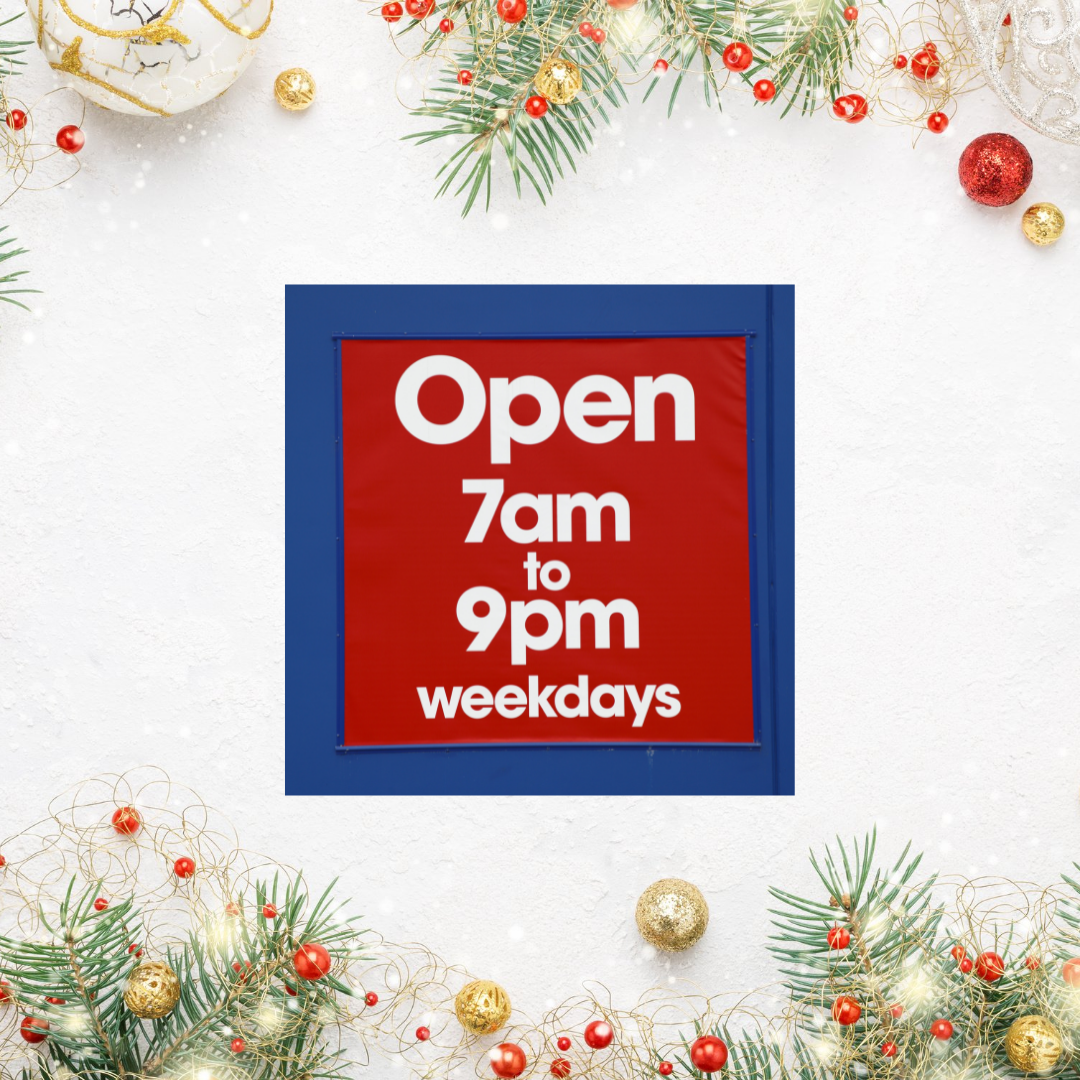
Your opening hours
Don’t forget to update your website, social media, and Google My Business page to show your opening hours over the Christmas period, so you don’t disappoint any potential customers.
Have a stock of your products
This is really obvious but ensure that your most popular products are in stock. You don’t want to run out and have to turn people away or have to email to say that you don’t have a product they’ve ordered on your website or online shop.
Use your email list
If you have a list of email subscribers via your blog or website, use this to advertise your products too. You don’t have to be pushy and salesy, as I know a lot of us don’t like to do that, but you can point your subscribers to your promotional campaign or exclusive offers.
As they subscribe to your regular email, you could even offer them a special discount code.
Don’t forget to ensure that your email marketing for November and December uses festive imagery to ensure you are getting your readers into the spirit of things!
What does your product do for your audience?
This is the age-old, sell the solution, not the product. The most successful products will always focus on the customer – and showing how that product benefits the life of the potential user. What problems does it solve?
Let’s go back to the coffee example. Your luxury coffee might be organic – why is this important to your audience? How does it enhance their life? You could say it energises and enriches your mind, keeping you focussed on the important things in life. If your product has a specific ingredient that you want to advertise, give the benefits of that ingredient and why it is so good. It could be that it’s a good choice for the planet because of the way it’s produced.
Again, you get the idea, any product has its selling point.
Create bundles
This is an amazing way to sell your products. Simply bundle some of them together. For example, buy luxury coffee and a festive mug together at a slightly cheaper price than if they were sold individually. The benefits of bundling items together are that customers see them as a bargain – a bundle increases the perceived value of an item. If you couple this with your bespoke packaging, your customers have superb gift ideas. If you also add free shipping to bundled items, this will make it even more attractive.
Create ideas with a gift guide
This is a simple idea that can help your sales. All you have to do is to create a guide of ideas using your products. It’s a collection of your products that will make good presents…and give ideas as to who they could be for and why.
For example, it could be ‘Gifts for men’ or ‘Gifts for the coffee lover,’ ‘Gifts for Mum or for your best friend.’ Then include the items you sell that are relevant to men, coffee lovers, friends etc. Create a landing page, which is easily done in Mailerlite for example, which displays your products in one place. You can them promote that landing page on your website, in your email, blog or on your social media sites.
It’s about suggesting who your products might be suitable for and marketing them as such.
Keep on top of your images
Log into your website and have a look at it from a customer’s perspective. They need to know that you’ve got a festive promotion, or a gift guide, or online catalogue. Make sure that there is something bold, front, and centre on your homepage to advertise the fact, with links to the relevant pages or products on your shop.
Change the images on your product pages to show your products with a more festive theme.
If you’re on social media, update your cover pages to advertise your festive products and ensure that you have some great images on Google My Business. You could update your profile picture to you in party mode or wearing a Santa hat – depending on what you do!
This is time consuming, but absolutely worth it for the sales you will generate.
Keywords
Just as you update your imagery, also update your keywords to include what you’re doing this Christmas. Here’s a few suggestions…
Christmas gifts
Christmas gifts for men/coffee lover/best friend/Mum
Buy Christmas decorations
DIY Christmas decorations
DIY Christmas decorations for kids
Festive food
This does require some research to ensure you get the right keywords or hashtags for you and your business and products. Once you have them, use them on your posts, on your website, blog, and social media.
Offer gift cards
Whilst most of us like to look for that perfect gift for our loved one, there will be customers out there who just don’t know what they want to buy. This is the ideal person to sell a gift card to – they can spend what they like and the person they buy for can choose exactly what they’d like from your product range.
If you do offer a gift card, make sure there is a simple graphic on your homepage, or a link to a landing page, specifically dedicated to gift cards in your online shop or web page.
Black Friday and Cyber Monday
These two days are your best friends when it comes to selling your products for Christmas. These two events are heavily advertised on TV, all over the internet and social media. If you don’t join in, you will lose out on some fabulous sales.
The other joy these days bring, is that it will really set your business up for Christmas sales. If someone has bought something from you at a reduced rate on Black Friday, they will know your business and may think of you when buying their last-minute Christmas gifts. But there are other things you can do to encourage this…
Offer a special 10% off discount for the rest of the year, for anyone who buys from you on Black Friday or Cyber Monday
Add in a little free gift
Offer free postage
Tell them that if they recommend you to friends and family, by sharing your post and one of their friends buys from you, they get a free gift, or 20% off their next purchase from you
Black Friday and Cyber Monday aren’t the only days each year that your business can use to get seen and sell more. Here are a few more in November and December.
Small business Saturday – 27th November
St Nicholas Day – 6th December
Free shipping day – 14th December
Panic Saturday – 18th December
There are many others throughout the year too.
Finally, finally…
Don’t forget that elusive time of year – between Christmas and New Year. It always feels a bit like limbo land, but as a lot of the ‘January’ sales start on Boxing Day in the UK, it’s a great time to continue pushing for sales. People are happy, they’ve eaten and drunk too much, they have a bit of money in their pockets…and time on their hands to scroll through social media on their phones. If you have an ad on your page, or a post pinned to the top of your page, saying your sale starts now, you will be seen by your customers and followers.
You could do a ‘flash sale’ with a ‘Santa didn’t get me what I wanted’ type title! Have heavily discounted items that you want to move quickly.
If you still have Christmas themed products, heavily discount them selling for a ‘Buy now for next Christmas.’
Then in the New Year, you’re ready to launch your new range of products or services starting anew.
Don’t forget that the aim of a Christmas campaign is to have satisfied, happy customers, who will want to come back to buy from you again in the New Year. And make your brand stand out in the crowd, so people remember you and your business. I hope this has helped you plan your campaign.
Messenger has changed drastically since it was first launched and there are lots of things you can do with it now, that you couldn’t at the start. For example, did you know that, although Facebook messenger is attached to Facebook, you don’t actually have to have a Facebook account to download and use it?
I’ve been looking at the different ways we can use messenger for our small businesses. Although I knew about most of the features, there are some that are new to me! Here are a few hints and tips…
Stay under the radar whilst working
Facebook must be one of the most common distractions to your daily work routine, especially if you work from home. But did you know that you don’t need to have Facebook open to access your messages via messenger?
Go to the website, messenger.com, sign in and there you have it! A phone-like messenger without the distractions of Facebook posts!
Reminders
If you tap the four dots next to the typing field when you’re in a conversation, and then tap ‘reminders,’ you can schedule a time, activity, and location…and send a reminder to anyone you want to include.
Share your location
You can share where you are – your location – in a conversation. Whilst in a conversation, tap the four dots, then tap ‘location’ and hit ‘share live location.’ This is great if you’re meeting the person you’re talking to, and they don’t know the part of town you’re in.
You will need to let messenger have constant access to your location to do this, but you can switch it off at a later stage.
Mute notifications
You can also mute notifications. So, if you’re part of a group chat and the constant ‘pinging’ of new messages gets too much for you, but you don’t want to leave the group entirely, you can just mute the group for certain periods of time…or indefinitely if it is really getting to you!
From your main chat screen, swipe left on the thread and tap the ‘bell’ icon. From here, you can mute notifications for set periods, such as 15 minutes, an hour, 24 hours or indefinitely.
Mark as unread
If you are the kind of person that can easily forget to reply to messages after you’ve read them, then the ‘mark as unread’ feature is just the thing.
Swipe from the right on a message and tap the three little lines, then tap the ‘mark as unread’ option. The thread will then show in bold, just like new messages that you haven’t yet read! It will also show a little blue blob as a reminder!
Leave a group
This is a good one – we all get copied into group messages by friends or family, which might be as simple as an invitation to a party. Then you have to suffer your phone ‘pinging’ for days, if not weeks afterwards, with various people having conversations about it.
Once you’ve replied to the message and finished with it, you can leave the group. Simply tap on the group name at the top of the conversation, scroll to the bottom and select ‘leave group.’ The group will be notified that you’ve left, but you can always put a message before you leave to say that you are going to!
Delete old threads
You can delete old conversations once you’ve finished with them, if you like things kept nice and tidy. Just swipe to the left on the message you want to delete and tap the ‘trash’ icon. All done!
Reply to a particular message in group chat
This is one that is really useful. I belong to several group chats for business and often someone posts a message and, by the time I’ve thought of an answer and go to reply, there’s a whole list of other people chatting and very often they’ve gone right off the original message.
If you use the ‘quote and reply’ function, this solves the problem. Simply press and hold the relevant message you want to reply to, then tap the little arrow to reply. The quoted message will then appear above your own reply, making it absolutely clear who and what you’re talking about!
Unsend a message
It can happen that you send a message to the wrong person. But, if you know what to do and act quickly, you can rectify the error before it’s seen. Press and hold the mistaken message, and so long as it was sent less than 10 minutes ago, you will be able to remove it. Trash it for everyone, click confirm and it will be gone. There will be a message to say ‘you removed a message’ but your recipient won’t be able to see what it was. BUT it must be done within 10 minutes, or you can’t change it.
Chat to other businesses
Messenger is great to message any business that has a Facebook presence. You don’t have to pick up the phone to make a hairdressing appointment and risk getting into long conversations. Simply search for the person or business you want and send a message.
You’ll be able to see when they’ve seen it and see when they reply. This saves so much time…and you don’t have to speak to anyone!
Find filtered messages
Messenger has a filter, so if a message comes in that isn’t from one of your contacts, or if a message looks a bit dodgy to Facebook, the messages get filtered into an ‘other’ inbox. This used to be really irritating as it was difficult to find, but now it’s much easier.
Hit the ‘people’ tab at the bottom of the messenger app, and tap on the ‘requests’ icon, which is a speech bubble with three dots in the top right corner. This will show messages you’ve received from random people – for me, usually men in the military, or someone trying to get me to sign up to a dating app (!) But, it does also sometimes put people who are legitimately trying to contact you into that box too, so it’s worth checking.
Pick a colour
This is one I didn’t know about! You have the option to pick a different colour for every conversation you have. Hit the conversation name to go into settings, then tap ‘colour.’ You’ll be able to pick from a range of colours for your chat, which will be seen by both you and whoever you are messaging.
Emoji branding
As well as picking colours, you can also assign an emoji to your chat too. This will change the default ‘thumbs-up’ like button to the emoji you’ve picked.
Sync contacts
If you want to manage your communications efficiently and have all your acquaintances in messenger, you can turn on ‘sync contacts.’ This is a way to find people who aren’t on Facebook, or who aren’t your friend, but use messenger with their phone number.
Hit the icon with your profile picture, then tap ‘people.’ Go to ‘upload contacts’ and click it ‘on.’ Messenger will then continuously scan your contacts list for new numbers and people to message.
Edit photos
Another one I didn’t know I could do in messenger! Yes, you can edit photos…just open an image that has been sent to you in a chat. Hit the pencil icon – then you can type word overlays, add emojis – have a look and give it a go.
Dark mode
This is really handy and protects your eyes. It reduces the glare from your screen when you’re typing in a low light. The settings change the background from bright colours to black and grey, whilst the pictures, messages and any buttons are still in full colour.
How do you do it? Tap your profile pic in the top left corner and access the settings menu. Then toggle the Dark Mode slider. Simple!
Messenger stickers
You can add stickers to your text – I love this and use it a lot. There are loads to choose from and you can download many different types of stickers and graphics. Just click on the smiley icon next to the text box and, under the stickers tab, hit the plus button at the bottom. Then you can choose which stickers you want to download and use.
Polls
You can create a poll in a chat, giving people multiple choice answers to your question. This is quite a new addition, so another one I hadn’t come across before! Just click on the dots symbol and select ‘polls.’ Then you can create your poll and create custom options.

Encrypt chat
It is possible to encrypt a chat. It’s not an automatic option because it disables some of the other chat options.
To encrypt a chat, tap the name of your chat partner at the top of the screen and scroll down to ‘secret conversation.’ Tap ‘ok’ and your conversation will become encrypted from start to finish. You can also set a time limit so that those encrypted messages disappear after a certain amount of time.
Make calls via Wi-Fi
This is the one I use the most. Messenger has a built-in video and voice calling ability. So long as you are connected to Wi-Fi, you get free messenger-to-messenger calls. It also doesn’t matter if one of you uses IOS and the other uses Android. This has been a godsend for me during lockdown to stay connected with my family…and all free of charge.

Voice note
Not everyone likes to talk directly to their contacts, so there is also voice note. This means that you can leave a short voice message instead. It limits you to 1 minute, but you can send as many as you like! Tap on the plus symbol, select ‘voice,’ and hit the red ‘record’ button. Then record your message and send
Messenger has games!
When you do fancy a break, you can access games from messenger. If you’re chatting to someone and both want a little bit of light relief, just hit the plus symbol in the bottom left when you’re in a conversation and tap the ‘games’ icon. There are loads of them…from Snake to PAC-MAN to Tomb Runner…and all without having to leave the app. You can also get involved with group chats too and you can have a competition!
I really hope that you have found this useful and learned something new – I know I did when doing my research! Happy messaging!
Like this post and follow me for more marketing tips for small businesses.
Every day the number of people going online increases, and since the 2020 pandemic, there has been a huge increase in online shopping. This means that offline marketing won’t be as effective as it was before.
Marketing is all about connecting with your target audience in the right place and at the right time and, for the most part, this now means meeting them where you know they’ll be…. online!
So, it makes sense to make use of digital marketing to get your small business out there.
What is digital marketing?
Digital marketing covers everything that uses an electronic device or the internet. Whether you’re a small or larger business, you can benefit from using digital channels, such as search engines, social media, email, and other websites to connect with your current and potential customers.
Digital marketing helps you to reach a huge audience, which you would not have access to using traditional methods. You can also target prospects who are most likely to buy your products or use your services. It’s also more cost effective that traditional methods, as you can measure your success daily and change things as you see fit.
What are the benefits of digital marketing?
There are lots of benefits to using digital marketing for your business. Here are just a few of them…
Minimal Costs
When you have your own business, you’ll know that marketing and advertising are the most expensive things you need to do. Marketing via digital platforms gives a much more affordable alternative to traditional methods. These methods can be hugely impactful but cost you way less.
For example, you can subscribe to an email marketing subscriber, such as MailChimp, Mailerlite or ConvertKit for little cost (and with MailChimp and Mailerlite, there are free versions when you first start). This will help you reach all the customers on your mailing list by email, quicky and efficiently.
Good return on investment
You get an incredibly good return on your investment with digital marketing. For example, if you run an advertising campaign on a social media platform, it costs much less that traditional marketing and with email marketing, you’ll also get a good return on your investment.
Measurement is easy peasy!
With traditional methods, you must (typically) wait months to evaluate a particular campaign to see how it’s worked. But with a digital campaign, you can find results within a few days… and you’ll know almost immediately if an ad is performing well.
If you sign up to an email subscription platform, their email marketing software will enable you to track the performance of your emails – you’ll know who’s opened them and who hasn’t. You can also find out about conversion rates.
Using Google Analytics helps you measure goals achieved on a website or blog. And Google AdWords manager allows you to monitor the performance of your ads on Google search. So, you’ll know how many people viewed your ads and what the conversion rate is.
Easy to adjust your ads
If you do decide on an ad campaign, if you find that it’s not really performing as well as you hoped, you can adjust it accordingly, or stop it altogether, with just the click of a mouse. The same can be done for changing something within a current ad.
Developing your brand
You can use digital platforms to build your business brand and reputation. For example, a great website, or a blog featuring quality articles, which are useful to your audience. Social Media channels are also fabulous for brand recognition, so long as you post consistently and are very interactive with your audience.
The good thing about social media channels is that they are shareable, which allows you to share articles, blog posts, website, campaigns etc., with your followers.
Absolute targeting
By this, I mean that your campaigns can target the exact audience you want. You can choose potential customers based on their preferences or actions.
For example, if you have an email subscription set up with a free lead magnet to entice customers in, such as an e-book, you can tailor emails to that customer totally based on what they asked for. You know they’re interested in the subject matter of your e-book, so are there other digital or physical products that they might also be interested in?
I don’t mean make your emails to customers all about selling…but you know for future reference, once you have given quality information and once you know your email subscribers a bit more, you know that they’ll be more open to similar products or services.
Global darling!
If your business is online, it’s simple – you’ve gone global darling! The internet is global, available 24/7, to billions of people. Marketing on your digital platforms opens you up to customers from all over the world.
Conclusion
With traditional marketing, you may have put an ad in a local paper or on a billboard. This will reach a large audience, but you will be limited to demographics, (where the magazine is distributed, or where the billboard is located). With digital marketing, you can identify and target a specific audience and in turn, send highly converting marketing messages.
Digital marketing helps you to conduct the necessary research to identify your buyer persona, and helps you to understand your target audience, which means you can define your marketing strategy and reach those prospects that are most likely to buy from you.
If you need help with your digital marketing, I can work with you through a few coaching sessions so you understand what will be best for your particular business. You can message me on Facebook or Instragram, or email me at cindymobey@outlook.com
If you’d like more regular marketing tips delivered to your inbox, and would like a free marketing strategy workbook, please click on the link below to subscribe to my email list.
How many times do you think of a great idea and launch with gusto, thinking ‘this is it, the greatest thing since sliced bread’, only for it never to get finished? We all do this from time to time. Sometimes you might even find yourself completing all the planning and detail, but just find that you lose interest in it and then the end seems further and further away. Procrastination starts to creep in, and before you know it, you’ve stuck your project on the back burner to ‘come back to later’. Inevitably, later never comes, so how can you be sure that whatever you start is going to be finished?
Here are a few tips to help you…
Be choosy about what you start on
Make sure that whatever it is you want to do, that it is something that you are passionate about, something you really WANT to achieve. If you start on something with a half-hearted attitude, you won’t see it through. For example, I once decided I was going to make myself a skirt…now I absolutely hate sewing, but I thought it would be a good idea to help me save money etc. That skirt was started when I was in my 20s and I finally threw it away in my 40s when I realised it was never going to be finished. Why didn’t I finish it? Because I hate sewing and it was a chore to even get started on it.
Be more cautious about what kind of thing you embark on. If it’s something you are passionate about, you are more likely to be interested in the planning and actioning stages and won’t be wasting your time.
Another tip would be to try it out first – for example if you want to start a business, read up on it first. Find out as much as you can about it and see if it’s for you. You might want to volunteer somewhere in that sector or offer to help a similar business you know to find out if it’s something you’d really like to do. Then if you do decide to go ahead, you’ll know more about it.
Check out what resources you’ll need
Big companies and corporates always look at resource planning, so they have a rough idea of what is going to be needed for their project. They also look at how long it is likely to take and how much it is likely to cost. Planning out a quick overview of these things could save you lots of time and energy later, and you’ll immediately know if your project is viable. And you can use your initial planning to help you when you go into more detail.
For example, I recently published my first e-book on Amazon Kindle. It took me ages to write it as I didn’t plan it properly to start with. By the time I’d written several chapters, which took months as I did no planning, I realised that to really do it justice, I needed to start again…and start with the planning. So, I…
Created a rough outline of the book and what it would contain
Found relevant quotes and statistics and listed resources for those quotes and stats
Wrote bullet points of each of the chapters and then put them into some sort of order
Write the material properly
Designed the front and back cover
Wrote a brief bio
Created the sales page and any graphics I wanted to use for that
Made notes about how I would market the book
And gave time to edit, edit, edit!
This gave me an overall view of the book and what it would cover and look like. Which brings me nicely onto the next point…
Time management
Once you have the plan in place, as I did with my book, you will now have a more realistic idea of how much time it is going to take you to complete your project.
Now, for me, lists work extremely well – I am a list person! As I work online, I needed to factor in the time to do all the things in my plan. You will need to do the same. Plan out your tasks and resources, put them into manageable chunks of time and make a to-do list. Then plan on your calendar when you will do those tasks and book that time in.
I think the thing that puts a lot of us off when we are thinking about something we really want to do is that we don’t think about how much time and effort it’s going to take to make that dream come true or bring that project to a successful close.
My book took me 2 years to write because of procrastination and another year to think about publishing it. I had planned everything, but life kept getting in the way and other work deadlines, so I kept putting it back, despite all the planning. So, deadlines are important to keep you on track – be realistic about the time you can give.
Don’t be a perfectionist
Now, I struggle with this as I like things to be just right. However, I did so many edits on my book that in the end, I had to say to myself, ‘STOP’ and just go with what you’ve got…because every time you review something, you change it! Instead, if you are working on a project and find you are revisiting part of it repeatedly, STOP! Move on to the next part and return much later to review again. You’ll probably find that what you thought was not good enough, suddenly sounds or looks great…or that whatever you thought was a massive no-no, suddenly really isn’t that big a deal at all.
If you find that you are being so anal about every single little detail, you will never finish, so try to break down each of the tasks into smaller, more manageable chunks and put your energy into completing each small part.
Make a commitment
If you are going to go ahead with whatever your project is, then make a definite commitment to it. Whatever you put in your to-do list, commit to it, give yourself the time to do it and DO IT! If you find yourself going off on a tangent, try and get back on track. If, along the way, you come across something you hadn’t planned, but it’s needed, go back to your plan, and add it in – and make sure you plan the time to add it!
It’s also about committing to yourself. It might be that if you start to fall behind your schedule, you might need to give up other things in order to achieve your goal. If that means saying no to a couple of nights out or weekends away, so be it. You can do that any time, but your project is now! Once you commit…really commit to it. Once you have finished your project, those nights out and weekends away will still be there and you’ll have achieved your goal, so will enjoy them all the more. If you do them whilst you know you should be working on your project, you’ll be feeling guilty and when you do get back to it, you’ll be annoyed with yourself for not being further ahead.
Keep your energy up – visualise the end result
At the beginning of any project, we’re all the same – full of enthusiasm and energy for what we’re about to achieve. But that seriously wanes as time goes on. You know you still want to do it and you’re still excited about it, but you’re not quite so energetic about it as you were in the beginning.
It’s usually because you’ve lost sight of the end result. You need to be able to close your eyes and visualise that end result – what does it look and feel like? Maybe have a mood board with what it will look like – try and imagine how you’re going to feel when you get there. If your goal is to earn enough money from your project to buy a dream house or car, have photos of what that looks like on your desk, or on your wall in your workspace.
Be flexible
This is really important. If you’ve planned everything out and then try and do it in a certain order, you might hit a task you’re not too enamoured with. This then makes it easy to procrastinate. So, be flexible! If you’ve got your tasks down in order, and you don’t feel like doing task number 3, or start task number 3 and aren’t really enjoying it, don’t feel you have to stick with it. Move on to another task and come back to it later. If you don’t you could find yourself at a complete standstill. For example, one day when I was writing my book, I was bored with it and didn’t feel like writing, and I was allowing myself to become distracted by social media or email. So, I stopped what I was doing and started working on designing the cover of the book. Over the course of writing it, I changed the cover about ten times, but I enjoyed every minute!
Keep a record of where you are
Tracking where you are is crucial, so you know what you’re doing and when, how things are progressing and if you need to amend anything to keep on track. Every week, keep a record of what you’ve done and how it went – what went right and what went wrong. Then you can amend what you need to do the following week.
Celebrate your achievements
When you plan how you’re going to achieve your goal and finish your project, put in little milestones along the way. Then, when you reach those milestones, have a little celebration. This really helps you stay on track and to stay with your project. Each milestone brings you that little bit closer to the finish line.
Don’t feel guilty if you do give up
Finally, not every single project you start out to do will get finished. No matter how much planning you do, if you really lose interest in it, or find that something is not viable after all, don’t flog a dead horse. It might be that by working on one project, you get an even better idea for something completely different – and then that initial project becomes a chore because your heart really isn’t in it anymore.
I don’t mean just give up as soon as it feels a bit hard, or your interest wanes a bit – that’s normal. If you’re almost there and just need to find the energy for that final push, then go for it and push yourself
But, if it’s really not working out, then stop. Go away and do something else and then come back to it after a couple of weeks. If you still can’t get going with it, it’s time to call it a day. And don’t feel guilty about that – sometimes, despite all your best intentions, something just won’t work. At the end of the day, it’s up to you to weigh up the pros and cons.
Conclusion
I hope these tips will help you with your planning process and help you overcome some of the natural procrastination that comes with all projects.
If you found this article useful, please feel free to comment below or to share. And if you’d like to take a look at my book, it can be found on Amazon.
In India, most of the funding for mental health is used for institutional care that focuses on addressing solely biological vulnerabilities rather than social stressors (e.g. poverty, employment status, abuse, homelessness)
The Banyan aims to address both the biological and social factors that contribute to the emergence of mental illness through their treatment and prevention programmes. They offer comprehensive mental health services in a range of institutional and community settings for people with mental health issues living in homelessness and poverty, working in the states of Tamil Nadu, Kerala and Maharashtra. Their focus is on transformative social justice. They work to ensure that people with mental health conditions living in homelessness make journeys back to families and communities of choice, re-enter work, reclaim social relationships and pursue lives of their choosing.
The Assignment
I had been working in the Marketing and Communications team for a large, global insurance company in the UK. One of the many accounts I looked after from an internal communications perspective was the charity arm of the company. Every year, the company sent individuals on work assignments to help with personal development. Only a few of these assignments were available and I’d wanted to go on one for a few years, when I saw ‘The Banyan’ assignment in Chennai, India. The Banyan had grown from just a handful of staff three years earlier, to now over 100 members of staff. The CEO needed to find a way to communicate with all staff members at all levels, who spoke 16 different Hindu and Tamil languages. He needed a sound communications strategy in place and tools to help the newly appointed communications team to deal with internal and external communications. The new team also needed help and training in communication vehicles and what best suited their needs. So, with a little trepidation, I applied, not thinking for one minute that I would be selected and approved…but amazingly, I was granted the assignment and so started one of the best adventures of my life.
The journey
In November 2010, I set off with terrified anticipation on a journey to Chennai in Southern India. Right from the start, I was completely out of my comfort zone, which was very hard for me – at work, I gave the image of a very self-confident person, methodical and very well organised. In my home life, I always did everything the safe way, rarely did anything on my own and always asked for someone’s opinion before I made any decisions. Although I had flown several times on holiday with my family, I had never flown long-haul and had only flown a couple of times alone for work.
And so, I found myself with work visa, passport, tickets, traveller’s cheques, huge suitcase and hand luggage in departures at London’s Heathrow airport. It was easy to navigate my way to the departure gate and within no time, I was on board a huge plane. As I hate flying, I was shaking as the plane began to move, and soon we were speeding down the runway. With tears streaming down my face, holding so tight to my Dad’s St Christopher, the big bird took off smoothly and we were off. It was a bit bumpy as it was a cold, grey, overcast day and pouring with rain, but we were soon up above the clouds and I had an 11 hour flight to look forward to. It was a pretty uneventful flight and I enjoyed every minute of it.
Chennai market and my tuk-tuk
My first taste of India
The arrivals in India was total chaos, nothing like a UK airport. Absolutely crowded with people, which sent my claustrophobic brain into overdrive. But I managed to work my way through to the exit. It was the middle of the night and I don’t know what I expected when I got outside, but it certainly wasn’t a total bombardment of my senses. As I left the building, the noise level rose, people shouting to their arriving relatives and very loud music playing from musicians all around. There was a ‘pathway’ from the airport to the car park, which was barricaded off, with people leaning over shouting and waving. I walked down the centre, not really knowing what to do next…after my ears being bombarded, now it was the turn of my eyes – people in brightly coloured clothes, various animals wandering about, including a couple of cows; I could smell the most delicious aroma of the various stalls cooking Indian food to sell – the smell of the spices was so strong, that I could actually taste it!
The taxi journey to the hotel was uneventful and I arrived at 4.30am. It was a lovely hotel, and my room was huge with air con (thank goodness) and an en-suite…not quite the same as an English hotel’s en-suite, but there was a loo, a sink, and a shower of sorts, which involved a tap, a long piece of hose and a bucket!
My first day
When I woke up, it was time to go and get some traveller’s cheques cashed, as I was only allowed to bring the equivalent of £20 into the country in cash. On leaving the hotel, I was met by a wall of humid heat. It was monsoon season, but the temperature never dipped below 35 degrees day and night. I felt like I was a damp mess before I even found my first tuk-tuk driver. He took me to the big shopping centre, Spencer’s Plaza, where I could cash my traveller’s cheques and get something to eat…which was surprisingly easy to achieve. I got to know my tuk-tuk driver, and I asked him to be my driver for the next month, arranging for him to pick me up and take me to work every morning and to collect me from work and deliver me back every night.
Office life
The Banyan
I met the CEO of The Banyan in the afternoon of the first day and started work the following day. The Banyan is a charity that takes homeless women with mental health problems off the streets and gives them a home and rehabilitation to get them back into society…eventually. It can take months or even years to achieve this and the need is great – see more on their website.
I also met the Communications Team I would be working with and training…three lovely people, who became good friends to me during my time there, one of whom I still keep in contact with.
During the first few days, I carried out a fact finding mission. I spoke to most of the staff in the office to find out how they currently received information from the CEO and important information about the charity they worked for. Most of it was word of mouth, and Chinese whispers featured heavily in what they understood. They all had computers in the office to do their work, several of the workers were, like me, on assignments from other countries. There was a very basic form of intranet, but little used as only the people in the main office had access to it when I was there.
I also visited the other two locations, which were both a car journey away. One was only an hour or so by car. It was a huge building set over four floors and each floor housed differing stages of where the women were with the state of their mental health…and it varied greatly.
The ground floor housed the offices of the workers who ran the home, there was a large kitchen…huge in fact, where women who were well on their way to recovery, had a ‘job’ in that they cooked meals for all the residents and also for the staff at the office where I worked in Chennai – a van arrived every day to ferry lunch to us workers in Chennai. There was also a living room on this floor.
The next floor up housed a mini gym and various rooms for treatment and therapies, exercise classes and various classes, such as basket making. There were also rooms where group sessions took place with patients and staff. This was quite a calm floor and there were also some bedrooms on this floor too. The other two floors were mainly bedrooms. The aim was to get the women from the top floor, treated and on medication, so that they slowly came back to being themselves, then moved down a floor, until eventually they would work in the kitchen or have some kind of work, such as basket weaving.
The charity had a very high success rate at helping these women integrate back into society, giving them the time, treatment and medication they needed.
The third location I visited was quite a long way away from the four storey building, but it was where the women went, when they left that establishment to be rehabilitated. The third location was wonderful. It was in a rural area, where the buildings were set in a square around a central courtyard. The courtyard had a vegetable garden that the women could tend and beautiful flowers and trees. Here, the women lived in houses or chalets, between 4-6 people to a house. They cooked and cleaned for themselves, went to ‘work’ every day, either sewing, making baskets, cooking, cleaning, and doing the garden etc. This place got them ready to go back into society. They gathered in a big hall regularly to just meet up, chat, drink tea and do some kind of activity. We joined in with a dancing activity, which was lovely and the women were all very calm and happy.
Helping the charity
Back at the office, I realised that the task I had to undertake in just over 4 weeks was huge. Whilst at the other locations, I had asked the staff how they received communications from their Head Office, so I knew that this was not going to be easy.
The first task was to pull together a list of what communication vehicles were currently in place and then work out how best to communicate with all employees, bearing in mind there were over 16 languages in everyday use.
Luckily, one of the members of the communication team and another member of staff could speak all the languages between them, so that was a huge plus.
To cut a long story short, we put several processes in place, one of which was a newsletter, which could be sent online to those who had computers and printed as a hard copy and put on the notice boards in all the locations. There would be translations available for those who wanted it and they could have a hard copy. Notice boards were still the best way to communicate with so many people and so many different languages, especially with many not online.
I’m sure that by now, some 11 years later, things have changed greatly from when I was there and obviously technology has moved on greatly since then too. The charity has grown and its work is second to none and I am very proud to be able to say that I worked there for a short time and was able to help in a very small way.
Lesson learned from being in India
As well as training the staff on how to get information for their newsletter, how best to write it and how to implement various other forms of communication, I learnt a lot from them. I learned about their culture, found a love of proper Southern Indian food and to respect their customs and way of life.
Fantastic food at the hotel
In the hotel, every evening I sat in the area where there were computers with free internet, so I could speak to my friends and family back in the UK. I had the most wonderful conversations with several of the staff on the front desk. As I’m not an early to bed person, I was often sitting there well into the late evening. They told me about their families, and although I already knew before I went to India, I was surprised by how many families lived with not just their wives and children, but also their parents and sometimes their grandparents too. The extended family is very important, and I was struck by the respect they obviously showed their elders, and by the obvious affection they had for their extended families.
As time went on and I spent more time with the staff, and talked to my tuk-tuk driver, I realised just how much we in the UK took for granted. But the thing that struck me the most about the Indian people, was that they were all incredibly happy. They loved their families, and that love shone through everything. Whether they were wealthy, normal office workers, graduates, hotel staff or tuk-tuk drivers, they made me feel so welcome and were just so kind and friendly. My tuk-tuk driver was lovely and spent weekends ferrying me around to various places of interest, so I could find out more about the culture.
One weekend at the hotel, there was a wedding. I was in the computer area and was looking at some photos from home that I’d taken the winter before I came to India. Some of the children at the wedding were fascinated by my photos of snow – they’d never seen it. And one of them pointed to the photo of my detached double garage at my home and said what a lovely big house I had. I felt ashamed and couldn’t bring myself to say that what they were seeing was actually the house for my car!
The impact that my trip had on me was to make me feel very ashamed and cross with myself, that I had become such a material person.
I also realised that happiness and contentment with life was something that I was sadly lacking. I had all the material things – a nice, big house with all mod cons, a nice car, fantastic job etc. etc. But what was more important was happiness.
St Thomas’ Basilica
Three weeks before I went on my assignment to Chennai, my Dad had died. I had spent two weeks sitting with him in hospital watching him slowly fade away. The first week, we had several long chats about life. The one thing that resonated with me when I was in India, was something he had said to me, “Be happy, my sweet. Grab every chance you get to be happy.” These weren’t his exact words, but that’s the gist of it. He didn’t know that I was going to India, as I knew he would be worried about that. But when I was there, I visited several religious places and, at St Thomas’ Basilica, I found a kind of peace that I hadn’t felt for years. The religious leader there sat with me and prayed with me, even though I’m not really religious, but it just felt right, and I told him that my Dad had just died. He was such a kind person, and I spent a good half an hour, just sitting there quietly.
Back home
On the plane, on the way home, I had 12 hours (yes, the flight was an hour longer on the way back!) to reflect on my visit and to make a few decisions about the life I had in the UK.
And 14 years later, my life is very different. I’m very happy living with my partner in rural SW France. My children are all grown up and have their own families, good jobs, and nice homes, and I visit them as much as I can. It’s nice to go back to a town every now and again!
My partner and I have a small cottage, with a lot of land and outbuildings, most of which are derelict. We’re both self-employed and I work from home online. We don’t have lots of money, we don’t have lots of material things…and we don’t need them. What I learned from being in India was that there are more important things in life than material things – what we have is real love and true happiness. We have fantastic children and grandchildren, who we love with all our hearts. We have a roof over our heads and food to eat. Sometimes we struggle, but we always have each other, and can depend on each other – and money can’t buy that.
My experiences in India taught me a lot about life, opened my eyes about so many things, and taught me so much about myself in that one short month. I’d absolutely love to go back one day.
If you’d like to find out more about The Banyan, and their continuing amazing work, click here.
Social media engagement is the measurement of the likes, comments and shares your social media posts get. However, it’s not just about the numbers, it’s about how engaged your audience is with your posts, videos etc. It’s about quality, not quantity.
For example, let’s say you hold a big BBQ at your home and invited loads of people – some you know and some you don’t. They all turned up, but all just sat around silently. Nobody spoke to each other, nobody danced, no fun and games. If you were just looking at the numbers game, your BBQ would be a huge success…after all, shed loads of people came. But was it really a success? Did your guests enjoy themselves? Did they like the BBQ food? You don’t know if you don’t speak to them and ask.
Social media is the same – engagement with your audience is crucial to build a rapport, to develop relationships with your followers and potential customers. It helps you to build customer loyalty and trust.
How do you engage on social media?
It’s all about interacting with the people who like and follow you. It’s about building those relationships, getting to know them, and showing a genuine interest in them and their business/family or whatever they talk to you about.
When a person comments on your posts, ALWAYS reply.
If they ask a question, answer it, and go that extra mile to give them the information they need – and more.
Depending on your post or the question asked, you can answer jokingly and have a bit of backwards and forwards banter.
Thank people for commenting; if you get a new follow-on Instagram, DM to say thank you and introduce yourself and ask about the person who has followed you. The same applies for Facebook – send a private message to say thank you and interact with that person – even if it’s just saying hi and asking them how their day has been.
Try and avoid talking about your products or services in these first contact messages – just be friendly, show your personality and be genuinely interested in your new contact.
These points are basic, but they do work.
Grow your followers!
Grow your followers
So now, we need to look at how to grow your followers – the more followers you have, the more engagement you’re likely to get. But please, DON’T buy followers and don’t do ‘follow for follow’ or ‘like for like’. Only follow or like someone or their business, if you are genuinely interested in them, if you genuinely like their business or their page, or are interested in the content they put out.
Be consistent – I know, I bang on about this all the time, but it really is important. You don’t have to post every day, but post regularly so that your audience know when you look for content from you.
Create unique content – don’t just copy what other people do. You can use ideas from other peoples’ content but make it your own. You can use Canva to make posts – there is a free version, so you don’t have to pay to start on this site and it’s extremely useful, with lots of different templates to help you. It’s also super easy to use.
If you share someone else’s post, make sure you always credit them with it, so people know who created it.
Use a mixture of posts, such as quotes, gifs, memes, jokes, video, hints and tips, ‘how to’ posts, informational posts, educational posts – the list is endless.
You can also do ads for your business/products/services as a post but keep these to a minimum. Apply the 80/20 rule – 80% of posts to engage, entertain, educate, or inspire and 20% selling.
You can do paid ads to increase your followers, but you don’t have to do this.
Have a consistent look and feel to your page posts – this comes down to your brand – what do you want your posts to look like? How do you want people to feel? What colours do you use? A theme could be the look of your content, the type of content your share (funny, educational, inspiring) – this will largely depend on what you do. For example, if you’re a mindset coach, you might post inspirational quotes or tips to improve mindset, so this is worth spending some time thinking about what you want to portray to your audience.
Use images in your posts.
You can also collaborate with other businesses to help grow your followers. It’s best to collaborate with other businesses who have a similar audience to you but sell or promote different types of products or services. For example, if you are a hairdresser and you do hair for weddings, you could collaborate with a make-up artist who also does weddings – you can recommend each other when you get a booking. You can put links on each other’s social media pages and websites.
A collaboration could also include a contest or giveaway, a blog post promoting their products or a post on your social media pages…and vice versa.
Set up a Facebook group. These are great for increasing social media engagement as they tend to be more social than pages as the members can post questions or comments at any time. It also means your customers can communicate with each other and get to know other like-minded people. It’s important that you are active in your group every day, several times a day – you need to keep an eye on things to make sure any disputes or differences of opinion don’t get out of hand…and moderate posts to avoid spam. And of course, engage with your group members by posting something of value every day.
Measurement
As with everything, measurement is important. If you don’t measure what you do, how will you know if things have improved or if you are successful?
So, before you start any new engagement campaign, look at your insights on your various social media pages. Take a note of your followers, look at the type of posts that are popular. Then, when you embark on increasing your engagement, you’ll be able to see how you’ve done against what you did before. You’ll be able to see which posts people like and don’t like, what kind of posts get comments, which ones get shared, and which ones produce tumbleweed!
Most of all, enjoy your social media – there’s a clue in the name! It’s about being sociable with others, engaging with them, building relationships, gaining trust, and making new friendships and business contacts, as well as new customers.
If you have any more tips, please let me know in the comments.
If you’d like to have more marketing tips delivered to your inbox, (once a month only – not loads of spam emails!), please sign up to my newsletter, by clicking on the sign-up link below. I’m giving away a FREE Marketing Strategy workbook, which takes you, step by step, through the marketing strategy process. Hope to see you inside!