

No matter where you are in the world, if you run your own small business, be it from home or from small premises, like me you’ll be wondering how you are going to cope if or when you have to close or scale down your business due to the coronavirus pandemic, Covid 19. This is a worldwide crisis like nothing else we’ve ever encountered before, so no wonder everyone is a bit bewildered.
- Will I go out of business for good?
- What if my customers don’t want to come back when it’s all over?
- How can I keep my business in the spotlight if I want my business to carry on being a success after all this?
The answers all boil down to what you can do right now…NOT what will happen afterwards and that’s what a lot of small businesses are focusing on. However, there are things you can do with your marketing to keep your business in the hearts and minds of your current and prospective future customers. I think that a lot of us have been told that our businesses are ‘non-essential’, but this doesn’t mean not important, just not essential to the running of the country! Of course your business is essential to you, to your family and friends, your customers and your purse! It’s not going to be ‘business as usual’, even if you normally work from home, but now is not the time to be pushing ahead in an aggressive way. You need to be highly sensitive to your customers and the situation that they’re in too.
How does the Coronavirus affect your customers?

Obviously how the virus affects your customers and in turn, how that affects you will depend on what you do for a living. If you’re in the beauty industry, (therapist, masseuse, hairdresser etc.), then your business will have to close, as what you do means you can’t possibly remain 2 metres away from your clients. If you sell a product or service, there may be things you’ll need to change – you can no longer do this face to face, so it’s time to get a bit more creative. But before you do, have a think – get out that pen and paper and think about how the virus is affecting your customers. What is keeping them awake at night? How can you help? They may have a specific challenge or worry that you can solve that has nothing to do with the virus.
You may be able to position your business, products or services to be helpful and maybe address some of the problems your customers are facing right now.

So, get out that pen and paper right now (!) and take 15 minutes to think about your customers. Try and answer these three questions…
- How can you provide value to your customers – real value to help them and to build up trust between you?
- What can you offer your customers right now that they need? Try and be creative here…maybe even a little ‘off the wall’.
- How can technology help you to still offer your products and services in a way that you didn’t before?
I definitely don’t in any way mean for you to exploit your customers – definitely not! Remember, people (including us) are all a little bit scared at the moment; we’re all out of our comfort zone and over the coming weeks, maybe longer, we are going to have to adapt to our new ‘normal’.

People who are in business themselves, small businesses as well as bigger corporations, will be spending a lot of time looking for answers to their problems. This could be in the form of solid help, albeit virtual, for their business, advice to help them move their business forward despite the virus. But not only that, there will be hundreds or thousands of people out there looking for products that can be delivered to their homes; if they are ‘locked-in’ without being able to go out for longer than an hour a day, they will be looking for entertainment, things to do, looking for things to read…and yes, turning almost certainly more and more to the internet for inspiration.
Embrace the change

Time to get out that pen and paper again, can you answer these questions about your business?
- People still need and want to buy things. Can you create a space online where people can look at and buy your products or services? If you already have that place online, look at advertising it or, if online on social media, post about your products – without the hard sell or you will get loads of negative comments!
- If you run a restaurant or café, can you do takeaway meals or meals that can be delivered?
- How can you up your game with your online marketing? As well as just advertising you products on social media, start conversations about your products – ask for opinions and post a photo of the item you’re talking about.
- Think about starting up a new social media channel – are you on Facebook, Twitter, Instagram, LinkedIn and Pinterest? If not, now is the perfect time to learn how to use these channels. There are lots of free resources online and lots of FB groups where you might be able to get an expert to speak to you one to one.
- If you normally have meetings with clients face to face, can you use Facetime, Skype or Messenger Video?
- If you’re in a profession, such as the beauty business where you can’t physically work, can you give people hints and tips on social media about their hair or beauty regimes? Take this time to set yourself up as an expert…it might bring you new customers when you can get back to business. And it keeps your business out there and not forgotten. Focus on your visibility.
- Do you have a website? If you do, now is the time to update it; change wording, add new products/services, look at your SEO (search engine keywords and phrases)…in fact, why not go the whole hog and give it a new look and freshen up your brand? Hell, yeah!
- You don’t have a website? Well, now you have the time to sit down and think about planning one for when you can afford it. Look at other websites who do the same as you and make a plan as to what you want yours to look like. Think about your brand, how you speak to your customers – what do you want them to come away with after visiting your website? What would a website do for your business?
- Can you pull together some online resources for your customers that you give for free? You can do this no matter what you do for a living. Information sheets in pdf format – ‘how to’ information, ‘what to do if…’ information – the list is endless. If you have an email list, ask people for their email address in exchange for your information sheets, and ask them to confirm that they’d be happy for you to send them a regular email giving details of your products and services.
- Start a monthly newsletter with the email addresses you collect. Mail Chimp is a good place to set this up and it’s free until you hit around 2000 subscribers.
Be accessible
Focus on your accessibility – are you easy to contact? If you are online on social media, or have a website, is your contact details immediately visible? If you email your customers, make sure you give contact details…an email address or telephone number where they can contact you.

And finally…
Enjoy working on new things – make this time away from the stresses of work, a time that you sit back and take a long, hard look at your business. When you’re back up and running, can you change anything to make it better, more efficient? You have time now to research new products. You have time to learn new things, so you can offer a new service.
If you work from home, clean your desk, clear away the clutter.
If you do decide to put some new practices in place now, make sure you have a measurement in place, so you know if it’s working or not. This saves you wasting your time if it’s not working and then you can look at other ideas. On the other hand, it gives you a boost and the impetus to do more if it is working.
Above all, during this dreadful virus and the fall-out afterwards, we are all in this together. My message to all the small businesses out there, keep strong, keep safe and keep thinking of new ways to do business.
As a small business myself, I would just love to hear from other small businesses out there – no matter where you are in the world. How are you coping with the virus and the impact on your business? What are you putting in place to help you through the crisis? Do you have any other ideas that people might be able to implement? Feel free to leave a comment here or pop over to email and send me a message cindymobey@outlook.com




 the title tags and meta descriptions help the search engine understand the content of that page and the title tag and meta description is what is shown in blue link in the search results.
 Every page on your website needs a unique title tag – avoid duplication
 As a general rule, you would use Categories to group the content on your website or blog into eight to ten segments. For example on my blog, some of the categories are Marketing, Small business tips, SEO, Customer Service.
 A URL is your web address, for example,

 These are tasks that take longer than you thought they would, or tasks that have a high risk of procrastination or distraction. Once you can identify these, you can allocate a set amount of time to doing them each day, so you concentrate on just that task and get it done – with a time constraint, there is less chance of being distracted or of taking too long to do it. Tasks could include email, phone calls, meetings and breaks – they are not productive, so give them a limit.
 giving any one task your full attention. This can lead to having to revisit tasks as you forgot to do something or made a careless error. In turn, this ends up wasting you more time having to revisit. Turn off email and your phone so you can’t receive messages and emails whilst you’re focusing on a particular task. And put your phone onto answer phone with a message that says you’re busy right now but leave a message and you’ll get back to them within a certain amount of time – could be an hour or just half an hour – whilst you concentrate on getting an important task finished.
 you time to focus on the important stuff. Hire someone to either do the mundane stuff that you really don’t have time for, or for the more complicated things that you don’t know how to do, or that you know will take you too long as you’re not experienced in that area. You can also delegate or outsource tasks you absolutely hate doing. There is nothing wrong in delegating or outsourcing; it simply gives you more time to do the things you enjoy or that need to have your undivided attention.
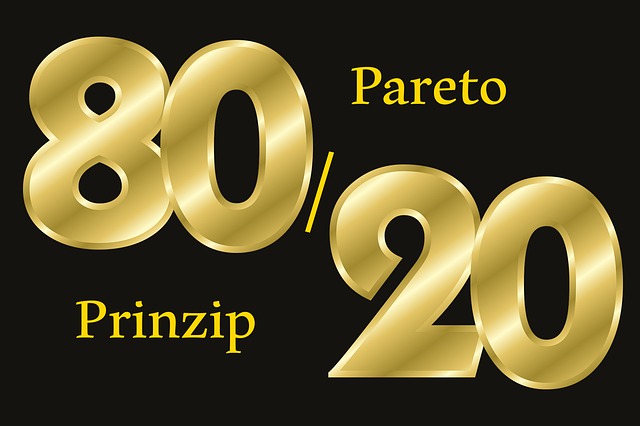 The US President Dwight Eisenhower once said, “What is important is seldom urgent and what is urgent is seldom important.” This is where the 80/20 rule (or Pareto principle) can help…80% of results come from 20% of effort, so it’s important to look at your list of tasks and decide what is actually important and just requires a bit of attention. Spend most of your time on the critical 20% and less on the rest…even if it does seem urgent.
 after a tomato shaped timer (pomodoro is Italian for tomato). You set the timer for 25 minutes, work solidly until the timer sounds, then give yourself a 5 minute break before going back to do another task for 25 minutes. This is a great technique if you struggle with focusing on a task or structuring your time. This is a great method to use if you want to ensure you only devote a certain amount of time to one task or if you have trouble focussing.
 hours a week to plan what you will achieve the following week – set yourself achievable goals by writing a ‘to do’ list – It’s such a good feeling to tick off the items on the list and to feel you have achieved something. And, make sure that your goals are






 Data Controller – the person who decides how and why personal data is collected. This is usually the business owner, as in my case. This person must ensure that the business is compliant, including transparency, data storage, data confidentiality and accuracy of data collected and stored. The Data Controller is also responsible for reporting to the Information Commissioner’s Office (ICO) if a data breach occurs or if data is lost or stolen from your business..or report to CNIL if you are in France.
 what personal information you want to collect and why, and how it will be used. The individual must agree and if they don’t, you must not collect and store their data under any circumstances. This includes conditional data collection, such as where you offer a freebie on your website to get people to sign up to your newsletter and then use that data for marketing your products or services.
 For us small businesses, you need to have a policy that states how long you will keep a customer’s data if they are not continuously engaging with your business. For example you could say that any data you hold will be deleted after 12 months, if that customer has not engaged with your business during that 12 month period.
 and email address, to any references made to them in email messages, websites, electronic notes etc. If you’re a small business, this won’t be too difficult, but for huge businesses, it would be very time consuming to go through hundreds of documents and data entries. That’s why it’s so important to know what you hold on your customers and where. If a customer makes a SAR, you have 30 days to comply, so good to have a plan in place.
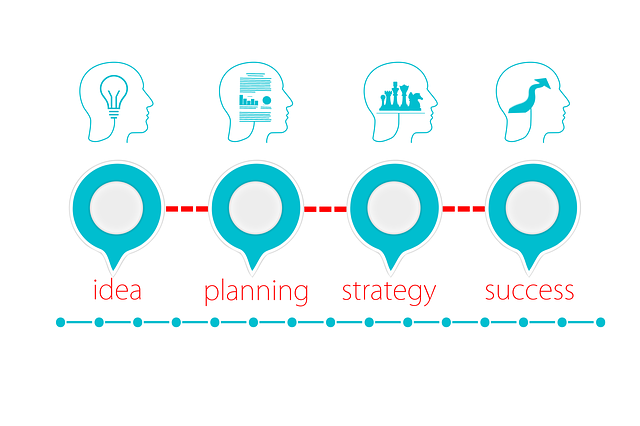

 To ascertain your business goals or milestones. Your business plan will make you think about what you want to achieve with your business and where you see yourself in a year’s time… in five years’ time or more. You can plan not only your long-term goals, but also some quick wins and short term plans. They are significant events that you want to achieve, such as building a website, launching new products/services, producing a brochure and also things like getting your first 100 or 1000 followers on social media.
 To understand and know your customers. Planning makes you look at your customers; who are they? Why do they buy your products and why do they buy when they do? Do they belong to an average age group or geographic region? An in-depth customer analysis will help you understand what makes your customers tick and how you can better serve them and give them what they want.
 To determine your financial needs. Do you need to raise money to buy stock and how are you going to do this? Are there training opportunities for you, so you can learn more about what you do, that incur a cost? How will you factor this in? If you need a big financial injection, you will need to look at loans or investors…your plan will then need to be very specific around how you will be able to afford this kind of investment and what your return will be.
 To pinpoint your brand. Creating a business plan makes you focus on what your brand is; helps you describe your business succinctly and decide how you will position your brand to your customers and target market.

 SEO – or search engine optimization. This is the process of increasing traffic to your website. This includes using the right keywords, your social media presence, references to your website from external sites, to name a few. In 2020, this is going to be vital to keep ahead of your competition.
 Content marketing – this is about blog posts, e-books, infographics, videos etc. that you share digitally. The goal of content marketing is to entice users to view your content and take action, clicking your call to action button. For example, you might write a blog post about ‘How to insulate your house for winter’. The call to action button might be ‘Contact us to get a free quote to insulate your house this winter.’ And research is showing that rather than having lots of short blog posts, people prefer longer, more relevant information that answers their questions and is of value to them.
 Voice Search – By 2020 it is expected that voice search will account for half of all Google searches. So how do you make sure your business is found? Good SEO will help, but it might be a good idea to create an FAQ page on your website answering questions that people might ask about your products or services. Make the questions sound the way that people talk. For example, if you own a fish and chip shop, people are more likely to ask ‘what chip shop is open right now?’ rather than the way they’d type a search into a search engine…opening times of fish and chip shop.
 Online Video – Today’s generation prefer to view video footage to get answers to everything they want to know. YouTube is the second most popular website, pipped at the post only by Google. Videos that show someone how to do something, help solve their problems, etc. is definitely the way to go in 2020.
 No matter what channel you use, have a business page and plan what you are going to do and when. Try and plan a host of different posts to keep your customers coming back for more. Use video, audio with pictures, product posts, competitions, polls, quotes, funny stuff and serious stuff. Make things as visual as possible and plan to post regularly and consistently. You can look at your insights to find out who looks at your posts and when is the best time for you to post. Plan to post at least three times a week, more for visual channels like Instagram.
 Christmas is the season of giving and all over the world, people get excited about everything that surrounds this magical time of year. So, let FB be your ‘Santa’s little helper’ and get started now on your Christmas campaign.
 You will have your unique brand for your products or services, but it’s a good idea to look at branding your products for Christmas and apply that branding to your FB posts and your website/blog. Famous brands do this every year, for example, television programmes such as Dr Who, will have a Christmas special episode, fast food outlets will use Christmas themed wrappings for their burgers, pizza etc. and there will always be a popular musician who will release a Christmas album, such as Cliff Richard! Everyone jumps on the bandwagon at Christmas, so why shouldn’t you too?
 Offer gift cards so customers can buy a gift card to give to family and friends.
 example, if you are a restaurant, you could share your Chef’s favourite Christmas dish, dessert or menu; Hairdressers can share easy to do hairstyles for Christmas parties; Beauticians can offer special packages so your body/face/nails/feet etc. are ‘Christmas ready’!; If you sell make-up, you can push your glittery make-up or maybe publish a video on how to do your Christmas party make-up. You get the idea!


 The CTA is really important as it’s your opportunity to get your reader to stay in touch with you, stick around, and come back to your site again. So you need to give them a reason to do this. Asking them to subscribe to something ensures that you can keep in touch with them. If you send out a newsletter, this is a great way to let them know about your business on a regular basis, tell them about new blogs, new products or services, special offers etc. etc. But please don’t do what a lot of people do and bug your readers with emails two or three times a day. When I subscribe to a website, I’ll soon unsubscribe if they bombard my inbox with the same email over and over again. I don’t mind having an email trying to sell me a course that is relevant to me, of course I don’t, but to have the same course being pushed day after day, with just slightly different wording, really irritates me. Maybe an email once a week for the first few weeks, then I’m happy with once a month. I find that if I get something once a month, I’m more likely to read it and click on any links. If someone bombards me every day, they become wallpaper and I end up just deleting them without even reading them.
 The Write Way