Networking – does it work?

Networking is something that most small businesses know about and understand its importance. It can help you build relationships, gain new customers, and sometimes it can set you off in a completely different direction!

But what if you’re not sure where to start? Do you know what type of marketing networking will suit your business? Do you know where to start looking for those networking connections?

The aim of this article is to answer some of those questions and more…

What is networking?  

Networking is about interacting with other small businesses, your target audience, and potential customers…in fact interacting with anyone for mutual benefit. This might sound a bit harsh but let me explain. If you are struggling with something in your business, or you have a challenge you’re not sure how to solve, networking within groups on social media, or joining face to face networking groups can help – someone will be able to give you advice or provide you with an answer.

In the same way, you’ll be able to share your knowledge or skills to help other businesses in your network. This will help to strengthen relationships with those people.

Networking plays an important part in any marketing strategy, as it’s an inexpensive and very powerful way to find opportunities with customers, suppliers, mentors, marketing experts, investors, and other sellers or service-based businesses.

It can also help you to raise the profile of your business, share new ideas, increase your sales, find out information to see how your business is doing against competitors and helps you keep up with any latest trends in your particular niche.  

Networking is a skill like any other. Many small businesses feel very anxious about it, but like anything else, the more you do it, the more you get involved in group discussions and take the time to get to know people in the groups you belong to, it’s a skill you can fully develop. The more you do it, the easier it is.

What are the different types of networking?

Networking is one of the best ways to grow your business and your brand. It’s important to help you reach people you wouldn’t otherwise have met on your own.  

The four main types of networking are:

  • Business to business (B2B) – the exchange of products, services, or information between businesses – simply put, one business selling to or supplying another business. This can be products or services or could be a manufacturer selling goods to a business, so they can make their products.   
  • Business to consumer (B2C) – this type of marketing targets the consumer, so businesses selling directly to individual buyers.
  • Social media networking – this is probably the most well-known way to network for small businesses. Social media helps you engage with your target audience and your customers. You can find out information about what people like, attract new customers, get feedback, and build customer loyalty. You can also use it to advertise, promote giveaways, do market research, increase traffic to your website and develop your brand.   
  • Professional association membership organisations – this would be joining professional groups where you must become a member, such as the Chamber of Commerce for example, and are largely face to face groups. They usually incur a fee, but often professional groups run networking evenings where they have guest speakers or training sessions to help you with your marketing.  

Networking as a tactic for your marketing plan

Most small businesses know that networking is important, especially at the start of a business, but it is also important no matter where you are with your business. It’s about creating relationships that in turn could turn into a collaboration, sales or create advocates for your business. So, it is important to add Networking as a goal on your marketing plan.

The goal could be broken down into the skills you need to develop for networking, (all kinds, not just on social media), such as:

  • Listening skills
  • Self confidence
  • Person skills
  • Making a good first impression
  • Maintaining eye contact
  • Patience
  • How to show passion for your business

I’ve talked about this before, but an ‘elevator pitch’ helps make networking easy. An elevator pitch is a short paragraph that takes you 30 seconds or less to say, which describes what your business does. It should include what you do, what makes your business special, what sets it apart from others in your field and why someone should do business with you. Check out the blog I wrote about this.

Having an elevator pitch would be part of your networking goal.

Common mistakes

Networking might not come easily to you at first, but you soon get the hang of it. Practice makes perfect!

These are some of the things to avoid when networking:

  • Don’t focus on sales – networking is about building your brand and reputation. Instead ask questions about other peoples’ businesses and focus on building a rapport that will eventually lead to a sales conversation. But that might not be for weeks or even months!
  • Don’t talk more that you listen! Yes, it is good to have to opportunity to tell your business story but listen to and show a genuine interest in other businesses.
  • If you’re attending a face-to-face networking event, think about dress code. Sometimes formal dress is a requirement, sometimes it’s just casual, so always worth checking.
  • If you’re attending an event, be prepared. Decide what you want to achieve – is it meeting potential customers? Getting referrals, or do you just want to build connections with people who might be able to help your business grow? Knowing what you want will enable you to decide how you will approach people.
  • Not following up – if you say you will get back to someone, make sure that you do. If you exchange telephone numbers or email addresses, drop them a mail just to say hi and remind them who you are, or give them a quick call to do the same. If it’s someone you’d like to work with or get to know better, suggest a coffee, and catch up – or a Zoom call catch up.

There are lots of different ways to network, so it’s just about finding the ones that work best for you and your business.

If you liked this article, please share, and follow for more marketing help and tips.  

Content buckets and how to use them

Most small businesses are on social media, and as a small business it’s important to have a good presence. But it can be difficult to know where to start, or what to post. If you’re building your brand on your website, shop, or social media accounts, content buckets will help you decide what to post and help you build an effective content strategy to grow your business.

What are content buckets?

The first step in building an effective content strategy is to know what type of content you want to post. This is where content buckets help you. This term refers to identifying the different categories for each type of content you choose to post, that most appeals to your target audience. They’re not topics, they are types of content, under which your various topics sit depending on your business and your goals.   

Let me give you an example. My content buckets include educational posts, entertaining posts, engaging posts and inspiring or motivational posts.

One of the content buckets I choose to use regularly is under the heading of ‘Educational’. So under this ‘content bucket’ heading, I have a list of posts I can create to support that type of content, such as:

  • Blog posts like this one, teaching my audience
  • How to…posts
  • Infographics with statistics
  • Tips and tricks of marketing for small businesses
  • Q&A about my business and what I offer

So, when I am planning my posts for social media, and planning my blog posts, I try and incorporate at least one post/blog from this list.  

An example using the same principle and type of content could be…

You have your own small business selling a product. You could film a short video or a series of photos showing you making a product from start to finish.

How does this help my marketing?

If you make a product that improves someone’s life, you could give tips and hints as to how to best use your product. It might be you sell a drinks bottle that is personalised or has a slogan on it. Give ideas as to how this improves the buyer’s life, such as handy to keep in the car, so you have a drink on the go. Good for picnics and day trips as the lid seals, so it doesn’t spill. For the same reason, it works well at the gym as you can carry it in your gym bag, knowing there will be no leaks. It could be used to make your morning smoothie in, or a special diet drink. There are all sorts of things you can come up with as to why your product helps your customers. It’s about painting a picture, so your target audience can see themselves using your product. You might give them an idea they hadn’t thought of.    

Content buckets work because they help you create variety in your posts, which keep the attention of your audience and they want to come back for more. And you get to choose the types of buckets that you know will speak to your audience and therefore the posts that sit under that.

This kind of content strategy works really well, but does require planning and scheduling posts, but it is really worth it and pays off in the long run. Knowing what to post and when saves you shed loads of time and effort.

Content buckets work as they are a good solid content marketing strategy that will help your small business increase engagement and build your brand.

Examples of content buckets

  • Educational – I’ve already covered this one in my previous paragraph.
  • Entertaining – this targets the audience that likes a bit of fun and takes a more interactive approach to content. Examples would be:
    – Memes or gifs
    – Showcasing a fun day out or holiday
    – Sharing joke posts
    – Showcasing throwback posts
    – Looking at a current trend
    – Holding a contest or giveaway
  • Engaging – posts that get your audience to join in with a thread or participate in a post, such as:
    – Ask questions such as ‘what is your favourite……’
    – Use a poll with a few multi-choice answers
    – Posts such as ‘this or that’
    – Show a new product and ask for opinions
    – Ask for new ideas for products
  • Inspirational – posts that make your audience think, or posts that motivate or inspire them. This could be:
    – Motivational or inspirational quotes
    – Memes or gifs with an inspirational theme
    – Share something you do that inspires you – could be you meditate daily or enjoy a yoga class or a sport.
    – Share your story of why you started your business – what inspired you to do what you do?  
  • Personal – this is about increasing your brand awareness. YOU are part of your brand – your audience gravitate towards you and your business because who you are – not a faceless business. Examples of posts could be:
    – Introduce yourself on a regular basis and share a little information about yourself. You will constantly be picking up followers, so it’s good that they can get to know you.
    – Live Q&A sessions
    – Action shots of you
    – Pictures of your workspace
    – Share details of your hobbies
    – Tell your audience about your likes and dislikes
  • Conversational –  This is linked to engaging content- it’s about creating two-way conversation, so you’re listening to your audience as well as talking to them. You could:
    – Simply ask some questions and then engage in the answers, even if the back and forth conversation is only a couple of comments.
    – Show a genuine interest in your followers – if you follow other small businesses, engage with their posts and ask questions, starting a conversation.
    – Do a live webinar or just go ‘live’ on Facebook (advertising it first) and encourage your listeners to ask questions. You could host a Q&A about your business inviting listeners to ask you anything they like.
    – If you include a poll in your content, once you have the results of the poll, do another post, or series of posts, looking at the answers and asking further questions around those answers.
  • User-generated content – This is content that is original, brand-specific and created by your customers and published on social media or other channels, and seriously helps your business promotion. If you see a comment from a customer, you can ask if you can use it on your posts to tell a story around that comment (if it’s a bespoke item you made, for example), or you can just make a positive post. Content like this comes from:
    – Testimonials
    – Blog comments
    – Forums
    – Networking events or forums
    – Podcasts
    – Reviews
    – Facebook comments or posts  

The best bit about User-Generated content is that it costs nothing and you’re not putting in the work to create it!

  • Listicles – you may or may not have heard of these. They are the second most popular type of blog post, after how-to content. A listicle is content that you create in list format, such as Top Ten movies of 2022. You probably use these without thinking too much about it. If I’m looking for a product I want to buy, I’ll often check out an article that gives the top ten brands of the product I want to buy, so I can compare them. So, how can you use this in your marketing?
    – Top tips for …… depending on what you do. You’ll see this type of post on my FB and IG, when I’m giving specific marketing tips.
    – If you’re a product based business, for example, selling soaps, you could do a list of the top five favourite fragrances.
    – List your top three products – your most popular products etc.
    – If what you sell is seasonal, you can do seasonal lists. If you sew, you could list the top five hats or dresses to make this summer, or the top styles of hats for winter.
  • Success stories – This type of content is about sharing a case study or a customer story, that tells how your product or service really helped them and how it changed their life or business for the better. Customer stories are different to case studies. A case study focuses on data. A customer story focuses on the experience they have had with you, your business and your products or services. Here are some ideas of how you can use these:
    – Have a success story page on your website, course site or sales page – then share the link from there on your socials.
    – Write a blog post about a success story or case study and share the link.
    – Create a case studies section on your website
    – Add testimonials and video clips of your customers telling their stories.

    This is a bit more time consuming, but really helps show you as an expert and your business as super professional. 
  • Promotional – This is probably the kind of post you see the most on social media, especially for product-based businesses. Promotional posts are used to make your audience aware of your deals and offers. But beware, as promotional posts can deter people from following you, especially if you are constantly trying to sell your products and your posts are repetitive. It can damage the relationship you have with your audience – instead of providing value and nurturing your audience, they may feel you only care about making a sale.

    Now I know that, at the end of the day, every small business relies on sales and needs those sales to survive. But potential customers need to know that they can trust you, that you care about them, and their opinions are important. By only posting promotional posts, about 20% of the time, and concentrate on other types of post the rest of the time, your audience will be more engaged in what you have to say, they’ll start to get to know you – the person behind the business through personal, fun and inspiring posts. They’ll see you as an expert from your educational and engaging posts and are then more likely to stick around and look out for your posts every day. 80% of your posts need to be about providing value to promote trust and loyalty.
  • Product content – This refers to the text, images and any other descriptive information that tells your audience about your products. Product content tells us about what you sell, whether that be a physical product or a service.

    Product content should clearly define what your product/service is, and what problem it solves. This kind of content is what shoppers look for when deciding what to buy.

    This is the selling part of your content. Make sure that you:
    – speak directly to your audience
    – Focus more on the benefits of your product, as opposed to the features.
    – Include good photos or images, or infographics – make sure they are clear

Conclusion

Now that you know what content buckets are and how to use them, you have the tools to use them in your social media content planning and make your content buckets part of your marketing and content strategy.

If you would like some 1:1 coaching around content marketing for your specific business, or would like help with your strategic marketing planning in general, please feel free to email me or message me on social media.  cindymobey@outlook.com

How the customer experience (CX) is evolving in 2022

The customer experience is every interaction that a customer has with your business, from the very first time they find your website, shop, or social media pages, to every time they comment or like what you do, right up to making a purchase or working with you.

It’s something that continually evolves, and since the start of the Covid 19 pandemic, it’s developed faster than every before. During the various lockdowns, we all had to adapt our businesses to cope with being more visible online…and customers have found that they like the services that businesses started to offer during this time and want it to continue.

For the rest of 2022 and into 2023, there are several things you can do to ensure that your business evolves to match those new customer experience trends.

The Digital Experience

These days people use technology more than ever to find what they want – most of us reach for our phones to look at things we want to buy. We can see what the best products are, compare prices and look at reviews to see which is the best to buy. If you’re a small business and not online in several places, you’re missing a trick.

The obvious one is to have a website. I know that many small businesses have online shops, such as Etsy, to sell their products, but at the end of the day, you don’t own that shop. You must pay high fees and the owners of Etsy could shut you down whenever they want.

Whereas, if you have your own website, you own it. No one can take it away from you and you can put so much more information about your business on it – you’re not just restricted to a shop. As well as being able to tell your backstory through your ‘About’ page, you can also set up an email subscription to communicate regularly with your customers and set up a blog to share information with them. It’s more personal.

Your social media accounts are also useful to gain a following and promote your products or services. You can also promote your website, blog, or email subscription, with links to your website.

Consumers expect you to be on these channels and they are the best way to engage and interact with your customers and potential customers.

Be personal

Another positive for the customer experience is personalisation. They like personalised experiences when they engage with a business. And not just greeting them by name in emails etc, or remembering birthdays, they want more than that. They expect to be able to contact businesses on their terms – using email, chat, voice calls, messaging etc. They want their enquiry answered in a timely way and don’t want to waste their time waiting or having to repeat themselves.

Customer expectations

As things have evolved to a more digital world, customer expectations have grown. And if you make any kind of promise to a customer, they will expect it to happen quickly.

How do you find out what their expectations are? Ask them! Put questions on your social media pages to find out what they like and don’t like.

You could send out a link to a survey…and offer a discount in exchange for completing it.

It also helps to look at your competition to see what they’re doing and how they interact with their customers. If you run the same, or a similar business to that of your competitors, your customers will have similar problems.

Identify customers’ pain points

To turn your customers into fans and advocates for your business, you must exceed expectations. Look at the pain points that your customers have and find out how you can address them with what you do.

Some common pain points include shipping, returns, sizing and being able to easily contact you. By looking at these and other pain points, you can exceed expectations and create very happy customers, who will recommend you.

Your customers put positive experiences above everything else, as you can see from some of the latest statistics below.

The Omnichannel experience

Omnichannel simply means lots of different channels – social media, website, email, chat etc.

To maximise this experience for your customers, ensure that you are consistent across all channels – that branding and the way you speak and interact is the same. And that your customer service is excellent and exceeds expectations on all channels.

Data Security and privacy

Another thing that customers are very aware of these days is data security and privacy. There is so much on the news and online about this that most people know they have certain rights.

The emphasis on data security and privacy is only going to increase over the coming months and years. As your customers share more personal data, businesses must adhere to the General Data Protection Regulations, (GDPR) relevant to the country you trade in, as well as the countries you sell to.

You should ensure that you have a privacy policy and clearly you’re your data practices in that policy. You need to ensure that you are clear about your purpose and processes for collecting and storing customer data.

You need to have your customers’ consent to email them – most email subscriptions include an opt-in, where customers willingly give their name and email address, so they are consenting to you sending emails.

Never share your customers’ data with third parties or sell lists of customers email addresses.

You can find out more about GDPR online for your country, but here are a couple of useful links.

GDPR UK

GDPR EU 

Top tips for a great customer experience

Businesses with great customer experiences have higher customer referral rates and higher rates of customer satisfaction. This means you’re more likely to keep those customers’ loyalty and they’re more likely to come back for more. Word of mouth is one of the most powerful marketing tools you can have – your customers do the marketing for you, saving you time and money.

In today’s market, you not only need to compete on price, but you also need to compete on experiences, that is, your customers want to feel emotionally connected to you and your business.

Here are some of my top tips for creating that great customer experience:

  • Every business should have a mission statement and set goals. Make the customer experience part of your mission statement and have specific goals to enhance that experience.
  • Be friendly – whether you are talking to customers face to face, or via video call or phone, SMILE! Believe it or not, you can hear that friendly smile. If you’re face to face, make eye contact. And always use warm, friendly language and tone of voice.
  • Have empathy for your customers. Do your best to understand them and what they want. Make the experience they have with your business, the best!
  • Provide value – by this I don’t mean that your products should be cheaper than everyone else’s. I mean deliver the best value you can, at the right price for your customers. Make sure your prices are easy to find and are visible – people don’t have to go looking – they’ll just log out. Make the sales process as quick, efficient, and easy as you can.
    Make sure that your shop or website is easy to navigate and doesn’t take ages to load – or you will lose customers.
  • Be easy to contact. This speaks for itself. Make sure that your contact details are on every channel you use…be that your phone number, email address or chat box.
  • Be consistent with everything you do and never stop looking for ways to improve. Listen to your customers, take note of any feedback you get and act on it.
  • Finally, show your appreciation for your customers. Sometimes a simple ‘thank you’ is enough, whether that is face to face or via email.

I hope that this article has been helpful – if you have any further suggestions or have any questions, please feel free to comment below. Alternatively, you can email me at cindymobey@outlook.com or contact me via my website.

Take your marketing from mediocre to marvellous

The one thing that most small business owners have in common is the dream about what their business has the potential to grow into. They want it to be a success and know they can do it if they work hard.

However, sometimes it’s hard to focus on what is important and you sometimes lose the focus on the future and how to keep moving forward. How many times do you find yourself wondering if it’s all worthwhile? How often do you feel like just jacking it all in and doing something else?

You know that in this digital age, especially since Covid raised its ugly head and everyone had to find more innovative ways to reach their customers, that having quality content online that engages your audience is crucial. But that really is only half the picture. You also need to ensure your audience is exposed to this content, and that means building a successful content strategy beyond social media posts.

This week’s blog looks at how you can work ON your business, NOT IN your business, and take it from mediocre to marvellous.

Resolve your mediocre marketing

Mediocre is quite a depressing place to be in marketing. Lots of businesses pay more attention to how they look than what they’re saying, or how they’re saying it. I’m not saying everyone does this, of course, but instead of focusing on what makes us unique, we are all guilty at some time or other of saying what people expect us to say or do.

So, what can you do to resolve your mediocre marketing?

All small businesses have lots of balls in the air. Not only do lots of you have a family to look after, but you also have everyday things to keep on top of too. Some of you are running your small business as a side hustle, as well as holding down a full-time job, and you can find yourself being pulled in all directions. This can lead to a mindset of ‘hoping for the best,’ which in turn can lead to you being unproductive – and it’s exhausting!

One of the answers is to work smarter instead of harder. Here are some things to think about:

Have a plan

If you read my blog regularly, you will know what I’m going to say; you need a marketing plan.

At this point, you might just switch off. Is it because you find the thought of having to plan a bit overwhelming? It’s probably the last thing you want to hear…again!

But not having a marketing plan makes your job harder and juggling all the harder to handle.

If you have a marketing plan, you can focus on the things that are necessary. In ‘The Trend Report: Marketing Strategy 2022, reported by CoSchedule, it was found that people who have a plan to market their business are 313% more likely to report success than those who don’t.

And, although it may seem very overwhelming, it really isn’t.

What should a marketing plan contain?

For starters, it doesn’t have to be 100 pages long – that won’t help you at all. It needs to be clear and short, realistic, and repeatable, as well as easy to understand so you can tweak it as you see fit in future months.

It needs to show:

  • Your Vision/Mission statement
  • The four Ps – products, pricing, place (where you’re going to sell what you do), and promotion (how you’re going to sell your products or services).
  • Market analysis – look at your competitors
  • Target market – who you are aiming your products/services at
  • Your goals or objectives
  • Your promotion strategies
  • What budget you have if any
  • How you’re going to measure the success of your plan

If you would like a simple to follow marketing plan, sign up to my email and receive your free ‘Marketing your small business workbook.’ This will help you get on the right track.

Don’t try to do too much

Trying to do too much can also cause you to do less. For example, I know businesses that are on five or six social media channels. It’s good if you have the time to manage them all, but my experience is that you’re likely to lose your motivation and abandon them one by one.

Trying to be seen everywhere is not easy to maintain long term, especially if your business is just you. So, I would always advise to focus on just a couple of social media, or online channels and do them well.

Be consistent, add plenty of value to your customers and have a goal – what you expect to achieve from your social media activity.

One of those online channels doesn’t have to be social media – it could be email marketing. To build a lucrative email list, it’s advised to have a lead magnet that entices people into subscribing to your email. I realise that email isn’t for everyone, but if your business is steadily growing, you engage with your audience regularly online, (and may be finding this is taking up too much of your time), the next option is to create an email subscription, where you can talk directly to your customers every week or month.  


Not everyone is your audience

I know I’ve posted about this recently on my social media pages, but one mistake that lots of small businesses make is to try to sell to everyone. Not everyone is your target audience, and by trying to target everyone, you risk selling to no one.

You need to know your audience, build a couple of buyer personas and tailor everything to them.

Don’t spend too much money

The word ‘budget’ is something guaranteed to send fear into most small businesses hearts. It’s not one of our favourite words, but it is important. Having a budget, no matter how small, can help your business.

There are so many digital marketing apps it is all too easy to keep subscribing to new apps. But while they might be individually cheap, they add up.

Look very carefully at what you spend your money on. Do you spend a lot on app or analytics tools? I do subscribe to Canva, and it’s worth every penny as I use it every day, but I have recently stopped subscribing to a few, as they were just a waste of money.

It is worth spending money on things you will use and will help you make your business more successful.

Here are a few ideas on what you can spend your marketing budget on:

  • A website (some people prefer to spend on things like Etsy or Shopify rather than a website as lots of the marketing can be done for you, but I feel it’s better to have your own website with built-in e-commerce, as you own it yourself
  • A registered domain
  • Training – so you learn more about things associated with your business
  • Paid ads – this needs very careful consideration to get the right kind of ad
  • If you are service based, you might want to invest in scheduling and measurement tools
  • Hire some professional help, such as a marketing coach, someone to help you with your business/marketing/social media strategy, or someone who can build your website, write blog posts, or set up your email marketing.

Don’t forget about your existing customers

Did you know that your existing customers are your biggest sales opportunity? Happy customers are loyal customers and are five times more likely to buy from again, and four times more likely to act as referrals.

Looking after your existing customers is worth the effort as losing customers who are no longer engaged or hear from you, are more costly. It’s harder to find new customers than it is to keep existing ones.

Keep your customers engaged with your business by offering them gifts, or discounts, listen to their feedback and act on it, or maybe think about creating some sort of loyalty programme.

Stay up to date with technology

This is a hard one, but most of what you do as a small business will be routine. There will be some daily tasks that need to be done to keep your business running smoothly. The more effective you become in completing these tasks, the more time you must work more on your business. For example, instead of physically posting on social media every day, batch make your content for the week and schedule it. You then only have to do this once a week.

Keeping up with the latest tools you can use to help you can ultimately save you time and money.

Mix up your marketing activity

Check out your insights on social media to find out what kind of posts work best for you and what doesn’t. Change the type of posts you do, try, and include things like reels and video, as well as short and long posts. Post your blog articles, and remember to use posts that entertain, educate, engage, and inspire your target audience, as well as selling posts.

Take a step back

In this article, I’m not telling you what to do, but what I am trying to encourage is to take a step back and look at the bigger picture. It gives you time to assess what works and what doesn’t work for you.

It’s very easy to fall into the trap of doing the same things, just because that’s the way you’ve always done it, or because that’s what everyone else does. But in business, time is precious and it’s good to remember to:

  • Create a clear marketing plan so you can focus on essential activities
  • Only concentrate on the social media platform that you love and that you enjoy
  • Sell to a targeted audience rather than trying to sell to everyone
  • Make your budget work for you in the most efficient way
  • Make your existing customers your priority. They will be the ones to buy more, give reviews, and are more likely to refer you to their friends and family

This is basically what a marketing strategy is all about and will help your business go from mediocre to marvellous! If you need help in pulling together your strategy, please feel free to take advantage of my free 30-minute discovery call, where I can give you some tips to help your business

What makes your customers buy from you?

Understanding consumer behaviour

Have you ever wondered what makes some people choose one type of product and another person choose another? For example, why someone would prefer to buy a designer handbag, whereas someone else is happy with one she bought from a local small business. What drives our choices?

Studying consumer behaviour is fascinating, as I’ve found by researching this article. So, what is consumer behaviour?

It’s the study of how people buy, use, acquire and dispose of goods and services. It’s not just about buying either, it could be they acquire goods through bartering, lending or leasing. Behaviour can be affected by how much they use the goods they buy. For example, if someone buys a can of drink, it is consumed just the once, but if they buy a laptop or tablet, it would be used over a period of time. Buying behaviour depends on how much that product is used.

Consumers are also influenced by others, through reviews. If a product has great reviews, or if a consumer’s friends are raving about how good a product is, they are likely to buy it. But, if their friends are really slating a product, or it gets negative reviews, they probably wouldn’t buy it.  

There are several factors that influence how consumers make their buying choices. In this blog post, I’m going to talk about five of them…

  • Psychological
  • Social
  • Cultural
  • Personal
  • Economic

All of these factors can be split down further.

Psychological factors

How someone feels about a particular product when they are presented with it will depend on their state of mind. Their state of mind will determine not just how they feel about the item itself, but also about the brand as a whole.

Social factors

Most of us want to be accepted socially, and this can affect buying habits. In order to be socially accepted, some people will mimic others, including copying what they buy.

Family, friends, work colleagues or other groups will play an important part in the way people see different products or services. These groups all help to influence buying behaviours.

Cultural factors  

Culture is not just defined by a person’s nationality. It can also be defined by who they associate with, religious beliefs or even people living in the same geographical location.

Personal factors

Personal factors include age, occupation, marital status, budget, personal beliefs, values and morals.

Economic factors

Consumers are affected by the economic condition of a country. This is evident at the moment with inflation at an all time high – people can’t afford to buy too many luxuries, as they have to concentrate on paying the bills, putting fuel in the car and buying food.

Economic factors include personal income and how much disposable income is left after everything has been paid each month. It also includes family income – again, what’s left over that the family can enjoy.

Consumer credit is another factor. People have credit cards so can buy goods when they want to. Consumers are more likely to buy luxury and comfort goods if they have access to higher credit, or can pay through a credit card, easy instalments or bank loans. I’m not saying this is good – it’s just a factor.


The Five stages of the consumer buying process

Now you understand the factors that influence the buying process, lets look at the five stages people go through when deciding to buy.

  1. The problem. A consumer notices they have a problem they want to solve. This could be anything from needing to get a new outfit for a special event, to buying a new tap for their sink.
  2. Research – the next stage is to research how to fix their problem. This might be trawling the internet for recommendations, or to look at various sites that sell what they’re after. It might be talking to a friend or family member for their advice.
  3. Find a solution – once they have all the information they need, they can start comparing brands and looking at reviews to help them decide on a solution.
  4. Buy a product – the consumer makes a decision and decides to spend their money on the solution they’ve chosen.
  5. Review the product – some consumers will leave a review about the product they’ve bought – some won’t. Either way, they will still personally review the product and decide whether they would recommend it to others…and whether they’d buy from that brand again.    

The four types of buyers

It’s also worth knowing about the four different types of buyers, so you can market your products or services accordingly. The four types are different, based on what motivates them to buy.

  1. The analytical buyer – this person is motivated by logic and needs to have lots of information. They want to look at all the data on the different brands and different types of products available before making an informed decision.
  2. The amiable buyer – this person is warm and friendly and just wants everyone to be happy. They can often be stumped by having to make big decisions, especially if there is a perception of a win/lose outcome.
  3. The driver buyer – this type of buyer is really concerned with how others view them, and whether they should follow the trend setters. Drivers are most concerned with their appearance rather than the relationships that are formed during a transaction.
  4. The expressive buyer – this buyer is driven by relationships. They hate the feeling of isolation and don’t like being ignored during a transaction. They like to feel as though they are your most important asset.

This being said about the four types of buyer, it’s difficult to put everyone into one category – people will often fall into a combination of the four.

Conclusion

As you can see, consumer behaviour is influenced by many things; psychological, social, cultural, personal and economic.

It’s also worth knowing the buying process and the types of buyers – this can help you figure out how you can reach and influence the people that are most likely to buy your products.

If you’d like to take a more in-depth look at your customers and target market, get in touch for a free discovery call.

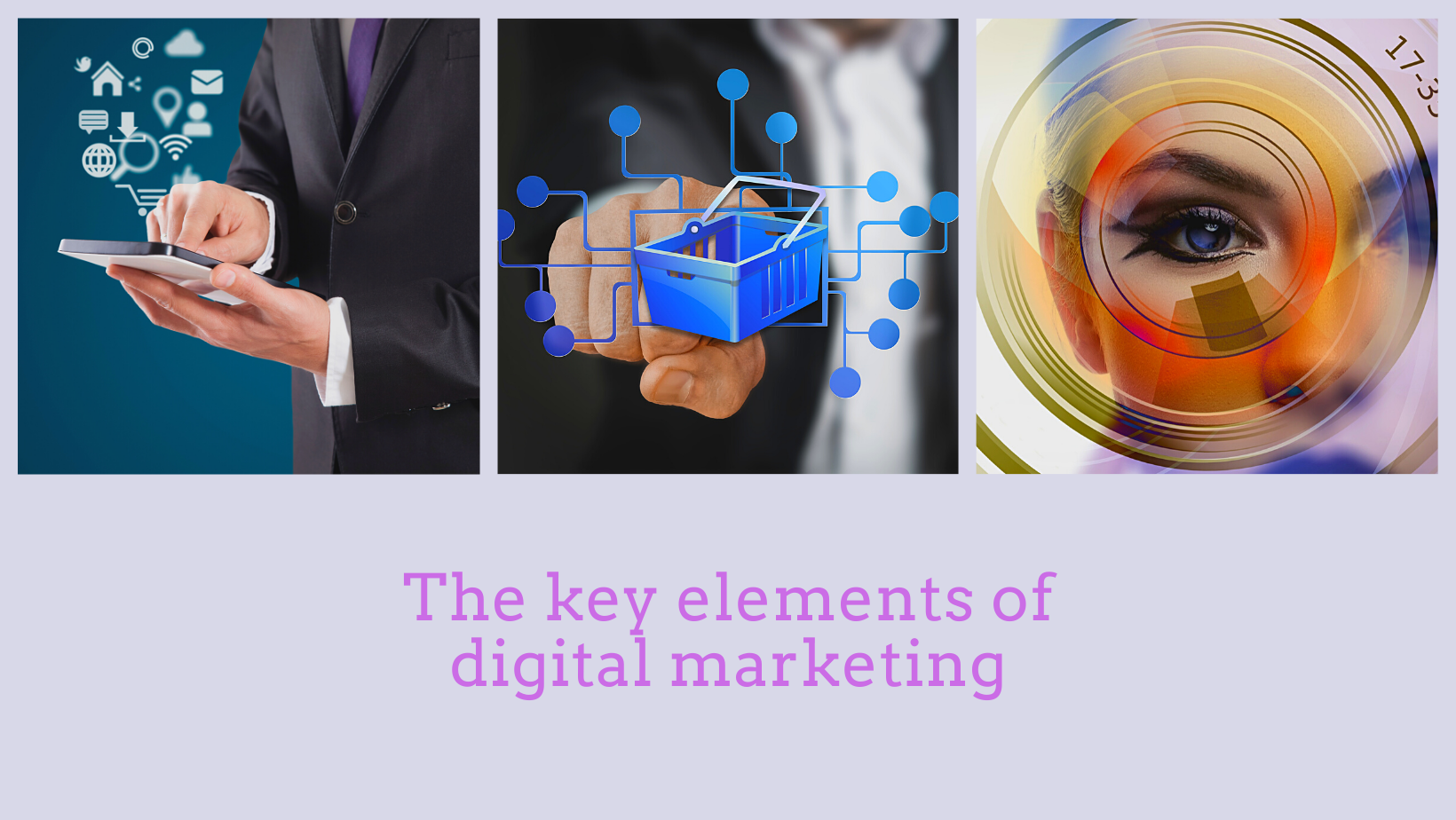
The key elements of digital marketing

Every day the number of people going online increases, and since the 2020 pandemic, there has been a huge increase in online shopping. This means that offline marketing won’t be as effective as it was before.

Marketing is all about connecting with your target audience in the right place and at the right time and, for the most part, this now means meeting them where you know they’ll be…. online!

So, it makes sense to make use of digital marketing to get your small business out there.

What is digital marketing?

Digital marketing covers everything that uses an electronic device or the internet. Whether you’re a small or larger business, you can benefit from using digital channels, such as search engines, social media, email, and other websites to connect with your current and potential customers.

Digital marketing helps you to reach a huge audience, which you would not have access to using traditional methods. You can also target prospects who are most likely to buy your products or use your services. It’s also more cost effective that traditional methods, as you can measure your success daily and change things as you see fit.

What are the benefits of digital marketing?

There are lots of benefits to using digital marketing for your business. Here are just a few of them…

Minimal Costs

When you have your own business, you’ll know that marketing and advertising are the most expensive things you need to do. Marketing via digital platforms gives a much more affordable alternative to traditional methods. These methods can be hugely impactful but cost you way less.

For example, you can subscribe to an email marketing subscriber, such as MailChimp, Mailerlite or ConvertKit for little cost (and with MailChimp and Mailerlite, there are free versions when you first start). This will help you reach all the customers on your mailing list by email, quicky and efficiently.

Good return on investment

You get an incredibly good return on your investment with digital marketing. For example, if you run an advertising campaign on a social media platform, it costs much less that traditional marketing and with email marketing, you’ll also get a good return on your investment.

Measurement is easy peasy!

With traditional methods, you must (typically) wait months to evaluate a particular campaign to see how it’s worked. But with a digital campaign, you can find results within a few days… and you’ll know almost immediately if an ad is performing well.

If you sign up to an email subscription platform, their email marketing software will enable you to track the performance of your emails – you’ll know who’s opened them and who hasn’t. You can also find out about conversion rates.

Using Google Analytics helps you measure goals achieved on a website or blog. And Google AdWords manager allows you to monitor the performance of your ads on Google search. So, you’ll know how many people viewed your ads and what the conversion rate is.

Easy to adjust your ads

If you do decide on an ad campaign, if you find that it’s not really performing as well as you hoped, you can adjust it accordingly, or stop it altogether, with just the click of a mouse. The same can be done for changing something within a current ad.

Developing your brand

You can use digital platforms to build your business brand and reputation. For example, a great website, or a blog featuring quality articles, which are useful to your audience. Social Media channels are also fabulous for brand recognition, so long as you post consistently and are very interactive with your audience.

The good thing about social media channels is that they are shareable, which allows you to share articles, blog posts, website, campaigns etc., with your followers.

Absolute targeting

By this, I mean that your campaigns can target the exact audience you want. You can choose potential customers based on their preferences or actions.

For example, if you have an email subscription set up with a free lead magnet to entice customers in, such as an e-book, you can tailor emails to that customer totally based on what they asked for. You know they’re interested in the subject matter of your e-book, so are there other digital or physical products that they might also be interested in?

I don’t mean make your emails to customers all about selling…but you know for future reference, once you have given quality information and once you know your email subscribers a bit more, you know that they’ll be more open to similar products or services.

Global darling!

If your business is online, it’s simple – you’ve gone global darling! The internet is global, available 24/7, to billions of people. Marketing on your digital platforms opens you up to customers from all over the world.

Conclusion

With traditional marketing, you may have put an ad in a local paper or on a billboard. This will reach a large audience, but you will be limited to demographics, (where the magazine is distributed, or where the billboard is located). With digital marketing, you can identify and target a specific audience and in turn, send highly converting marketing messages.

Digital marketing helps you to conduct the necessary research to identify your buyer persona, and helps you to understand your target audience, which means you can define your marketing strategy and reach those prospects that are most likely to buy from you.

If you need help with your digital marketing, I can work with you through a few coaching sessions so you understand what will be best for your particular business. You can message me on Facebook or Instragram, or email me at cindymobey@outlook.com

If you’d like more regular marketing tips delivered to your inbox, and would like a free marketing strategy workbook, please click on the link below to subscribe to my email list.

Subscribe now

Discover the secrets of delegation for small businesses

Unless you’ve actually owned your own small business, it’s difficult to tell someone what it’s like – you need vision, passion, a huge helping of optimism and lots of positive energy to start a business from scratch. Then you have to maintain a high level of dedication and work hard to pull everything together. There is so much to think about, from sorting out your products/services, your brand, website, social media marketing, online marketing, ads, as well as running your business and all the day to day things that entails.  

Most of us who own a small business launch ourselves headlong into everything, have our fingers in every pie. But even during the early stages of your business, it’s often worth getting some help with some aspects, such as building your website, designing a logo and advice on building your brand. However, I know that most of us will try and do everything ourselves and eventually there will come a time when you find you can’t do everything on your own AND keep your business successful and thriving.

It’s impossible to work 24 hours a day, so there comes a point where something has to give. You either have to think about what you can stop doing, or you have to think about delegating some of the tasks you’re either not that good at, or don’t like doing, or simply need someone with more expertise to get it right. It can feel like a tough call to make as your business is, in many ways, your baby. I understand that only too well, and delegating or outsourcing some of the work means you have to give up a certain amount of control over that area.

How do you decide what to delegate?    

First of all, why is delegating so important to you and your business? The most important aspect must be that it makes financial sense – that you’ll make more money by passing a task on to someone else, than if you tried to do it yourself.

Most businesses think nothing of employing someone to do their accounts or tax return. Most are happy that they are handing it over to a professional and you trust them to do it properly. It’s the same principle with the other aspects of your business that you want to pass onto someone else.

Another thing to think about is the stress factor. If you try to do too much and are working long hours, six to seven days a week to keep your business running, you are in serious danger of suffering from burnout. As well as making you physically and mentally ill, it can leave you feeling trapped, detached from the very business you love and with no motivation to pull yourself back up again.

You are the leader, the boss, of your business. If you had an employee who was not coping with the sheer amount of work he/she had, what would you do? You would most probably remove some of the stress that person was under by giving some of their work to someone else to relieve the stress they were feeling.

As the leader of your business, you need to make the best use of the resources you have. Your time, energy and enthusiasm MUST be spent on working on the most important and core parts of your business.  

OK, time to put your thinking cap on. First of all, do not pass on any tasks that are the absolute core of your business – things that you need to have absolute control over and MUST do yourself. Think of a big company like DELL or Apple. They come up with the innovative ideas for their products that fit their brand and also work on the design, so they know exactly what they want and what it will look like. But they don’t manufacture the devices themselves – that is outsourced.

For a smaller business, it could be that you design and produce something yourself and you get involved in everything around that. But you may not have the expertise or time to spend on social media, your blog, your website or sending out your monthly newsletter. That’s where you can get someone else to do that for you.

Let’s take a look at the advantages and disadvantages of passing work on to someone else.

Advantages

  • You get to work with experts, who will bring a fresh perspective to your business and may come up with ideas you hadn’t thought of.  
  • Work will get done more quickly by passing on things that are time consuming.
  • It gives you the chance to focus on the skills you bring to your business – strengthening the processes that make your business work.
  • Some of the risk is shared – by delegating certain processes or maybe a campaign, you will benefit from their ability to plan and alleviate potential risks.
  • It’s always going to cost less to outsource small pieces of work than hiring someone on a permanent basis.
  • If you decide to outsource work overseas, due to time zone differences, a certain amount of work will get done whilst you are sleeping!

  • You will be able to do more effective and targeted campaigns and projects that you wouldn’t normally have the time to take on.
  • Finally, you get peace of mind knowing that you have hired a reliable individual or agency and that the tasks you have assigned will be handled in a professional and efficient manner.

Disadvantages

  • You do lose some control over how the tasks you assign are being monitored and performed, but so long as you take this into account when hiring and understand how the other person/agency works, it shouldn’t be a big issue.
  • Make sure you read all the terms and conditions of whoever you hire. Some big agencies have very long contracts and you could find yourself with hidden costs if you don’t read all the small print. With an individual, the terms and conditions tend to be more straight-forward.
  • Be aware of data protection. With the new GDPR (General Data Protection Regulations), you need to be very vigilant if you are outsourcing tasks that use your customer data. You need to be aware of the privacy rules – always worth thinking about, although most individuals offering freelance work/agencies will be aware of the rules and regulations, so always worth checking.
  • Although rare I’m sure, some individuals/agencies will be more interested in the money they are earning, than giving a good quality service…as I say this is rare and most are reputable, but just something else to be aware of.
  • If you are outsourcing or delegating work overseas, you will need to check that anything you ask them to do doesn’t get lost in translation. Make sure they understand exactly what you expect and by when. And you need to be aware of the different time zones for anything that is needed by a particular deadline.

In conclusion, if you are looking to get more stuff done in less time, so you can concentrate on the core aspects of your business, then delegating tasks or outsourcing projects or campaigns might be the best way forward for you and for your business. 

Coronavirus Covid 19 and your small business

No matter where you are in the world, if you run your own small business, be it from home or from small premises, like me you’ll be wondering how you are going to cope if or when you have to close or scale down your business due to the coronavirus pandemic, Covid 19. This is a worldwide crisis like nothing else we’ve ever encountered before, so no wonder everyone is a bit bewildered. 

  • Will I go out of business for good?
  • What if my customers don’t want to come back when it’s all over?
  • How can I keep my business in the spotlight if I want my business to carry on being a success after all this?

The answers all boil down to what you can do right now…NOT what will happen afterwards and that’s what a lot of small businesses are focusing on. However, there are things you can do with your marketing to keep your business in the hearts and minds of your current and prospective future customers. I think that a lot of us have been told that our businesses are ‘non-essential’, but this doesn’t mean not important, just not essential to the running of the country! Of course your business is essential to you, to your family and friends, your customers and your purse! It’s not going to be ‘business as usual’, even if you normally work from home, but now is not the time to be pushing ahead in an aggressive way. You need to be highly sensitive to your customers and the situation that they’re in too. 

How does the Coronavirus affect your customers?  

Obviously how the virus affects your customers and in turn, how that affects you will depend on what you do for a living. If you’re in the beauty industry, (therapist, masseuse, hairdresser etc.), then your business will have to close, as what you do means you can’t possibly remain 2 metres away from your clients. If you sell a product or service, there may be things you’ll need to change – you can no longer do this face to face, so it’s time to get a bit more creative. But before you do, have a think – get out that pen and paper and think about how the virus is affecting your customers. What is keeping them awake at night? How can you help? They may have a specific challenge or worry that you can solve that has nothing to do with the virus.

You may be able to position your business, products or services to be helpful and maybe address some of the problems your customers are facing right now.

So, get out that pen and paper right now (!) and take 15 minutes to think about your customers. Try and answer these three questions…

  1. How can you provide value to your customers – real value to help them and to build up trust between you?
  2. What can you offer your customers right now that they need? Try and be creative here…maybe even a little ‘off the wall’.
  3. How can technology help you to still offer your products and services in a way that you didn’t before?

I definitely don’t in any way mean for you to exploit your customers – definitely not! Remember, people (including us) are all a little bit scared at the moment; we’re all out of our comfort zone and over the coming weeks, maybe longer, we are going to have to adapt to our new ‘normal’.

People who are in business themselves, small businesses as well as bigger corporations, will be spending a lot of time looking for answers to their problems. This could be in the form of solid help, albeit virtual, for their business, advice to help them move their business forward despite the virus. But not only that, there will be hundreds or thousands of people out there looking for products that can be delivered to their homes; if they are ‘locked-in’ without being able to go out for longer than an hour a day, they will be looking for entertainment, things to do, looking for things to read…and yes, turning almost certainly more and more to the internet for inspiration.    

Embrace the change

Time to get out that pen and paper again, can you answer these questions about your business?

  1. People still need and want to buy things. Can you create a space online where people can look at and buy your products or services? If you already have that place online, look at advertising it or, if online on social media, post about your products – without the hard sell or you will get loads of negative comments!
  2. If you run a restaurant or café, can you do takeaway meals or meals that can be delivered?
  3. How can you up your game with your online marketing? As well as just advertising you products on social media, start conversations about your products – ask for opinions and post a photo of the item you’re talking about.
  4. Think about starting up a new social media channel – are you on Facebook, Twitter, Instagram, LinkedIn and Pinterest? If not, now is the perfect time to learn how to use these channels. There are lots of free resources online and lots of FB groups where you might be able to get an expert to speak to you one to one.
  5. If you normally have meetings with clients face to face, can you use  Facetime, Skype or Messenger Video?
  6. If you’re in a profession, such as the beauty business where you can’t physically work, can you give people hints and tips on social media about their hair or beauty regimes? Take this time to set yourself up as an expert…it might bring you new customers when you can get back to business. And it keeps your business out there and not forgotten. Focus on your visibility.
  7. Do you have a website? If you do, now is the time to update it; change wording, add new products/services, look at your SEO (search engine keywords and phrases)…in fact, why not go the whole hog and give it a new look and freshen up your brand? Hell, yeah!
  8. You don’t have a website? Well, now you have the time to sit down and think about planning one for when you can afford it. Look at other websites who do the same as you and make a plan as to what you want yours to look like. Think about your brand, how you speak to your customers – what do you want them to come away with after visiting your website? What would a website do for your business?  
  9. Can you pull together some online resources for your customers that you give for free? You can do this no matter what you do for a living. Information sheets in pdf format – ‘how to’ information, ‘what to do if…’ information – the list is endless. If you have an email list, ask people for their email address in exchange for your information sheets, and ask them to confirm that they’d be happy for you to send them a regular email giving details of your products and services.
  10. Start a monthly newsletter with the email addresses you collect. Mail Chimp is a good place to set this up and it’s free until you hit around 2000 subscribers.

Be accessible  

Focus on your accessibility – are you easy to contact? If you are online on social media, or have a website, is your contact details immediately visible? If you email your customers, make sure you give contact details…an email address or telephone number where they can contact you.    

And finally…

Enjoy working on new things – make this time away from the stresses of work, a time that you sit back and take a long, hard look at your business. When you’re back up and running, can you change anything to make it better, more efficient? You have time now to research new products. You have time to learn new things, so you can offer a new service.

If you work from home, clean your desk, clear away the clutter.

If you do decide to put some new practices in place now, make sure you have a measurement in place, so you know if it’s working or not. This saves you wasting your time if it’s not working and then you can look at other ideas. On the other hand, it gives you a boost and the impetus to do more if it is working. 

Above all, during this dreadful virus and the fall-out afterwards, we are all in this together. My message to all the small businesses out there, keep strong, keep safe and keep thinking of new ways to do business.

As a small business myself, I would just love to hear from other small businesses out there – no matter where you are in the world. How are you coping with the virus and the impact on your business? What are you putting in place to help you through the crisis? Do you have any other ideas that people might be able to implement? Feel free to leave a comment here or pop over to email and send me a message cindymobey@outlook.com    

Hashtags FAQ

If you run your own small business, you probably use social media sites to promote your products or services. We all know that Search Engine Optimization (SEO) is important in promoting your website and blog content, but what about HASHTAGS? Do they help?

What are hashtags?

Originally hashtags were used to help filter and organise conversations on Twitter, but they are now used on all social media platforms. A hashtag is the sign # followed by a phrase such as marketing, so would be #marketing. It’s a category that posts relating to that subject can be streamed into; anyone can use it for their content, be it a blog post, Instagram or Facebook post.

How can I use hashtags on social media?

A really easy way to get started is by using popular hashtags. One hashtag that I see regularly on Facebook and Instagram is #throwbackthursday or #tbt. This is used as a weekly theme by some Facebook groups where people and brands share posts, or experiences from the past. For example, they may post their first ever product.

There are different hashtags depending on what niche your business is in. For example if you are in the fitness business, you might use #fitnesstips #fitinspiration or #gymspiration to name a few….or if you are in marketing, you could use #marketingtips #marketingstrategy. There are thousands to choose from and research on what are the best hashtags for you to use for your business is crucial. If you go into Instagram and click on the search icon, you can type in a hashtag you think would suit your business – for me it might be #marketingtips. Then that hashtag group comes up, with hundreds of the most popular posts that have used that particular hashtag. Doing your research in this way can help you to decide which hashtags to use (if you are a small business with a small to moderate following, you don’t want to use a hashtag that has over a million posts, as your post is unlikely to be ranked under that hashtag. I try to stick to a variety, some that are under 50k – some 50k-100k – some 100k-500k and then others that are over 500k posts up to 1 million.

How many hashtags should I use?

How many you use depends on what social media platform you are posting on.

  • X (formerly Twitter) allows space for hashtags, but advise using no more than two.
  • Facebook advises using between three and five.
  • Instagram – you can use up to 30 hashtags, but most accounts use around the 10 mark. It’s up to you – I tend to stick to between 3 and 5.
  • TikTok don’t really advise hashtags as they can look spammy, but if you do, no more than three to five – but they should be used with purpose.
  • LinkedIn advises a maximum of three per post.
  • Pinterest state you can use up to 20 hashtags per Pin description, but it is advisable to use no more than 10.

So what do hashtags do for my business?

Hashtags are a great way to build your brand, boost a marketing campaign or sales campaign, and launch a competition or to just keep in touch with your target audience.

Using hashtags on Instagram and Facebook can really increase awareness of your business and engagement with you and your products/services.

They are an effective way to build your brand, for example use them to launch new products/services, share your promotional material or for just generating interest in what you do.

Hashtags are also great for creating a buzz with your website, spreading news and information about new products, events that you’re involved in or just creating hype for your business.

How do I find the right hashtag words?

It really is as simple as putting a search into Google. Just type in ‘popular hashtags for XXXXX’ whatever business you’re in – fitness, food, crafts, artist, and so on… a list of hashtags will come up. If you are using them on Instagram, as soon as you type the first hashtag, you will also see a list of other similar tags which you can also use. Try and avoid really long hashtags. When writing posts using hashtags, don’t forget to put links to your website as this will encourage more traffic.

Can hashtags help me find my target audience?

Yes, they can! For the purpose of this question, I’m going to talk about Instagram.

When you’re posting for your particular niche or business, you need to find the keywords that will be specific to your business. So, a generic term like ‘photographer’ or ‘blogger’ just won’t cut the mustard. You need people to be able to find out more about you, so for example on my Instagram account, I will post #marketingincharente as I am a Marketing Consultant and I live in the Charente…you get the idea! Or if you are a café, you could specify something on your menu, #fullenglishbreakfast and maybe the town you’re in. It’s more specific.

Being specific is what will help your target audience find you.

How should I use my hashtags?

Use a mix of hashtags on your posts to give yourself the best chance of being discovered and getting ranked on that particular hashtag. Here are some examples of the kinds of hashtag categories you can use:

  • Your industry – #smallbusiness #handmadebusiness
  • What you sell – #candles #babyclothes #smallbizmarketing
  • Your specialty – #vegancandles #naturalfabrics #marketingtips
  • Who wants to buy – #homedecor #babyshower #socialmediastrategy
  • Location – #candleslondon #babyclothesuk #marketingcharente
  • Event hashtags – #mothersday
  • Daily hashtags – #manicmonday #throwbackthursday

    The reason you use all these different types of hashtags is to keep your content in view for as long as possible. The most popular will bring a brief flurry of activity, then the moderately popular hashtags will kick in and your content will stay active on those for a few hours. Then your more niche specific hashtags will be noticed.

    Of course, you will also receive activity from your followers, so you are still reaching out to your existing potential customers, as well as new ones.

    Can I set up my own hashtag?

    The simple answer is ‘yes, you can!’

    But, there is a but! You cannot legally own a hashtag. If you find one that hasn’t been used, which will take a lot of research, you can register it. However, even registering the hashtag will not stop other people from using it – it’s not like owning a website domain. Registering just means you’ve staked a claim to that hashtag and adds you to the hashtag directory, where you can go into a bit more detail as to what the hashtag is for…you can write a description.

    How do I register my hashtag? 

    Once you have found a new hashtag relevant to your business, you can register it on sites like Hashtags.org

    As soon as you have registered it, use your hashtag ALL THE TIME! Use it a lot…as much as you can! At first you will be the only one using it, but after time you will find others using it for articles, posts or blogs that talk about the same subject.

    Do hashtags help with SEO?   

    Again, the simple answer is ‘yes’. Hashtags are basically keywords, so they help you to categorise your content and help social media users to find it. Using hashtags in your social media posts will give you more opportunities to have your content in Google search results.

    Finally, just be aware that hashtag use varies greatly with each social media platform so you need to be mindful of which platform you’re on!

    Happy Hashtag Hunting! Let me know how you get on, and if you find hashtag research all a bit overwhelming, give me a shout and I can help you with your hashtag strategy.