Customer Loyalty programme – good or bad?

What is a customer loyalty programme?

We all know that if you have loyal customers, they will return to you time and time again, and will refer you to their friends and family. They return because they love your brand, love your products/services and are really happy with the experiences they’ve had with your business.

Over the last several years, we’ve seen more and more companies using customer loyalty schemes or programmes to reward their existing customers, and to encourage them to keep coming back for more. A good example is that of coffee shops. They give you a card and every time you buy a coffee you get your card stamped. When you have 10 stamps on your card, you get a free coffee. Some programmes give you cash-back or use a points system, but they are all basically the same, with the same reasons for using one.

Why use a customer loyalty programme?

They are great for small businesses because they give your customers an incentive to give you repeat custom. Some loyalty programmes reward customers for introducing a friend (and they get a reward if that friend becomes a customer).

These programmes also increase your brand awareness and can help generate a positive return on investment. But, as with any scheme or programme, there are the downsides as well as the upsides. I thought I’d take a look at the pros and cons, so you can be in a better place to decide whether a customer loyalty programme might be good for your business.

The Pros

Customer Retention

According to the advisory firm, Bain & Co, increasing customer retention by just 5% can boost your profits by 25%-95%, so looking after your existing customers is vital for the good health of your business and profits.

Customer loyalty programmes also have the benefit of making your customers feel like their custom is valued and they feel appreciated. This, in turn, makes them want to carry on doing business with you. And it makes financial sense to introduce such a programme as, according to Inc.com, existing customers spend 67% more than new customers. So, the benefits to both the customer and your business is potentially huge to boost customer retention and give them an incentive to buy more.  

Direct communication with your customers

Your customer loyalty programme means that you have access to a direct line of communication with your customers. This makes things a lot easier to build your brand awareness and increase that loyalty by providing them with regular and relevant information. You can collect their email address and ask them to opt-in to your monthly email newsletter, where you can share news about new products or services, events, any promotions you might be running, as well as any updates to the loyalty programme.

Customers who feel valued and ‘in the know’ about a business they buy from, will not only keep returning to you, but they will tell their friends and family, which could give you new connections and customers.

Data on customer trends

Having customers’ contact details, such as email, along with the records you keep of sales from each of those customers gives you valuable data. Customer data gives you an overview of your customers’ buying behaviour. You know what their preferences are, you know their buying habits, such as when they are more likely to buy something. This not only helps you with knowing what works and what doesn’t, if you sell products it can help with your stock and knowing what to stock more of, as well as giving you valuable information about what products or services they may like in the future.

It also helps you with your advertising and promotions planning and helps your marketing, as you can measure the results of special promotions, new products etc.  

Brand differentiation

Loyalty programmes help your brand and can help distinguish you from your competitors. As a customer myself, I know that I am bombarded on a daily basis with an overwhelming number of choices for a particular product or service. The minute you type anything into a Google search, it seems to be picked up by your social media pages and you get loads of adverts about the product you’re looking for – you also suddenly get a barrage of spam emails about the same. I don’t know about you, but I find this extremely irritating! I’d rather stick with a brand that I know and trust.

A loyalty programme can help your customers CHOOSE YOU over the competition and the fact that you offer an incentive to be a loyal customer, this differentiates your brand against the other businesses with a similar brand to yours.

It can also help you in slow seasons, when business is not going very well. Take an airline for example, in the summer they sell loads of plane tickets as people jet off for some summer sun. But in Autumn and Winter, business can be a bit slower. So, they do special low prices on airline tickets to incentivise customers to get away in the slower seasons, at a much reduced price. This keeps the airline ticking over.  

The Cons   

All loyalty programmes look the same

Loyalty programmes are not a new concept and many businesses have the same kind of incentive scheme running. They have similar purchase requirements and benefits for the customers. With the abundance of loyalty programmes around, customers could feel overwhelmed by the choice, and this can make it harder for businesses to generate excitement for their programme. So you need to create something unique and that stands out from the others…this is not easy.

Loyalty costs money

Creating a customer loyalty programme does cost money. Any discount you give is going to affect your profits. Even a small discount can seriously impact your profits. For example, say you give a 5% loyalty discount. A product that costs £50… is £40 in costs and £10 in profit. If your customer buys that product for £50 with their 5% discount, they will pay £45. So, from your business point of view, you still have to pay your £40 costs, so your profit will be £5 – this is a 50% decrease on what you normally earn. You could help this by putting a timeframe on the discount – 5% off for the next month. The losses you suffer could be lessened by the increase in business from that customer.

Your loyalty programme has to be worth the time, money and effort you put into it. If it is proving to produce more repeat business, it could still be worthwhile financially, especially if you’re selling more to a loyalty programme member than normal. It’s just something to be aware of.    

Is the behaviour you witness actual loyalty?  

It’s hard to tell if your customers are loyal to you and your brand, or whether they just buy from you out of habit or because you’re closer than anyone else who does the same. We often look at a frequent customer and think they are loyal, but loyalty is an emotion which can’t really be measured. So how do you get around this?

This is where you can use marketing tactics to find out just who is loyal. You could reward customers for referring family and friends, or for writing a good review. This will show who is actually willing to stand up and vouch for your brand, stating the reasons as to why they like it.  

Another way to keep that loyalty to your brand is to include customers in your advertising – what better way to advertise your product, than to use a photo of a real customer using your product, or talking about the excellent service you give.

Data does have its limitations

As well as being a good thing, data does also have its limitations. For one thing, it doesn’t give the full picture of your customers’ overall purchase behaviour, as it can’t know what they’ve bought from other brands or shops. You also can’t tell from data if a customer is buying from you just because it’s at the right price and others may give repeat business just so they get the benefits of a loyalty programme.

You could survey your customers to find out more about their loyalty, but some will be reluctant to provide information about where and what they buy elsewhere. They might even feel offended by it.

Conclusion

There are clearly huge benefits to having a customer loyalty programme, but it’s important to be aware of the downside too. And not all programmes are successful, as the marketing and implementation is crucial to their success. However, they can help you generate more business and be rewarding for your customers.

Look out for next week’s blog, when I talk about how to promote your customer loyalty programme.

In the meantime, would you consider running a loyalty programme for your small business? Maybe you do already. I’d love to hear your thoughts on all aspects. Please comment in the comment box below.

Thank you for reading!   
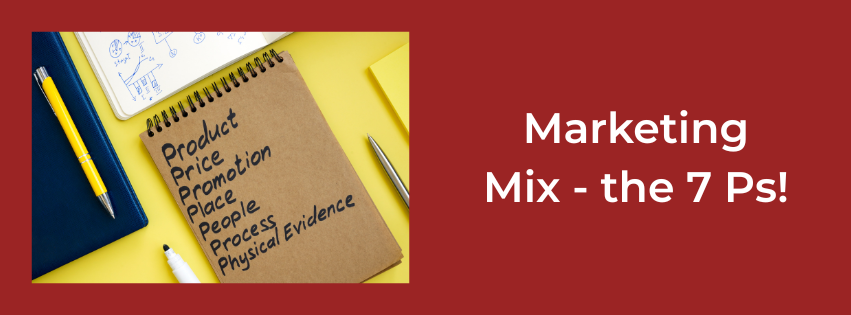
Marketing Mix – the 7 Ps

The marketing mix is not a new concept – it was first created by Jerome McCarthy in 1960 and consisted of the 4 Ps of marketing; Product, Price, Place and Promotion. Then in 1981, Booms & Bitner added three more Ps to the marketing mix; People, Processes and Physical evidence and these 7 Ps are now the set of key principles that are at the heart of all marketing strategies…often just referred to as the ‘Marketing Mix’.

How do the 7 Ps work?  

If we look at all of the Ps, one at a time, you will have a better understanding of basic marketing theory and this will really help give you a firm foundation, so you can write your marketing strategy.

The 7 Ps of marketing are a set of key principles that belong at the very heart of your marketing strategy. They are sometimes jointly referred to as the marketing mix.

The starting point, as most marketers know, when pulling together a marketing strategy is to identify your target market, so you know who your customers are, what they like and dislike and what makes them tick. Once you know this, you can look at the 7 Ps.  

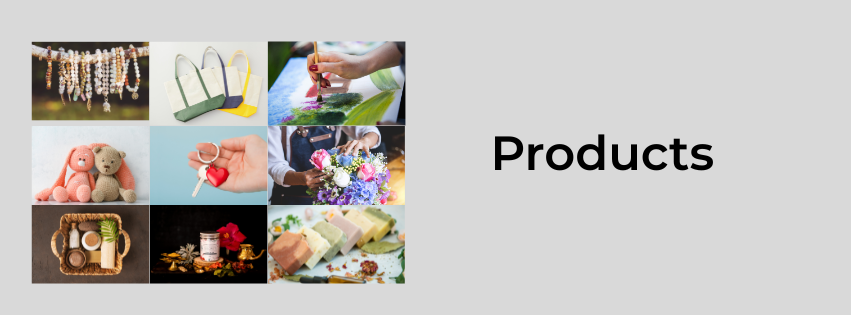
Product

Every product you sell, make, produce or think about making should have your customer at the very heart. It should solve a problem for them, or be something they need or want. It’s worth asking yourself, ‘What is it about my product that makes your customers want to buy it?’ Do you need to change or tweak your products in any way to meet your customers’ needs?

Your products should also be of good quality, and the research that you have done on your target market will give you the information you need to know about their tastes and their buying habits, so you can market your product in the best way possible to get the most sales.

Price  

There are lots of different things to consider when setting your price for a particular product or service you provide. Obviously it needs to be deemed as good value for money by your customers, but you need to take into consideration the costs of producing, promoting and delivering your product.

You also have to take the cost of a similar product that is sold by your competitors. Finding the right price for your goods is not just about undercutting the competition or offering a cheaper alternative. It’s about finding out, during your market research, what price your customer is willing or used to paying for products or services that are similar to yours.

For example, when you go to the supermarket to buy shampoo, whether you’re aware of it or not, you will probably buy a brand that is in what you consider to be in your price range. But, at the same time, you’ll probably look at other similar products on the shelf and are likely to try something outside of your habitual price range, just to try it…even though a cheaper alternative might be available! So, people don’t always go for the cheapest option.  

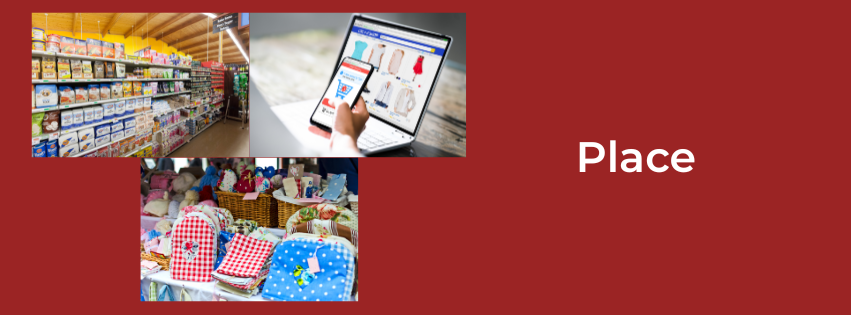
Place

Your product should be where your customers expect to find it. So where and how are you going to sell your products? Do you sell them yourself or outsource them to retail outlets? Do you sell from home via an online shop, sell online from your own website, or do you put them on a big selling website like Amazon? You might be a small concern and sell via party plan or on Social Media sites. It might be a combination of several ways.

Whichever way you choose, it must be where your customers will expect to find your products, and you need to take into account the shelf life of your products, so if you stock them yourself, you don’t find yourself with hundreds of products coming to the end of their shelf life and you can’t shift them.

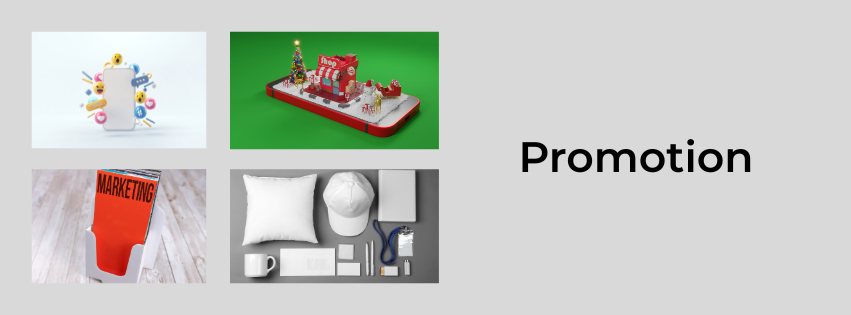
Promotion

This links into the place because, just as you need to put your product where potential customers can find it, you need to think about how you will let them know about your products through advertising.  And it needs to be where they will look and also what they look for. For example:

  • Social Media sites
  • Content marketing
  • Influencer marketing
  • Promotions and campaigns
  • Exhibitions or trade stands
  • PR
  • Direct mail
  • Personal selling
  • Advertising in newspapers, magazines, on radio etc.

People

This refers to the people who get your products out in the public eye, which includes you! Anyone who you employ or enlist help from to promote your business, or deliver a promotion or campaign need to have the necessary skills, qualities and drive to ensure its success.

You, and they, need to have excellent communication skills and deliver excellent customer service. After all, this is your reputation at stake and how you and anyone you employ behaves, impacts the way your customers will perceive you and your brand.

You might need to delegate some of the work to a Social Media Manager, for example, who will know when and how to promote, and importantly, what will work best for your business. So, you need people around you who are like-minded, will effectively market your brand and encourage customers to spread the word about your products or services. And, never forget to keep learning and training yourself and your employees to develop new and relevant skills that will further enhance your business.

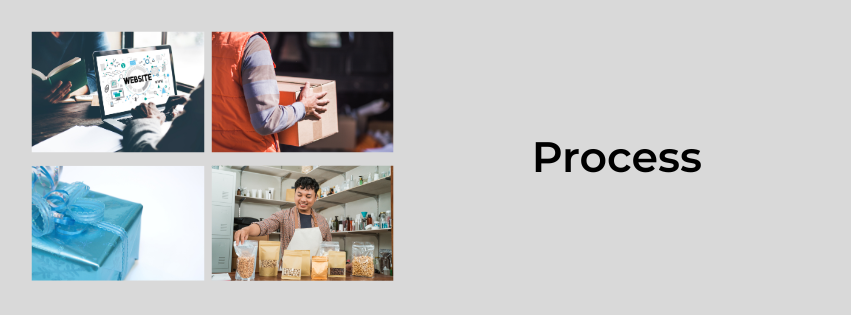
Process

The processes are what is involved in delivering your products to your customers. How your products are delivered will have a huge impact on the overall customer experience, their satisfaction levels and whether they will be loyal to your business in future. It’s absolutely vital to get this right from the very start.

Processes include:

  • Website experience – is your website easy to navigate? Are your contact details in a prominent or obvious place so you are easy to do business with?
  • Delivery time – do you have a good delivery process? Is it reliable? Does your website and product description (if selling online), tell people about delivery times and what they should expect?  
  • If your products are in a physical shop, what are the waiting times? Do they have to pre-order or can they just find the product in stock and in-store?
  • Aftercare – this is important too. Do you follow up after a sale to ask if the customer is happy with the product? If you do, and they are happy with your product, ask for a review to be left on your website or social media pages, or ask them to recommend their friends and family. You could even offer a 10% discount off their next purchase if they recommend you and that person buys from you.

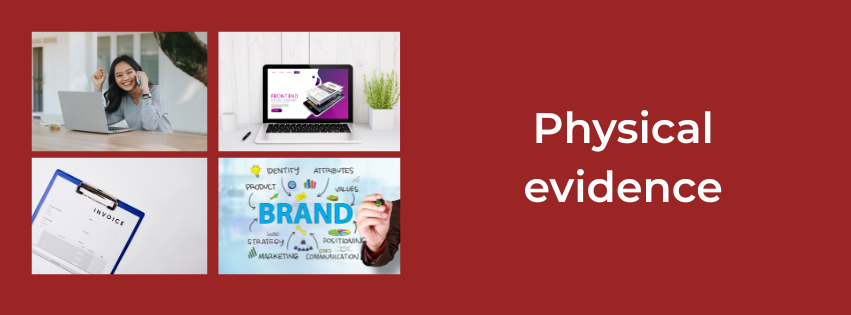
Physical evidence

Finally, the last P, is physical evidence. This refers to absolutely everything that your customers see and feel when interacting with your business. From the feelings your customers have when visiting a physical environment, such as a shop or office, to the area where you show your products or services, which may be online.

It cover all the physical equipment, such as invoices, receipts, confirmation emails, ‘thank-you’ cards, packaging and branding. All of these things make up the impression that customers will have at every stage of an interaction with you and your company or brand. People expect excellence in every aspect of business and they should get the quality and service that they expect…and of those that are set as industry standards.

It also includes how you act and relate to your customers. Are you awkward and aloof, or relaxed and friendly?

All these factors contribute to the overall customer experience, so make sure that your customers have a great one!   

Benefits of using the 7 Ps in your marketing planning

The 7 Ps gives you a fantastic framework for your marketing planning. It will help you do a thorough job, so for each product you sell, or service you provide, ensure that each one follows the best practices of the 7 Ps. After all, it is referred to as the ‘Marketing Mix’ – it is the right marketing mix to put in place to make sure that each campaign, each project, each product will be successful. The 7Ps can also help you look at previous projects or campaigns that were not successful. I’m sure you’ll find that they weren’t in line with the 7Ps.

As I said at the very beginning of this article, the 7 Ps are a set of key principles that are at the heart of all marketing strategies. They help make the different between instinct-led marketing and process-led marketing, which in most cases is a more sure-fire way to success.

I hope this article has helped you to understand how the 7 Ps fit in and why they are such an important part of marketing theory. Let me know what you thought about this article in the comments below. If you need help with your marketing planning, drop me an email and book a free 30 minute consultation.

Quick wins to get more customers


If you work for yourself, you will always be looking for new ways to get more customers, and this seems to be getting harder and harder, year on year. But there are a few quick wins that could help you on your way to getting more…

Make yourself or your business the answer to a problem. Is there a problem out there that you can solve with your products or services? Do some research online and find out…then market yourself/your business, letting people know that you have the solution to their problem.

Follow up on previous sales. Once you make a sale to someone or provide them with a service, don’t forget to follow up with them a month or so down the line. Just dropping them a simple email to say ‘Hi, hope everything is OK ‘and ask if you can be of further service to them. If you sell a product, or range of products, perhaps you can suggest one to them that they haven’t tried before. If you provide a service, perhaps there’s another service you provide which they hadn’t thought of…you just need to point out that they need it and why!

Know your audience. It’s much easier to sell your products and services if you know who you are targeting. Do you know who your target market is? Take a few minutes to think about what makes those people tick…what makes them happy, sad, relieved … how can you address any issues to make their life easier? There’s a workbook on my website, which can help you with this.

Hang out online. Answer your comments on your social media pages and hang out for a while! Get a conversation going and just generally chat with your audience. If you belong to groups, answer questions in comments and be genuinely helpful – don’t try to sell anything – if people like you, they’ll look for your page, where they can engage with you on a more regular basis. Be helpful, be friendly, share tips and stories!

Back to basics. Take a fresh look at your website and social media pages. Update your profile picture so it’s current, and make sure you are posting regularly. Make sure your website is up to date and that all the links work. Is your logo and online persona still relevant to what you do? If not, think about a re-brand. Make sure you have plenty of business cards and that they have all your up to date information on them. Distribute them to places where your target market may be….and think about getting flyers done to advertise your business…remember, that although we live in a technological world, not everyone is online, so there is still a need for hard copy advertising.

Be easily found! This isn’t necessarily an obvious one, but are you easy to find and contact? Make sure your contact details on your social media and website pages are up to date and easy to navigate. Give people options on how to contact you. For example, you might have a contact page on your website, but also give your email address, or a contact number – or tell them to message you on social media. It all helps!

Network with others. Find local groups or networking events, where you can meet like-minded people and exchange business cards and details. If you have a product and there’s a local trade fayre, go along and give out flyers and talk to as many people as you can. Don’t forget to also network online too on socials and in groups or forums.

Get yourself interviewed. Approach a local newspaper or radio station and try and get yourself interviewed about your business. You can take the tack of putting yourself forward as an expert in your particular field.

Are you selling online? If you sell a product at markets and trade fayres, let your customers know that you also have an online presence. If they don’t have enough cash or can’t afford your product at the moment in time, they’ll know where they can find you. If you have an email newsletter, get them to sign up to it so that they receive the latest news and information about your business.

Interview someone and post online. Arrange to interview an influential person in your niche – or soeone who does something complementary to your business. You can have a chat about what you both offer and how it works, both together or separately. You can then both post the interview in the form of a video post, podcast or use it for your blogs – you then get twice the coverage and reach not just your own audience but your interviewee’s audience too. Make sure you give details of both your businesses at the end, with details of where they can find you and/or contact you.

Offer a free trial of your product. Everyone loves a freebie and giving something away is a great way to get new customers. Make the free trial available for a limited time only, so instilling the idea that if they want a bargain, they need to do it ‘now’. Once they have the free trial, ask them for feedback so you can make improvements if necessary. and ask them to share their feedback in the form of a review.

If they love your product, they will look at what else you sell…you can also point them in the right direction, for example, “If you liked XXXX, you should try XXXX – I’m sure you’ll love it!”

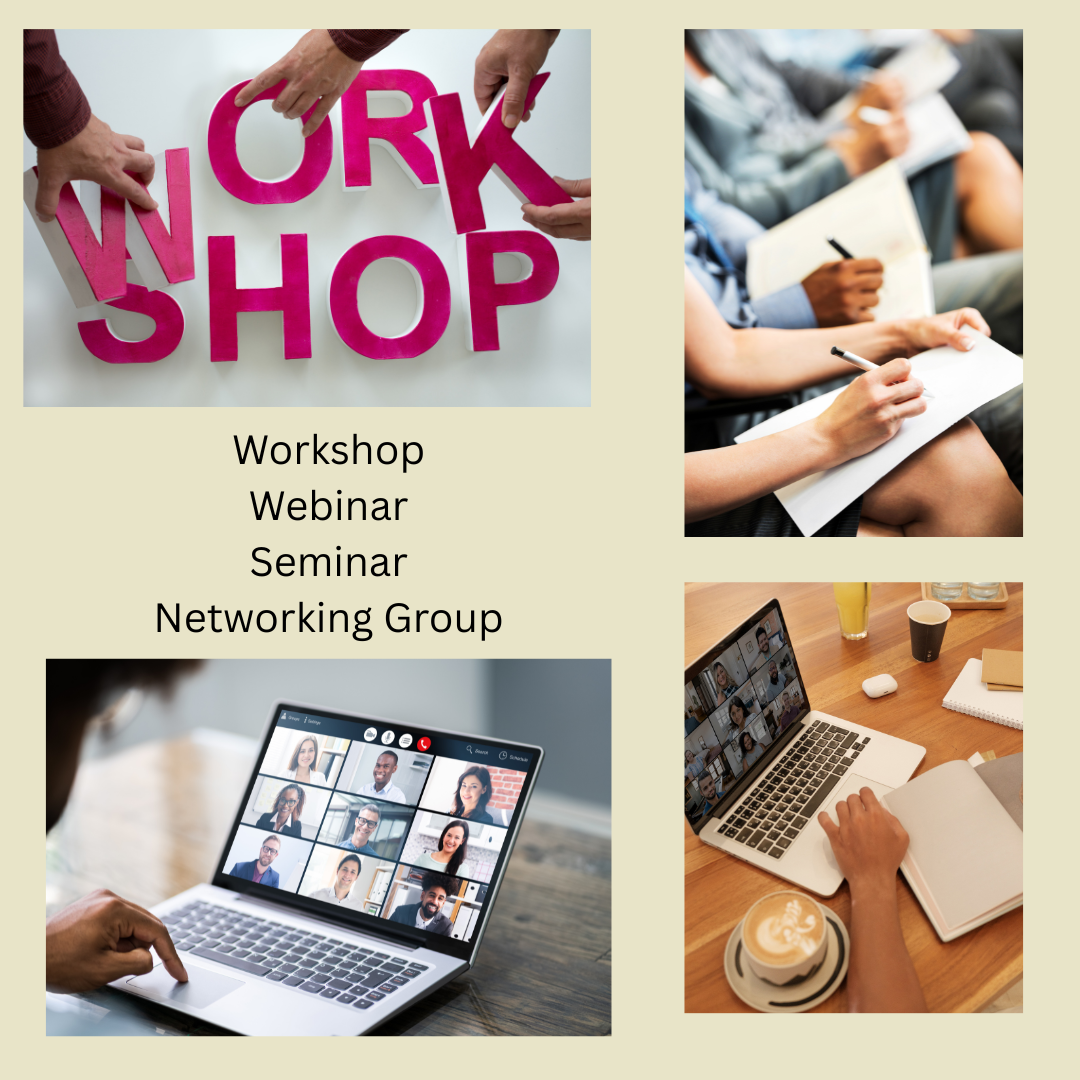
Think about setting up a face to face event. Although this might not necessarily be a quick win, face to face events work well to get yourself known, either online or in your local community.

If you do something that you could teach in a workshop, think about setting this up, so people can pay to come along and leave with something they’ve made themselves. You can advertise them for groups of friends, or you may know local groups of people who get together regularly – ask them if they’d be interested to do something fun as a group.

If you’re not comfortable doing a face to face, in person event, you could arrange a webinar, where you teach something online through video. You have the choice of showing your face or not.

You can also set up a networking group for people who do similar things to you to get together and brainstorm ideas, whilst having coffee and cake! Or, you could set up a Facebook networking group online – although be aware that this requires a lot of time to manage, so definitely not a quick win!

When you have gained new customers, which strategies have you employed? And what did you find was the most successful? It would be great to hear from you.

And you can always contact me for more help – I run several 1:1 coaching sessions that help you get clarity in where your business is going and how to do it.

How to reach your target audience

Once you have identified who your target audience is, the next thing to do is to find them! How do you do that?

Hopefully this article will answer those questions and fulfil the main goal of marketing…get the right message to the right audience, at the right time!

Here are a few ways that will help you decide how you can best connect with your target audience.

  • Any marketing you do needs to speak directly to that audience you have defined. This does sound pretty obvious, but so many people think that their products are universally appealing so are targeting everybody. It’s nice to think that is possible, but it is seldom true and that mind-set can get in the way of talking to the right people.
  • The next thing to do is to put yourself in the shoes of your target audience. It is most likely that they won’t know much about your brand, products or services as well as you do, so by seeing what you offer through different eyes, you can look for potential weaknesses or misunderstanding. Then the right messaging can be crafted.
  • Now you need to identify the best channels that will speak to your target audience. Now, there is not just one answer here, it will all depend on who your target audience are. So, when you did the research into your target market, what do they turn to for information?

    Do they read local magazines or newspapers? If they do, a local ad might do the trick.
    Do they listen to local radio? Could you get an ad on the radio or get in touch with the radio station and ask to be interviewed?
    Do they use social media and if so, what sites do they use? It’s no good putting everything on Twitter and Instagram, if they mainly use Facebook, for example.     

Building a communication/PR strategy  

Once you know who your audience are and where they like to get their information, now you need to get that information out to them. This does mean having some kind of strategy…I don’t mean another long and arduous document that you’ll do and never look at again, but a more pointed plan. So, let’s look at the strategies you could use…

Social Media

This pretty much goes without saying – most target audiences these days are on social media in one form or another. Social Media is a great way to engage people in conversations with your business. You can encourage people to follow your page by creating ‘follow’ buttons on your website that link to your social media pages. If you send out a regular email to your customers, add a follow button on that to get them engaged with your social media pages. You can also use ads on social media to attract followers.

Post content that you know will interest them and they’ll find value in. Ask questions in your posts and remember the 80/20 rule. 80% engagement and building a following and only 20% actually selling a particular product. If you only ever post details of your products and cost, people will lose interest. They like to get to know the person behind the brand, so engage with video content, podcasts, inspirational quotes, funny quotes, ask questions that may be related loosely to your product or service, do a ‘this or that’ – do you prefer coffee or tea for example.

Get into publications they read

If you know that your target audience like reading hard copy material, like magazines, trade publications or newspapers, you could put a small ad in it. You could also contact the publication direct and ask if your business could be featured. If it’s a newspaper, pitch a story idea to a journalist who writes for the newspaper, or ask if you can be interviewed. Alternatively, you could write an article and then submit it with a pitch to the relevant publication. This isn’t easy, but there are a few free courses and articles online about how to pitch to this type of media.

If you know that your audience read certain blogs, contact the blog owner and ask if you could write a guest blog article. Make sure that your SEO is on point with this, and also check the SEO on your website. It needs to be good to appear high in search engines, so take a look at your website and make sure it hits the mark, so it will be seen by your target audience.

Networking events

Join local networking events, as this is a great way to meet your target audience and talk about your business. Even better, if you can get a speaking spot to talk about a particular area of your expertise. You’ll not only be speaking about something that is relevant to your business and your target audience, you’ll also get the chance to mingle with your target audience afterwards. If you get a spot as a speaker, the event will be advertised with your name and subject, so you know that people interested in what you have to say will be in the audience.

Creative Content

OK, so now you know where and how to connect with your audience and how, let’s look at the content you share in more detail. This can be written content, video or podcast. It’s good to try out all the different forms of communication.

Appeal to emotions

People in general, are more easily moved to take action by their emotions than by anything else. Sometimes even good old logic goes out the window when emotions are involved.

For example, some of the big cat food manufacturers advertise on TV. Although the ads do focus on ingredients and how good it is, the product is mainly sold by the cute kitten talking to itself, or running around playing…or just sat there looking cute. There’s one brand of cat food that is described as ‘gourmet’ food. The cat in that ad is a pampered, long haired pedigree that looks a cut above the rest. This kind of advertising, using the right kind of images or video is what helps sell that product.

Solve a problem

If you have done your research on your ideal customer, you will know what problems they have…and how you can solve them. You just need to let them know that you can fulfil their needs and solve their problems. And, whilst it’s important to give the features of your product or service, all your customers really want to know is ‘what is in it for me?’ So, solve a problem they have and you are more than halfway there.

The time factor

Time, or the lack of it, is also a great marketing ploy. If you can communicate that your product or service saves people time, whilst also giving them what they want, for a price they can afford, you’ll be onto a winner. It’s a very busy world and people are constantly looking for ways to save time, so they are happy to listen to anyone who can help them save some of that precious time…and solve a problem for them at the same time!

DON’T push the sales angle

As I said earlier, use the 80/20 rule. I absolutely hate it when I sign up for something online – it might be a freebie, it might be something I pay for and in order to get it, I give my email address. I’ve not got a problem with that, but if I then get bombarded with emails in my inbox, I not only find it irritating, it’s usually about selling the same thing, something better, something bigger. OK, I get it, I’m happy to be asked once or twice, but some people send several emails a day over several weeks. In my mind, that’s just unprofessional and pushy. So I’ll unsubscribe…and might actually miss out on something I would have liked a few weeks down the line. I just can’t stand the hard sell. So it’s definitely about the getting the right balance on pitching products/services and engagement and building a loyal audience.

Ask questions

In order to connect fully with your target audience, you need to really know them. Ask existing customers and potential customers for feedback, so you can gain more information about their needs and wants. This could be via a poll on social media, or a survey to their inbox. There is no better way to get information about your audience than to ask that audience itself. You will gain great insight into what makes them tick and find out what they need, or what problems they might have. Then you can work to provide that need or solve that problem.  

Share and improve your Brand

Talk about your brand values in your content. This will engage people with the same values as you and will help you identify with your audience and to connect with them on a deeper level.  

Stand back and take a good, long look at your brand image. Read your website and social media pages through the eyes of your target audience. Does it speak to them in the way you thought it did? What could you do differently to improve it? Is your brand warm and inviting, or cool and aloof? Does it connect with your target audience? The way people perceive your brand goes a long way to deciding whether or not they will become a paying customer.   

Publish a case study

Whether you provide a product or a service, you will have a case study to share…a happy customer, someone whose life you made easier, or whose problem your product or service solved for them. What better way to advertise your business, than to interview a happy customer and ask them how your business helped them and why it is so good. This makes your business more real to your audience. It also gives your target audience the reasons why buying from you is such a great idea.

In today’s fast-paced world, it’s crucial to have a connection or a two-way conversation between your business and your target audience. It’s also really important to realise that, just because you have identified your target audience and identified how to get to them, that your job is done. Far from it I’m afraid. Every post you make, every campaign you run will show you how to do a better job next time around. And if you continue to ask for feedback and are willing to take criticism and ideas on board, tweaking what you do, you will get more and more effective results.

If you need help in identifying your target audience, there is a workbook on my online shop which takes you through the process step-by-step. Alternatively, you can contact me for a chat as I also offer coaching in this area.

Why is it important to understand your target audience?

You have a small business, you write beautifully crafted content, you engage on social media – but you’re still not selling. Why?

When you have a business, the ultimate decision about whether they are going to buy from you or not lies with your customers or potential customers. You can do as much as you possibly can to persuade people to buy your products or services, but without a strategy that provides personalised experiences for your ideal customer, you’re not likely to make many sales.

When you know who your target audience is and have a comprehensive understanding of who you’re talking to, you can create the right kind of content to attract that target audience. By having your own small business, you are competing with hundreds of other businesses who do the same as you, so having a marketing strategy is imperative to stopping your messages falling on deaf ears!

Why does your target audience matter?

I’d say that knowing your target audience is the most important part of your marketing strategy, for these reasons:

  • If you’re talking to everyone, you’re talking to no one. You don’t want to appeal generally to everyone out there, you need to appeal strongly to a specific group of people who are likely to want to do business with you…people you have a connection with.
  • If you know exactly who your audience are, you know what their pain points, or problems are. You can see their problems from their perspective and what obstacles they need to overcome to solve those problems. Then you can think about how your business can provide those solutions with your products or services.
  • Knowing your audience’s problems, you can work out how to market the solutions you have to their problems. You can show them how the features and benefits of your products/services can help them and why you are best suited to do that.
  • When you are creating content and forming new relationships with potential customers, you need to be able to speak their language. By this, I mean using the same terms and phrases that they use to describe their problems. Then you can build relationships by using that language to show that your business can solve those problems.
  • You target audience can also teach you how you can create better products and services that suit them best. You can use the understanding you have of their problems, along with any feedback

How do you identify your target audience?

Identifying your target market is all about three things: Demographics, Geographics and Psychographics. 

Demographics

  • What is their age and gender?
  • Are they married or living together?
  • Do they have children?
  • What do they do for a living?
  • If you know what they do for a living, what is their rough income?
  • Do they own their own home?


You can usually gain demographic information from your existing customers by simply talking to them. Social media accounts can also give you relevant demographic information. If your customers are on Facebook, for example, you can usually see information like date of birth, relationship status – people seem to love to share about their lives on social media, so you will probably see if they have children or grandchildren, what they do for a living etc.

  • You could also get this information from feedback you get. For example, if you make and produce quality rag dolls, you may have feedback that says, “Love your product, my daughter/grand-daughter loves her doll and hasn’t put it down since she received it.”  This tells you that your customer is a Mum and Grandma and that she likes buying things for her grandchildren.
  • Knowing the demographics of your existing customers makes it easier to tailor your marketing accordingly.
  • If you’re not sure who your target market it, go to Google and research some of your competitors, people who do the same as you, and look at their marketing techniques. Who are they targeting and how? What are the messages they are sending out? What images do they use? What media do they use to advertise? You will then have an idea of what direction you should be aiming for with your business. 

Geographics

This is the simplest – where do your target market live? Are they local to you? Just in a particular region? In the same country, but miles away – nationwide? Or international – in other countries?

Psychographics – why customers buy what they do

If demographics look at who your customers are, psychographics take you a bit further into their lives to find out why they buy the things they do. What motivates them and what makes them tick.

Psychographics include things like:

  • Interests
  • Activities
  • Religious beliefs
  • Attitudes
  • Personality
  • Spending habits
  • Lifestyle choices

If you combine the data you collect on the demographic and psychographics of your customers, you can paint a picture of what your potential buyer (or your buyer persona) will look like and who they are. Let’s have a look at one example …

Buyer persona 

Let’s say you’ve done your research, and this is what you have discovered…

Demographic data

  • Female, aged 40 – 55
  • Married with children
  • Household income around £45,000
  • Stay at home Mum who works part-time

Psychographic data

  • Interested in health and fitness
  • Likes to be eco-friendly
  • Is an active member on Facebook and Pinterest
  • Likes socialising with her small group of friends
  • Loves cooking

This demonstrates the difference between the two sets of data and why it’s important to gain both – you have more insight into what your customers might like. Then you can look at your products to see what would interest this kind of customer.

How do you make this relate to your business…and therefore your marketing? I’ll share some examples…

If you have a crafting business, for example, and your crafting activities were soap making or candle making, you’d know that this customer likes natural ingredients that are environmentally friendly and safe for children, so that could be part of your marketing angle.

If you are in the catering industry, making cakes or preserves, she might be interested in special birthday cakes for her family or in your preserves and pickles that use natural ingredients.

Her children are likely to have birthday parties and her friends are likely to have children of a similar age, so anything you make from a crafting perspective may be of interest – bunting for parties, toys, jewellery, etc. And as she enjoys socialising with her small group of friends, she may be interested in hosting an at-home party to buy your craft products.

Where to find her

Once you have this data, you’ll also know where to find her and this is especially important. She may attend local fitness clubs or gyms; she may visit a local spa; she will enjoy lunches out at restaurants or bars with her group of friends. This is where you could leave your flyers and business cards.

Now you know what your customer looks like and what she’s interested in, you can tailor blogs to suit her, you can make products you know she’ll like, and you can find out if she has any particular problem that your products can solve. 

How do your customers like to buy their products?

These days, I would hazard a guess that most of your customers will want to look at products/services online before they buy. They have such a wide choice that it’s important you make yours stand out. People spend their commute to work, breaks, lunch hour, evenings and weekends online, usually browsing through social media sites or looking for something specific. If you are not on these platforms then your products/services will not be found.

Selling online

Social Media is a great way to promote your products or services and to advertise what you do. But you also must bear in mind that not everyone is on social media. If your target market is in the older age bracket, they may prefer not to be on social media, so you will have to reach them another way.

Even though they don’t do social media, your target audience probably still uses the internet to search for things they want. You could set up an online shop.

A website is a crucial business tool – you can link it to your Social Media sites and vice versa. A website can help you reach a wider audience – it gives you a shop front that is open 24/7 – you can even sell when you are sleeping, and you can sell to anyone in the world!

You can put more information about yourself and your business and products or services that you can on social media and, if you have an online shop, you can point your customers to that site. Whatever you choose to do, there is always a marketing technique to support it. If you have a website, you can also choose to add a blog, which could also be a fabulous tool to write about your individual products or services … just another way to get your name/business out there.

I hope this article has given you the inspiration and information to dig deep into your target audience in more detail. I know that once you have all the relevant information, you’ll stand a much better chance of marketing your products or services in the right way…and get those sales.

Share this post to help other small businesses just like you. And if you would like help in identifying your target audience, you can always have a chat with me – or you can find a very helpful workbook on my website shop, which is a step-by-step guide – https://cindymobeymarketing.com/product/how-to-identify-your-target-audience-workbook/

Marketing your business with little to no budget

When you run your own small business, there is often little money left for a marketing budget, which can make marketing a bit of a challenge. But there are many ways that you can market your business to your target market without spending any money.

Having read a lot recently on social media about small businesses really feeling the pinch at the moment, I thought I’d have a look around to see what free marketing ideas there are out there.

I hope that these help you…

  • Create a free Google Business Profile. This is free to set up and you can add photos and updates with links to your blog posts or social media pages. It’s more of a local tool, so helps your business get found locally pinpointing you on Google Maps, as well as allowing a link to your website.  Your customers can also add reviews to your Google Business Profile.
  • Social media – Most of us have business accounts on Facebook and Instagram, and some of your will also have TikTok accounts, LinkedIn, Pinterest, X or one of the many other sites. Facebook still seems to be the most popular go-to place for people to search businesses. This is a great way to showcase your products and services, engage with your target market and find new communities to join and network with.
    Post regularly and consistently (it doesn’t have to be every day, so long as you are consistent). Share your human side, articles of interest, inspirational quotes, hobbies etc and as always my advice is the 80/20 rule. Share 80% entertaining, engaging, educational or inspirational posts and 20% selling.
  • Use hashtags – yes, these still work, so long as you don’t overdo it. The recommended number of hashtags used to be 30 per post, but these days it is advised to use around five. Use your own personal hashtag is you have one (or set one up) and use a variety of local and more general hashtags. Don’t go for hashtags that have millions of followers, or you won’t be seen – choose a variety between low and high figures. I personally wouldn’t recommend using those with over a million followers.
  • LinkedIn – this is one we often overlook and I’m just as guilty as the next person, but something I am going to try and do more of for the rest of this year. LinkedIn is a huge social media site – most use it to just add network connections, but you can share your blog posts and offers, talk about your business, have a conversation with the connections you make and join relevant forums and contribute to them – and you can share other businesses’ content.
  • Email marketing – this is a great way to get customers and potential customers engaged with your business. It’s a great place to build and maintain relationships. It’s not a new thing, but it is still one of THE MOST reliable ways to achieve new customers and maintain existing ones.
    There are free plans out there on hosting sites, but most want a small monthly subscription, but it is worth it if you use it correctly. When someone signs up to your email, give them an incentive, such as a money off voucher or a free checklist, e-Book etc. It’s a good idea to ensure that your email has an offer that encourages your readers to take the next step – that might be with a special offer you are running, a new product or service you’re promoting or perhaps a webinar or podcast you’re hosting. Your email is your direct link to your customers and potential customers, so ensure that the content is worth reading and that you show them the real value of your business and that you care about them. 
  • Ask your existing customers to refer you to their friends and family – you could also offer an incentive, such as ‘for every three customers that they refer who buy something from you, they will receive a 10% discount off their next order’.
  • Survey your customers – this is a great way to find out more about how your customers feel about the products or services they have bought from you. Ask them what they like best, what they like least etc. This gains you valuable information for future products or services. You can also ask for permission to publish their comments on your website or social media. 
  • Case studies – Use a real example of a problem you’ve solved for a customer, with a quote from them about how wonderful you and your service are. Turn this into a blog post, add it to your email marketing or post about it on your social media pages.
  • Have a website – this is a great place for you to give more details about you and your business. You can add an online shop, a blog, and a sign-up opt-in to your newsletter. Ensure your website is clear and easy to navigate, loads quickly (so keep image sizes small) and that it is engaging and gives plenty of useful information. Ensure that each page has a link to another page on your website to encourage visitors to stay a bit longer – this helps your ranking figures.
  • Write a blog – If you have a website, it’s a no brainer to have a blog. The reason? When you publish your latest blog post on social media, you point people to your blog post (and therefore your website0 where they may be tempted to have a browse. As with any other piece of content, a blog needs to be relevant to your audience and engaging. The good thing about a blog is that you can also repurpose the content to make other pieces of content for social media, email, podcast, webinar, YouTube video – the possibilities are endless!  
  • Free directories – as well as directories that you pay for, there are loads of free directories out there. Search for ones in your local area – this helps you get found more easily.
  • Attend networking events – if there is a regular networking event near you, they are well worth paying the small fee to join. You’ll meet other like-minded businesses and often pick up customers from those businesses over time once they get to know you. You can also join online networking events, which mostly don’t cost anything. If there isn’t a physical local networking event, why not think about starting one at a local café – coffee and networking always goes down well!  
  • Enter a business award competition – there’s nothing better than being able to say that you’ve won an award or a competition. Even if you don’t win but are shortlisted it’s still something to shout about. And either way, you can shout about it on your social media, website, in your newsletter etc.

I hope that this article has given you ideas on how you can promote your small business with little to no money. If you have any other ideas, put them in the comments – I’d love to hear from you!

If you need any help with any of the ideas above, you can always contact me for free 30-minute call.

How to write a blog post

A blog post is a great way to connect with your target audience, helping with engagement and helping to set you up as an expert in your field.

If you run a small business, blogging can help you attract customers, build trust, and improve your website’s visibility on search engines like Google. The good news? You don’t need to be a professional writer to create useful blog posts.

Here’s a simple step-by-step guide to help you get started.

Where do I start?

Choose one clear topic

The first task is to have a brainstorming session to generate ideas for your posts.Start with a question your customers often ask.

For example:

– Do you make bespoke, personalised items?
– Are your products eco-friendly or environmentally sustainable?
– How much is xxxxx

Keep the topic focused. One blog post should answer one main question.

Write a Simple Headline

Your headline should clearly explain what the post is about.

Good examples:

  • You sell gardening supplies – How to Prepare Your Garden for Spring
  • You are a small business – 3 Ways that our products are environmentally sustainable
  • You are a small business – this would be around transparency – How our products are priced to be competitive

Other more general posts could be:

  • A ‘how to’ post
  • A ‘what is…’ post
  • An ultimate guide
  • Tips and hints
  • A list-based post
  • Informational
  • Educational
  • A post about something personal that’s happened in your life

These are just suggestions – you’ll be able to write a good headline from the questions your customers ask you. Avoid trying to sound too clever. Clear is better than complicated.

Start With a Short Introduction

In the first few sentences:

  • Explain the topic
  • Tell readers why it matters
  • Let them know what they’ll learn

Example:

Writing regular blog posts can help small businesses attract more visitors to their website. In this guide, we’ll explain the basic steps to creating a simple and effective blog post.

Break the Content Into Sections

Large blocks of text are difficult to read online.

Use:

  • Short paragraphs
  • Subheadings
  • Bullet points
  • Numbered lists

This makes your blog easier to scan and understand.

Keep Your Writing Simple

Write the way you speak to customers in real life.

Try to:

  • Use plain English
  • Avoid jargon
  • Keep sentences short
  • Be helpful, not salesy

Remember: people usually read blogs to solve a problem or learn something new.

Include Useful Information

The best blog posts are genuinely helpful.

You can include:

  • Tips
  • Examples
  • Common mistakes
  • Step-by-step advice
  • Frequently asked questions

The more useful your content is, the more likely people are to trust your business.

Add images

Images help to break up the text, so incorporate a few images into your blog post

Add a Call to Action

At the end of the post, tell readers what to do next.

For example:

  • Contact your business
  • Go to your shop
  • Read another article
  • Sign up for a newsletter

Keep it simple and relevant.

SEO for Blog Writers: Simple Rules That Actually Work

-Write for humans first – Google second. If people stay and read, search engines notice.

  • One clear topic per post – don’t try to rank for everything at once
  • Put your keyword(s) naturally in the title, first paragraph, headings and meta description.
  • Use headlines that people search for. For example, ‘Best morning routine for productivity’
  • Make content easy to scan – short paragraphs, bullet points and sub headings
  • Answer a customers question – if your blog gets a comment or question, reply as soon as possible.
  • Add internal links – link to other articles you’ve written to keep readers exploring your site
  • Refresh old posts – updating posts can boost rankings without writing from scratch
  • Don’t keyword stuff – if it doesn’t sound right or sounds robotic – change it!

Don’t Worry About Perfection

Your first blog post doesn’t need to be perfect. The most important thing is to start.

Aim to be:

  • Clear
  • Helpful
  • Honest
  • Consistent

The more you write, the easier it becomes.

Press the publish button!

Finally, once you’re happy with everything, hit that publish button and your blog post is ready to share with the world.

Don’t just hit publish and run – you need to now do some work to get your blog in front of your target audience.

  • Share your post on all your social media sites, making sure you change the wording slightly for each platform.
  • Share in business groups when they have a ‘share your business’ day. There are several blogging groups too, which you can join and share your posts.
  • Tag influencers and use hashtags to get your content in front of your audience.
  • If you send out regular emails to subscribers, include a link to your blog, with a sentence or two about it.
  • Look on one of the Q&A sites and if your blog answers someone’s question, answer their question and link them to your blog for further information
  • Use analytics to track the performance of your blog   

 After that, it’s just a case of creating consistent content – be that once a month or once a week – whatever you choose, try and be consistent with that timing. Your blog will start to attract an audience and will start to establish you as an expert in your field.

So, set aside time each week or month to brainstorm ideas and work on your blog. I always carry a notebook with me, (but I am a stationery geek!). I often think of ideas when I’m out, so I can make notes about ideas, no matter where I am.

Final Thoughts

Blogging is one of the simplest ways for small businesses to share expertise and connect with customers online. By focusing on helpful information and clear writing, you can create blog posts that build trust and support your business goals.

Start with one topic your customers care about — and keep it simple.

If you need help with your blog and would like some bespoke coaching, drop me an email cindymobey@outlook.com

Happy writing and blogging!        

The pros and cons of blogging

Woman smiling while typing on laptop at desk surrounded by yarn and plants

If you run your own small business, be it a handmade business, craft brand, online shop, coaching business etc, you’ve probably heard the advice a hundred times:

“You should start a blog.”

And I know my opinions aren’t always popular, but blogging can be one of the most effective ways to build trust, improve visibility online, connect with customers, and grow your brand. But, as with everything, there are the good bits and the not so good bits.

Blogging also takes time, consistency, creativity, and patience.

For small businesses already juggling everything else and wearing hundreds of hats, adding “write weekly or monthly blog posts” to the list can feel overwhelming.

So is blogging worth it?

The answer depends on your goals, your available time, and how you choose to approach it. This blog post looks at the pros and cons or blogging for handmade businesses and smaller brands.


The Pros of Blogging

1. Blogging Helps Customers Find You Online

One of the biggest advantages of blogging is search engine visibility. A blog post is a great way to get your audience to your website. Website content tends to be pretty static, so having a blog that’s being updated regularly lets search engines know you’ve done something new and it will get pushed out.

When people search online for things related to your products or services, blog articles give your website more opportunities to appear in search results, especially if your blog title contains the right keywords. .

Let’s take the example of selling candles….blog post titles could be:

  • How to Choose the Right Candle Scent for Your Home
  • Best Gifts for Relaxation Lovers
  • Soy Wax vs Paraffin Candles
  • How Handmade Candles Are Made

These titles help potential customers discover your business naturally.

Unlike social media posts that disappear quickly, blog content can continue bringing traffic to your website for months or even years. For a small business, that’s worth its weight in gold!


2. Blogging Builds Trust and Credibility

People are more likely to buy from you if they feel that human connection.

Creating regular blog posts means you can share:

  • Your story
  • Your process
  • Your expertise
  • Your values
  • Behind-the-scenes content
  • Helpful advice

This is especially powerful for handmade businesses because customers often care and are curious about the person who makes the products. When they can see the time, care, and knowledge that goes into your work, your products become more meaningful.

A blog helps transform your business from “just another shop” into a real brand with personality and authenticity.


3. It Gives You Content for Social Media and Email Marketing

I’ve said this oodles of times before – you can repurpose your blog post into multiple pieces of contence, such as:

  • Instagram or Facebook posts and captions
  • Pinterest pins
  • Email newsletter content
  • TikTok talking points
  • Reels/videos
  • Educational content

Instead of constantly trying to think of something new to post every day, blogging can help give you ideas and content for your bigger marketing strategy, especially helping you save time and energy!


4. Blogging Helps You Stand Out From Competitors

Many small businesses rely entirely on social media.

The problem? Social platforms are crowded, unpredictable, and constantly changing. And, I’ve said this before too, you don’t own your social media accounts and they can be restricted or removed.

A blog is something you own!

A blog points your audience to your website and over time, that is what becomes the central hub for your brand, rather than just relying on platforms that can change their algorithms at the drop of a hat.

A thoughtful blog can also help distinguish your business from mass-produced competitors by highlighting craftsmanship, quality, sustainability, or personal service.


5. Blogs Can Improve Customer Education

Customers often have questions before buying.

Blog posts can answer common questions such as:

  • How products are made
  • Sizing advice
  • Care instructions
  • Shipping expectations
  • Product comparisons
  • Gift ideas

This not only helps customers feel more confident purchasing, but can also reduce repetitive customer service questions.


6. Blogging Supports Long-Term Growth

One of the best things about blogging is that it compounds over time.

The more helpful articles you publish, the more opportunities people have to discover your business.

Unlike paid ads that stop working when you stop paying, a useful blog post can continue generating traffic long after it’s written.

The Cons of Blogging

1. Blogging Takes Time

This is probably the biggest challenge for most small business owners.

Writing quality blog posts is not always quick.

You need time for:

  • Planning topics
  • Writing
  • Editing
  • Finding images
  • Formatting
  • Publishing
  • Promoting the article

For handmade businesses already wearing loads of other hats, blogging can easily come at the bottom of the pile, which is understandable.


2. Results Are Usually Slow

Blogging is rarely an instant-results marketing strategy.

Unlike a paid advertisement that can bring immediate traffic, blogs often take time to gain traction.

Search engines may take weeks or months to properly index and rank articles.

This delay can feel discouraging, especially when you’re putting in effort without seeing immediate sales, but believe me when I say it’s worth the wait. My blog took quite a while to get off the ground, but often when I’m researching an article or looking for information, one of my own blog posts pop up! It’s always a lovely surprise!

Consistency and patience are the name of the game!


3. Consistency Can Be Difficult

Many businesses start blogging enthusiastically and then stop after a few weeks.

The pressure to “post regularly” can become stressful.

The good news is that blogging does not necessarily mean publishing multiple articles every week.

For many small businesses, even one high-quality blog post per month can still provide value.

The key is creating a realistic schedule you can actually maintain.


4. Not Every Blog Post Will Perform Well

Sometimes you’ll spend hours writing an article that gets very little traffic and that can be so disappointing, but as with everything, blogging takes a while for you to find out:

  • Which topics attract readers
  • What your audience cares about
  • Which posts generate sales
  • What keywords perform best

Success takes time and patience, but believe me, it works!


5. You need basic SEO Knowledge

To get the most from blogging, it helps to understand at least the basics of SEO (Search Engine Optimisation).

That includes things like:

  • Using keywords naturally
  • Writing clear titles
  • Structuring articles well
  • Adding image descriptions
  • Linking between pages

This learning curve can feel intimidating at first, but once you get used to it, it will become second nature. The good news is that you do not need to become an SEO expert overnight! You can learn as you go along.


6. Blogging Isn’t the Best Fit for Every Business

While blogging can be incredibly useful, it’s only one way to market your business.

Some businesses find other ways work better for them, such as:

  • Video content
  • Local networking
  • Instagram marketing
  • TikTok
  • In-person events
  • Email marketing
  • Word-of-mouth referrals

If blogging feels forced or drains all your energy, it may not need to be your primary focus, but it’s definitely worth a try! And if it works well, you’ll be so happy you started!


So, Is Blogging Worth It?

For many handmade and small businesses, the answer is yes — but only when approached realistically.

Blogging works best when you:

  • Focus on helping your audience
  • Write about topics related to your products
  • Stay consistent without burning out
  • Understand that results take time
  • Treat blogging as a long-term investment

You do not need to publish perfect articles every week.You simply need to create useful, authentic, consistent content that reflects your brand and helps your customers.

Even a small blog can make a meaningful impact over time.


Tips for Small Businesses Starting a Blog

If you’re thinking about starting a blog, here are a few tips:

Start Small – Don’t commit to weekly articles immediately. Begin with one blog post per month and build from there.

Write About Real Customer Questions – Think about what customers ask you regularly. Those questions often make excellent blog topics.

Keep Articles Simple and Helpful – Try not to be too formal – keep your writing simple and friendly in much the same style that you write captions on your social media pages. Clear, honest, conversational content often performs best.

Repurpose Your Content – Turn blog posts into social media posts or stories, newsletters, reels/videos to maximise your effort.

Focus on Quality Over Quantity– One genuinely useful article is far more valuable than several rushed posts.


Conclusion

Blogging is not a magic solution for business growth. It takes effort, patience, and consistency.

But for handmade businesses and small brands, blogging can become a valuable way to:

  • Build trust
  • Improve search visibility
  • Connect with customers
  • Share your story
  • Strengthen your brand
  • Support long-term growth

The key is finding a balance that works for you.

Your blog does not need to be perfect. It simply needs to reflect your business, your expertise, and the value you bring to your customers.

And in a world full of fast content and constant scrolling, authentic and thoughtful writing still matters…and that’s where blogging is worth its weight in gold!

If you need help with starting your blog, or simply need help with keeping it going, contact me for a free 30 minute consultation to find out how I can help you and your particular business.

Of course, as well as a host of reasons why you should be blogging, there are some cons. It’s always good to know, so you can make up your mind as to whether it’s right for you.

Why use video for social media content?

Video is becoming increasingly popular on social media. It is a great tool for small businesses to help you highlight your brand, build loyalty with your customers, and attract new customers.

People are on their phones or devices all the time and they love watching videos – you’ve only got to look at how some of the TikTok dances have become a thing to see why. And who remembers the iced bucket challenge that was around a few years ago – it went viral with people from all over the world joining in and posting their own videos.

So why is video so important for small businesses?

Well, primarily, it’s good for your brand as video makes it more visible to a huge number of people. If you make a video using your products/services, it’s a good idea to use a logo watermark, as this will help establish that it’s your brand.

It also draws your audience’s attention. A video can grab attention quickly, compared to wordy text. The only problem is keeping it short, sweet and to the point, as people don’t have a long attention span! But practice makes perfect.

Video tips

So, when you make your video, here are some tips to keep in mind…

  • Ensure that the content is relevant to your target audience and is engaging enough to grab their interest.
  • Include headings and short descriptions, using SEO keywords and phrases so they will be found in a search.
  • Include relevant hashtags and a call to action.
  • Ensure that your video can be shared.
  • Think about using a video on your website or on your landing page for email sign up, so that your potential audience can learn more about you and your products/services in a more engaging way.
  • Try and inject some humour into your video where you can.
  • Show behind the scenes video – this helps your potential customers to see you have a transparent brand – people are generally nosy, so they like to see where and how you work.
  • Having yourself speaking in a video shows you are human, and people can engage with you, the business owner.
  • Videos can be made at any time and anywhere, so if you think of something you want to tell your followers and you’re at a coffee shop, go ahead and do it!
  • Video is low cost and more likely to remain online, available, and searchable for longer than ordinary text posts.

The most efficient types of video content for businesses are demonstrations, live performances, testimonials, ads of events and brand awareness, so it’s a good idea to keep that in mind.

You don’t have to be in the video and speaking if you don’t want to – you can show products or services with a musical background without actually having to appear in person.

Keep an eye on your engagement.

Just like any form of content that you put out, it’s vital to keep an eye on the engagement your video brings. You can see what’s working and what’s not! Then if you decide you want to use video for a paid ad, you’ll know what will work before you shell out any money.

You can see your engagement stats through the insights on all your social media channels, so it’s worth checking this out regularly for all your posts – not just for video.  

Conclusion

Video is a great addition to your social media marketing strategy. It helps your brand recognition and can help you reach audiences you may not reach with text/image only posts.

Just ensure that your video content is relatable and relevant to your target audience and just give it a go and see what happens! I think you’ll be pleasantly surprised!

Voice Search Optimization Strategy

Voice search optimization is becoming more popular and is going to really take off, big time, in 2025. It is the process of optimizing your website pages so that they appear at the top of search engine results when people use a verbal search to find what they want.

What exactly is voice search optimization?

In simple terms, if you want to find something on the internet, you can use voice search instead of typing in your request.

So, if people are doing this, you need to make sure that your website is optimized for voice search so there is the chance your web pages will be read out aloud by a voice search device. Even putting it simply sounds complicated! But it’s really not…

How does it work?

Loads of you will have experience of Alexa or Siri or you may even have used a voice search device to talk to Google.

So, you say ‘Alexa – how do I xxxxxxx’

This is voice search.

Then Alexa replies to you by reading an answer found on a search engine.

Siri is slightly different – for a lot of queries, Siri won’t read the answer to you but will tell you where you can find the answer on the internet – an answer that best fits the query you asked.

Again, when you ask Google a question, it’s different again. If you ask Google something on a device like Google Home, it will often tell you ‘I’ve sent a link in your Google assistant’ – then you have to go to your Google assistant to get the link and find your answer. 

Voice search optimization strategy

With more and more people using this form of search, a strategy for this is going to be vital for your business over the coming years.

According to WebFX, more than 55% of people use voice search to find businesses near them – this could be restaurants, cinemas, places of entertainment etc. But more are using it for local businesses for things they want to buy locally too.

More than a billion voice searches happen every month, and it is estimated that voice search will account for 50% of all searches in 2025, so if you have a small business you could be missing out on potential customers if you are not optimizing for voice search.

How do you optimize for voice search?

Voice search optimization is obviously linked to search engine optimization and the kinds of keywords and phrases that you put on your website, which will help people searching physically or verbally for what you offer.

There are a few ways you can optimize your content on your website. Let’s have a look…

Optimize for verbal queries!

When someone types out a query, it’s not going to be the same as when they ask a question verbally.

Example – Someone fancies making garlic bread.

They might type – ‘how to make garlic bread’ on their laptop.

On voice search, they may say ‘How do I make garlic bread?’

It’s only a subtle difference, but when someone asks a question, they’ll ask as if they’re talking to a real person – it’ll be more conversational.

Typed – ‘Recipes for chocolate cake.’

Voice search – ‘Show me some recipes for different kinds of chocolate cake.’

With voice search you are giving a command to your voice search device, (Alexa, for example).

So, for your website to be optimized for voice search, you need to optimize for conversational queries, just as you would find keywords for search engine optimization.

Let’s stick with chocolate cake – because we can (!) – let’s brainstorm questions people may have…

  • How do I make chocolate cake?
  • How do I make chocolate fudge cake?
  • What’s the best recipe for a chocolate fudge cake?
  • What do I need to make a chocolate fudge cake?

There will be all sorts of questions people could ask which are related to your products or services, so you need to have a good brainstorm to decide what questions people might ask.  If you need help with this you can use Google – type in one of the questions you have, and other questions will automatically appear under ‘people also ask…..’ in the search. This will give you ideas.

Then you need to ensure that these questions are incorporated into your website copy.

WHAT A FAFF!

I KNOW!

But important to stay ahead of the game!

Google Business Profile listing

I’ve talked about this before, and this is something that is a no brainer to pick up local business. If you haven’t set up your Google Business Profile listing yet, it’s worth doing it now. It’s free and will help you get found in your local area.

It’s a great tool as you can show your opening hours, link to your website, add your contact details, add photos and updates, as well as collecting reviews.

You’ll also want to add search engine optimization keywords and voice search optimization words and phrases too.

For example, if you make and sell candles, you might want to add ‘homemade candles in London (or wherever you live). Or ‘beeswax candles in London’ – you get the idea.

You can also use local slang and dialect for your area. For example, if you sell bread rolls – in your area they might be called cobs, or baps etc.

Give direct answers – don’t beat around the bush!

The bestway to address voice search optimization on your website is to have a frequently asked Questions and Answers section – FAQ.

By ‘answer a question directly’, I mean don’t fluff it out – state facts. For example…

Question could be ‘What do I need to make garlic bread?’

You can answer in two ways – directly and indirectly – look at the two example answers below.

Answer A – To make Garlic bread, you need a baguette, butter and 4 minced garlic cloves. Cut the baguette into slices without slicing all the way through.

Mix the butter and minced garlic together and spread in between the slices.

Wrap the baguette in foil and put in a hot oven for 10 minutes until bread crisp and butter melted.

Answer B – To make Garlic bread, you need just three ingredients. The first ingredient is a baguette or French stick. Then you need butter – you can use salted or unsalted butter, but I prefer salted, and 4 cloves of fresh garlic.

Take a sharp knife and cut the baguette into fairly thick slices, being careful not to slice all the way through the bread. Mince the four garlic cloves and add to the butter. Mash it up until thoroughly mixed.

Then, take the cut bread and carefully spread the garlic butter on both sides of each attached slice. BLAH BLAH BLAH..

Answer A is the way to go – short, concise and to the point. Don’t waffle and use unnecessary steps or phrases.

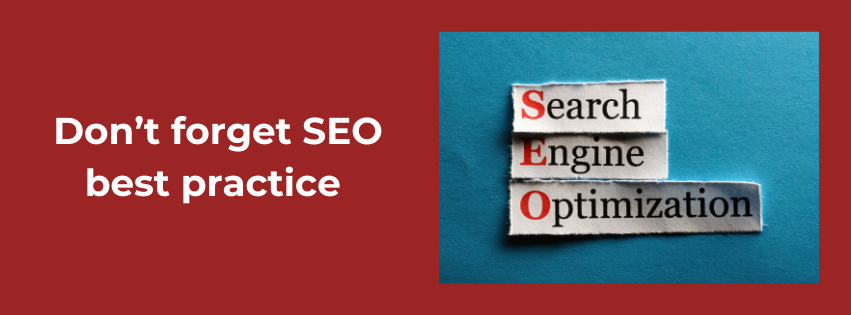
Use SEO (search engine optimization) best practices too.    

As I said earlier, you need to use both SEO and Voice search optimization for this to work efficiently. You need to have good SEO, so that your website appears near the top of search results – then voice search devices will search those top search results to find the answer to their questions – so you then need voice search optimization.

I’m not going to go into SEO in this article as I’ve covered it in others – see the links below…

You also need to make sure your website is optimized for mobile and tablet devices, as well as desktop or laptop, as people often use voice search on their mobile devices.  

Building your SEO Strategy part 1

Building your SEO Strategy part 2 – content

Conclusion

These are the basics for voice search optimization and I hope that it has helped you to understand what it is, how it is used and how you can ensure that your website is optimized so that you’re ready if anyone asks for something that you create or a service you provide.

If you optimize your website for voice search, then you’ll be on your way to driving more traffic to your website and ultimately driving leads and sales. Good luck!