How to write a blog post

A blog post is a great way to connect with your target audience, helping with engagement and helping to set you up as an expert in your field.

If you run a small business, blogging can help you attract customers, build trust, and improve your website’s visibility on search engines like Google. The good news? You don’t need to be a professional writer to create useful blog posts.

Here’s a simple step-by-step guide to help you get started.

Where do I start?

Choose one clear topic

The first task is to have a brainstorming session to generate ideas for your posts.Start with a question your customers often ask.

For example:

– Do you make bespoke, personalised items?
– Are your products eco-friendly or environmentally sustainable?
– How much is xxxxx

Keep the topic focused. One blog post should answer one main question.

Write a Simple Headline

Your headline should clearly explain what the post is about.

Good examples:

  • You sell gardening supplies – How to Prepare Your Garden for Spring
  • You are a small business – 3 Ways that our products are environmentally sustainable
  • You are a small business – this would be around transparency – How our products are priced to be competitive

Other more general posts could be:

  • A ‘how to’ post
  • A ‘what is…’ post
  • An ultimate guide
  • Tips and hints
  • A list-based post
  • Informational
  • Educational
  • A post about something personal that’s happened in your life

These are just suggestions – you’ll be able to write a good headline from the questions your customers ask you. Avoid trying to sound too clever. Clear is better than complicated.

Start With a Short Introduction

In the first few sentences:

  • Explain the topic
  • Tell readers why it matters
  • Let them know what they’ll learn

Example:

Writing regular blog posts can help small businesses attract more visitors to their website. In this guide, we’ll explain the basic steps to creating a simple and effective blog post.

Break the Content Into Sections

Large blocks of text are difficult to read online.

Use:

  • Short paragraphs
  • Subheadings
  • Bullet points
  • Numbered lists

This makes your blog easier to scan and understand.

Keep Your Writing Simple

Write the way you speak to customers in real life.

Try to:

  • Use plain English
  • Avoid jargon
  • Keep sentences short
  • Be helpful, not salesy

Remember: people usually read blogs to solve a problem or learn something new.

Include Useful Information

The best blog posts are genuinely helpful.

You can include:

  • Tips
  • Examples
  • Common mistakes
  • Step-by-step advice
  • Frequently asked questions

The more useful your content is, the more likely people are to trust your business.

Add images

Images help to break up the text, so incorporate a few images into your blog post

Add a Call to Action

At the end of the post, tell readers what to do next.

For example:

  • Contact your business
  • Go to your shop
  • Read another article
  • Sign up for a newsletter

Keep it simple and relevant.

SEO for Blog Writers: Simple Rules That Actually Work

-Write for humans first – Google second. If people stay and read, search engines notice.

  • One clear topic per post – don’t try to rank for everything at once
  • Put your keyword(s) naturally in the title, first paragraph, headings and meta description.
  • Use headlines that people search for. For example, ‘Best morning routine for productivity’
  • Make content easy to scan – short paragraphs, bullet points and sub headings
  • Answer a customers question – if your blog gets a comment or question, reply as soon as possible.
  • Add internal links – link to other articles you’ve written to keep readers exploring your site
  • Refresh old posts – updating posts can boost rankings without writing from scratch
  • Don’t keyword stuff – if it doesn’t sound right or sounds robotic – change it!

Don’t Worry About Perfection

Your first blog post doesn’t need to be perfect. The most important thing is to start.

Aim to be:

  • Clear
  • Helpful
  • Honest
  • Consistent

The more you write, the easier it becomes.

Press the publish button!

Finally, once you’re happy with everything, hit that publish button and your blog post is ready to share with the world.

Don’t just hit publish and run – you need to now do some work to get your blog in front of your target audience.

  • Share your post on all your social media sites, making sure you change the wording slightly for each platform.
  • Share in business groups when they have a ‘share your business’ day. There are several blogging groups too, which you can join and share your posts.
  • Tag influencers and use hashtags to get your content in front of your audience.
  • If you send out regular emails to subscribers, include a link to your blog, with a sentence or two about it.
  • Look on one of the Q&A sites and if your blog answers someone’s question, answer their question and link them to your blog for further information
  • Use analytics to track the performance of your blog   

 After that, it’s just a case of creating consistent content – be that once a month or once a week – whatever you choose, try and be consistent with that timing. Your blog will start to attract an audience and will start to establish you as an expert in your field.

So, set aside time each week or month to brainstorm ideas and work on your blog. I always carry a notebook with me, (but I am a stationery geek!). I often think of ideas when I’m out, so I can make notes about ideas, no matter where I am.

Final Thoughts

Blogging is one of the simplest ways for small businesses to share expertise and connect with customers online. By focusing on helpful information and clear writing, you can create blog posts that build trust and support your business goals.

Start with one topic your customers care about — and keep it simple.

If you need help with your blog and would like some bespoke coaching, drop me an email cindymobey@outlook.com

Happy writing and blogging!        
The pros and cons of blogging

Woman smiling while typing on laptop at desk surrounded by yarn and plants

If you run your own small business, be it a handmade business, craft brand, online shop, coaching business etc, you’ve probably heard the advice a hundred times:

“You should start a blog.”

And I know my opinions aren’t always popular, but blogging can be one of the most effective ways to build trust, improve visibility online, connect with customers, and grow your brand. But, as with everything, there are the good bits and the not so good bits.

Blogging also takes time, consistency, creativity, and patience.

For small businesses already juggling everything else and wearing hundreds of hats, adding “write weekly or monthly blog posts” to the list can feel overwhelming.

So is blogging worth it?

The answer depends on your goals, your available time, and how you choose to approach it. This blog post looks at the pros and cons or blogging for handmade businesses and smaller brands.


The Pros of Blogging

1. Blogging Helps Customers Find You Online

One of the biggest advantages of blogging is search engine visibility. A blog post is a great way to get your audience to your website. Website content tends to be pretty static, so having a blog that’s being updated regularly lets search engines know you’ve done something new and it will get pushed out.

When people search online for things related to your products or services, blog articles give your website more opportunities to appear in search results, especially if your blog title contains the right keywords. .

Let’s take the example of selling candles….blog post titles could be:

  • How to Choose the Right Candle Scent for Your Home
  • Best Gifts for Relaxation Lovers
  • Soy Wax vs Paraffin Candles
  • How Handmade Candles Are Made

These titles help potential customers discover your business naturally.

Unlike social media posts that disappear quickly, blog content can continue bringing traffic to your website for months or even years. For a small business, that’s worth its weight in gold!


2. Blogging Builds Trust and Credibility

People are more likely to buy from you if they feel that human connection.

Creating regular blog posts means you can share:

  • Your story
  • Your process
  • Your expertise
  • Your values
  • Behind-the-scenes content
  • Helpful advice

This is especially powerful for handmade businesses because customers often care and are curious about the person who makes the products. When they can see the time, care, and knowledge that goes into your work, your products become more meaningful.

A blog helps transform your business from “just another shop” into a real brand with personality and authenticity.


3. It Gives You Content for Social Media and Email Marketing

I’ve said this oodles of times before – you can repurpose your blog post into multiple pieces of contence, such as:

  • Instagram or Facebook posts and captions
  • Pinterest pins
  • Email newsletter content
  • TikTok talking points
  • Reels/videos
  • Educational content

Instead of constantly trying to think of something new to post every day, blogging can help give you ideas and content for your bigger marketing strategy, especially helping you save time and energy!


4. Blogging Helps You Stand Out From Competitors

Many small businesses rely entirely on social media.

The problem? Social platforms are crowded, unpredictable, and constantly changing. And, I’ve said this before too, you don’t own your social media accounts and they can be restricted or removed.

A blog is something you own!

A blog points your audience to your website and over time, that is what becomes the central hub for your brand, rather than just relying on platforms that can change their algorithms at the drop of a hat.

A thoughtful blog can also help distinguish your business from mass-produced competitors by highlighting craftsmanship, quality, sustainability, or personal service.


5. Blogs Can Improve Customer Education

Customers often have questions before buying.

Blog posts can answer common questions such as:

  • How products are made
  • Sizing advice
  • Care instructions
  • Shipping expectations
  • Product comparisons
  • Gift ideas

This not only helps customers feel more confident purchasing, but can also reduce repetitive customer service questions.


6. Blogging Supports Long-Term Growth

One of the best things about blogging is that it compounds over time.

The more helpful articles you publish, the more opportunities people have to discover your business.

Unlike paid ads that stop working when you stop paying, a useful blog post can continue generating traffic long after it’s written.

The Cons of Blogging

1. Blogging Takes Time

This is probably the biggest challenge for most small business owners.

Writing quality blog posts is not always quick.

You need time for:

  • Planning topics
  • Writing
  • Editing
  • Finding images
  • Formatting
  • Publishing
  • Promoting the article

For handmade businesses already wearing loads of other hats, blogging can easily come at the bottom of the pile, which is understandable.


2. Results Are Usually Slow

Blogging is rarely an instant-results marketing strategy.

Unlike a paid advertisement that can bring immediate traffic, blogs often take time to gain traction.

Search engines may take weeks or months to properly index and rank articles.

This delay can feel discouraging, especially when you’re putting in effort without seeing immediate sales, but believe me when I say it’s worth the wait. My blog took quite a while to get off the ground, but often when I’m researching an article or looking for information, one of my own blog posts pop up! It’s always a lovely surprise!

Consistency and patience are the name of the game!


3. Consistency Can Be Difficult

Many businesses start blogging enthusiastically and then stop after a few weeks.

The pressure to “post regularly” can become stressful.

The good news is that blogging does not necessarily mean publishing multiple articles every week.

For many small businesses, even one high-quality blog post per month can still provide value.

The key is creating a realistic schedule you can actually maintain.


4. Not Every Blog Post Will Perform Well

Sometimes you’ll spend hours writing an article that gets very little traffic and that can be so disappointing, but as with everything, blogging takes a while for you to find out:

  • Which topics attract readers
  • What your audience cares about
  • Which posts generate sales
  • What keywords perform best

Success takes time and patience, but believe me, it works!


5. You need basic SEO Knowledge

To get the most from blogging, it helps to understand at least the basics of SEO (Search Engine Optimisation).

That includes things like:

  • Using keywords naturally
  • Writing clear titles
  • Structuring articles well
  • Adding image descriptions
  • Linking between pages

This learning curve can feel intimidating at first, but once you get used to it, it will become second nature. The good news is that you do not need to become an SEO expert overnight! You can learn as you go along.


6. Blogging Isn’t the Best Fit for Every Business

While blogging can be incredibly useful, it’s only one way to market your business.

Some businesses find other ways work better for them, such as:

  • Video content
  • Local networking
  • Instagram marketing
  • TikTok
  • In-person events
  • Email marketing
  • Word-of-mouth referrals

If blogging feels forced or drains all your energy, it may not need to be your primary focus, but it’s definitely worth a try! And if it works well, you’ll be so happy you started!


So, Is Blogging Worth It?

For many handmade and small businesses, the answer is yes — but only when approached realistically.

Blogging works best when you:

  • Focus on helping your audience
  • Write about topics related to your products
  • Stay consistent without burning out
  • Understand that results take time
  • Treat blogging as a long-term investment

You do not need to publish perfect articles every week.You simply need to create useful, authentic, consistent content that reflects your brand and helps your customers.

Even a small blog can make a meaningful impact over time.


Tips for Small Businesses Starting a Blog

If you’re thinking about starting a blog, here are a few tips:

Start Small – Don’t commit to weekly articles immediately. Begin with one blog post per month and build from there.

Write About Real Customer Questions – Think about what customers ask you regularly. Those questions often make excellent blog topics.

Keep Articles Simple and Helpful – Try not to be too formal – keep your writing simple and friendly in much the same style that you write captions on your social media pages. Clear, honest, conversational content often performs best.

Repurpose Your Content – Turn blog posts into social media posts or stories, newsletters, reels/videos to maximise your effort.

Focus on Quality Over Quantity– One genuinely useful article is far more valuable than several rushed posts.


Conclusion

Blogging is not a magic solution for business growth. It takes effort, patience, and consistency.

But for handmade businesses and small brands, blogging can become a valuable way to:

  • Build trust
  • Improve search visibility
  • Connect with customers
  • Share your story
  • Strengthen your brand
  • Support long-term growth

The key is finding a balance that works for you.

Your blog does not need to be perfect. It simply needs to reflect your business, your expertise, and the value you bring to your customers.

And in a world full of fast content and constant scrolling, authentic and thoughtful writing still matters…and that’s where blogging is worth its weight in gold!

If you need help with starting your blog, or simply need help with keeping it going, contact me for a free 30 minute consultation to find out how I can help you and your particular business.

Of course, as well as a host of reasons why you should be blogging, there are some cons. It’s always good to know, so you can make up your mind as to whether it’s right for you.

Turn your blog readers into customers

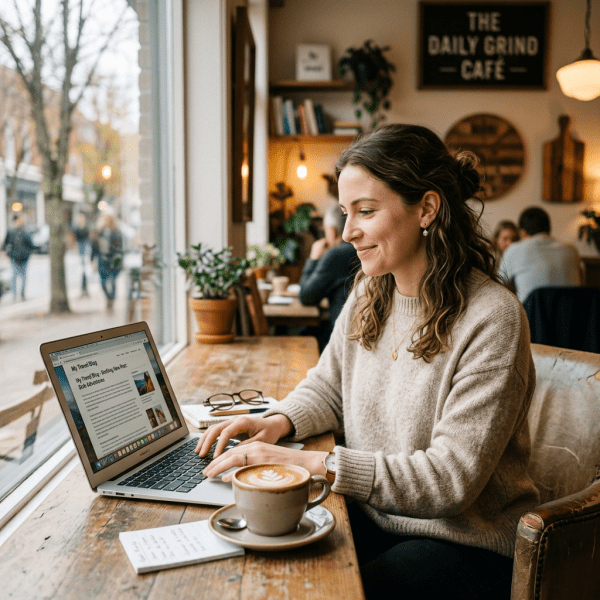
Woman typing on laptop at wooden table with coffee cup and notepad

Blogging can feel like a huge commitment for most of us…it takes up valuable time and energy to produce your once a month, or once a week blog. And whilst you may write your blog for fun or to purely engage with your audience, but it can also help you to convert readers into customers. So, what can you do to help make that happen?

Absolutely know your audience  

I find myself writing this all the time when talking about marketing, but it is really so important that you know your audience, especially when you’re writing content for them. Your audience will dictate how you write and what you write…and the language that you use. For example, if you write for a young, gaming audience, you will write for them – you wouldn’t write a blog the same way if it was aimed at a business audience or an older audience.

I’m a marketing coach, and in the past, I have written much more technically which I realised was talking more to my marketing peer group, not my target audience.

My audience are creative small business owners who want to increase their own profile online, engage their audiences and of course, sell their products or services. My aim is to teach my readers about marketing, so they have the choice to have a go at it for themselves, and of course, I want to help them with their choice, but ultimately I want my audience to come to me to help them with their marketing and content creation. It’s a fine line!

Just knowing who your audience is isn’t enough – you need to find out a bit more…ask these questions…

  • What age are they?
  • What gender, if appropriate?
  • What is their marital status?
  • What do they do for a living?
  • What are their interests outside of work?

And the biggie…What are the problems and challenges they face?

Once you have this information, you can pull together a profile of your ideal customer and use this to direct your blog content at.

Choose the right subject to write about

Now you know who your ideal customer is, and you know what problems they face or questions they have, you have your content.

The right way of course, is not to provide all the answers, which is something I’m guilty of! But this doesn’t mean you don’t provide a detailed article about how they can solve their problem – you can give information that is useful and actionable, but leave something that they can come to you for.

Call to action

It’s important to leave room for a CTA (call to action) that will draw your audience in, make them want to know more, or ask you for more help. I don’t mean asking directly if they want to employ you. It might be you encourage them to sign up for your newsletter, join your mailing list, download a freebie, listen to your podcast or watch a webinar you’ve set up. This won’t immediately make them a customer, but you’re leading them down the right path, and can help them see how you can add value to their business, or to their life.

For example, say you make and sell candles. You write a great blog post about the sustainability of your candles. Then you want your readers to find out more and look at your products. So, your CTA would be to point them to your website or online shop, or you might want them to sign up to your newsletter.

Content and the buying cycle 

Think for a minute about your own buying cycle. Let’s take an example that I had last summer. I was out on our sit-on lawn mower and it stopped working and made a strange whirring noise. I told my partner about it when he got home. I know nothing about lawn mowers and certainly wouldn’t have a clue how to fix it.

  • So, our first problem was THE NEED to get it fixed, but we’re not sure how.
  • The next obvious step is to find out what could be wrong. My partner goes onto YouTube and investigates the problem. He tries to work out whether it’s worth trying to fix it himself or whether it just needs a new part. This is the INITIAL RESEARCH stage. His research tells him that he needs a new drive belt.
  • My partner now has a solution to the problem. Now we have to find out who sells drive belts and where we can buy it. This is the FINAL RESEARCH.
  • Finally, the PURCHASE stage and we order the drive belt and pay for it.

If you are writing a blog with the idea of getting customers from it, you need to be targeting those that are at the INITIAL RESEARCH stage. Then you can give them the answers they’re looking for. But, it doesn’t stop there – you also want to make your content give total confidence in your product or service, so the blog takes them from that initial stage right through to the purchase…and show that your business is the right place to do just that!

The content needs to be longer than a social media post caption, but doesn’t have to be thousands of words. A minimum of 600 words is fine, but if you want it to be longer, that’s fine. It depends how much information you need to give.

The content needs to engage your readers, gain their trust and ultimately help them to see that you have that perfect product or service that solves their problem or meets their needs.

Content needs more than that…

OK, so you’ve let them see that you’re the perfect fit for what they’re looking for, but not all our readers look at an article in detail, so it’s really important to think about the format of your blog.

If you just write plain text, they might miss the point, so you need to make your content visually appealing.

  • Use bullet points to draw their attention to the important bits
  • Use short paragraphs
  • Use subheadings
  • Make sure that the font you use is easy to read and a decent size
  • And of course, use images to break up the text
  • If you want to draw attention to a particular part, use CAPITAL LETTERS or BOLD text…or both!

Include testimonials

How many times do you buy something without looking at the reviews of a product? I know I always do, as it gives me an idea of the product I’m going to order. For example, with shoes, some reviews will say ‘buy one size bigger, as these shoes are on the small side’. This helps me to make my decision to buy or not. So, include a testimonial in your blog if you can to sway your audience that your product is the best. Find a testimonial that says why your product is the best.  

Don’t digress

Don’t go off on a tangent and start talking about something else, make sure that you focus on the one product or service that you’re trying to sell or engage your audience with.

By all means, lead up to your point slowly and build a picture, but try not to get too distracted and don’t use too many links, as this will distract your reader.

Buy now!

Try and create some urgency around buying your product or service. I’m sure you will have heard of FOMO – personally I hate this expression, but in marketing it’s an effective tool. The ‘fear of missing out’ on something makes us want to buy it now.

Now, I’m not saying lie about your products – some people will say ‘FOR A LIMITED TIME ONLY’ and then 3 months later, you see the same CTA with the same product. So, if you’re saying a product is available for a limited time only or there are only a limited number of products left – make sure this is true. If it’s not, eventually your audience will see through this and that trust will be gone….and you defnitely don’t want that!

But, if a product is selling fast, you could say that – ‘Selling fast so get yours now!’ or ‘Order today to avoid disappointment’.

Don’t be too salesy

Finally, don’t be too salesy. Your audience will know you, they’ll follow your blog because they like to see what you have to say. They don’t want the hard sell all the time.

You need to be engaging your audience, they like you, so always start your blog with something personal, somewhere you’ve been or done – that builds that rapport. Then move on to giving advice and showing a solution to a problem.

Selling your product or service is obviously important, and your blog might be about a new product line you’re launching, so you are going to talk about how they can buy it. But focus more on the benefits and features of your product or service before you tell them where they can buy it.

Your readers trust you and trust your content. As my readers, you’ll know that I rarely use my posts to sell my business. Rightly or wrongly, I enjoy writing as it’s my happy place and I’m passionate about helping small businesses to grow. If I suddenly came over all salesy, I’d lose that trust and I’m sure, a lot of my followers.

Conclusion

It’s about getting the balance right. You don’t want to sell so hard that you destroy your reputation and your credibility. Writing a blog lets people know that you are an expert in your field and your followers will be confident that you know what you’re talking about. They may take a while to get to know you, but if they can see that you are knowledgeable and helpful, they will come back, and that will increase the chance that they will buy from you, or work with you in the future.  

If you want help with starting a blog or want to know how to improve it, get in touch and we can arrange a call.  

The Sunshine Blogger Award

Hi everyone,

A few days ago I was nominated for a Sunshine Blogger Award. It’s a different kind of award to the big industry awards in that it is an award by bloggers to other bloggers. What a fab idea to bring a bit of sunshine into our lives when everywhere around us is doom and gloom at the moment!  I was very honoured and so happy to have been nominated by someone I don’t personally know,  Debby Winter, as it means she has come across my blog, liked it and nominated me. That means a lot!

I’d like to take this opportunity to thank Debby and tell you a bit about her. She is an SEO blogger (Search Engine Optimization) and offers a range of low cost SEO services. She likes jogging, swimming and skiing and, if she could go back in time to any century, she would love to go back and sing with Homer and chat with Cleopatra! If you’d like to find out more about Debby and what she does, swing over to her website… https://debbyseo.wordpress.com/seo/

I have been blogging for a few years now, doing just a fun blog to start with about my new life in France with my partner. Then, when I started as a freelance writer, decided to start a blog about marketing to help small businesses.  

For those of you who don’t know me, I’m a Freelance Writer and Marketing Consultant for small businesses and I am based in France, although have clients in different places around the globe! That’s the great thing about an online business, I can write for anyone, no matter where in the world they are! Writing has always been my passion, so I’m lucky to be able to do it for a living. My blog articles cover marketing tips for anyone with a small business, from SEO to website pages, branding to social media.

Sunshine Blogger Award

My Nominees: Of course, the Sunshine Blogger Award isn’t an official award, but it’s a fun way of spreading motivation and inspiration. To get the flow going I have selected a handful of nominees and left a message on their blogs. If you read this and like to get involved (and why wouldn’t you?) don’t be shy and consider yourself nominated!! My nominees are

Wordstostoriesofficejockeystraveladdictedunicornjocajicsocialmediaandcoffeelittleconquestasociallyfataleoftooawkwardhistorymaniacmeganscatteredthoughts  

OK, now to answer Debby’s questions…

1) Are you familiar with SEO strategies? Have you optimized your site yourself? Did you do off site or on site SEO for your blog or website and are you happy with the results?
I am familiar with SEO strategies and I built, designed and optimized my website myself…both on-site and off-site SEO. I am happy but there is always room for improvement!

2) What is the most embarrassing clothing item you have ever worn?
A brightly multi-coloured shellsuit in the 1980s when I was a young Mum. I thought I was the bees knees at the time, but looking back, it was just awful!…and so was the overly big hair!

3) Have you ever intentionally broken the law? When? Where? and how?
No, I haven’t broken the law – I would have been too scared when I was younger of the wrath of my Mum and used to be married to a policeman, so it wouldn’t have gone down well! But now that I’m not……!!! 

4) If you were given $750 to spend on anything you wanted, what would you buy?
I would treat myself and my partner to a holiday in the sun when all this lockdown is over! And spend some of it on my lovely grandchildren!

5) If you had enough money that you never needed to work again, what would you do with your time?
I would still have to write, but would try all different types of writing and go to exotic places just to get the inspiration. My partner and I have said if we had loads of money, we’d buy property all over the world, so we could live in permanent Spring time!

6) If you could start over your life and change one thing, what would you change?
I’d have started my own business when I was a lot younger and found it easier to learn new things!

7) What do you consider your greatest strength, your greatest weakness?
My greatest strength has to be my sense of optimism, and I always try to see the good in everyone. Even though I’ve had my fair share of knocks in life, I always manage to get up, dust myself down and start all over again.
My greatest weakness is that I have a tendency to let my good nature be taken advantage of. And chocolate…I love chocolate! 

8) What have you tried lately that is new and exciting?
It’s not something I’ve tried yet, but I’m working up to it…doing live video and recorded video on my website and social media pages. I hate being in front of the camera but am both scared and excited at the same time.  

9) What was the greatest adventure in your life so far?
I went to India on a four week work assignment for my company’s charity arm. I worked with an NGO in Chennai – The Banyan, who help take mentally ill women off the streets and rehabilitate them. I worked with the NGO’s communication team, training them and pulling together a workable plan to communicate with their 100 employees across three different locations and in 16 different Indian languages. It was a huge challenge, but I loved every minute, absolutely fell in love with the country, the culture and its people and I have so many fond memories of all the people I met and sights I saw. I had never flown long haul before then and never thought I would have such an adventure, travelling by myself – it taught me a lot about myself.  

10) What makes you happiest and when you think about it you cannot help but smile?
My children and grandchildren. I miss them all so much and the lockdown means I probably won’t see them for a long while yet.
And I love singing with my partner, who is a musician – it’s lovely to have a hobby in common and something that you enjoy doing with your OH. 

11) Are some people’s lives worth more than others? Why or why not?
This is highly contentious! Generally no, I think we should all be equal and a life is a life and should all be cherished. But what about the people in the world who choose to rape, murder etc? Are their lives worth more than their victims? I’ll leave that one with you! 

My favourite articles:

My favourite articles on this blog are the ones around SEO and Hashtags and also the articles about GDPR. Risk was something I did a lot in my previous job and so this is something I’m very interested in and know a lot about. Not many people know but it is mandatory to have a privacy policy on your website (certainly if you are in the UK or Europe), so I also specialise in writing those pages. Check out my marketing services to see how I can help your small business get noticed and my writing services , where you can find out the services I offer.

Sunshine Blogger Award

My Questions:

  1. What social media channels do you use and why?

  2. What is the scariest thing you’ve ever done?

  3. What is your favourite pizza topping?

  4. What’s the number 1 thing you need most help with in your business right now?

  5. If you had enough money that you never needed to work again, what would you change?

  6. What is the weirdest smell you’ve ever smelled?

  7. What secret conspiracy would you like to start?

  8. What are your strengths and what are your weaknesses?

  9. What’s your favourite music album of all time?

  10. What has been your greatest adventure in life so far?

  11. What makes you happiest and when you think about it, you cannot help but smile?

THE RULES

* Introduce yourself

* Thank the person who nominated you and provide a link back to their site
https://cindyfreelancewriter.com/

* Provide a link to a favourite article on your blog

* Answer the 11 questions the blogger asked you

* List all rules and display the Sunshine Blogger Award in your blog post.

* Nominate 11 new bloggers and their blogs. Leave a comment on their blog to let them know they received the reward and ask your nominees 11 questions.

That’s all for now folks, if you liked this post don’t be a stranger and feel free to take a shot at it yourself, and remember to comment, like and share!

With love

Cindy Mobey