The Art of Persuasion

What is the art of persuasion? It is the ability to get others to see things as you see them, and it’s a key need for businesses of any size. From encouraging your customers to buy your products or services, to showing how your products or services are NEEDED by your target audience, the power of persuasion is key. And this is where marketing your business comes in.

I’ve recently read an article about Dr. Robert B. Cialdini, who wrote a book called ‘Influence: The Psychology of Persuasion’ in 1984. This feels like a long time ago now, but the ideas and principles he talks about in his book are even more relevant today, from a business perspective, than they were back then. In fact, the book and its principles has been hailed as crucial to marketing, especially around the area of converting people to customers. So, I thought I’d investigate this further, as I’d never heard of him.

Cialdini’s ‘6 principles of influence’ are:

  • Reciprocity
  • Commitment/consistency
  • Social proof
  • Authority
  • Liking
  • Scarcity

Do some of these sound familiar? Social media wasn’t a ‘thing’ back then, but we all know the term ‘social proof’ these days from our dealings with social media.

More than 30 years after publication, these six principles have been adapted to Internet Marketing, specifically around conversion rates. So, let’s dive in!

Reciprocity

This is about giving something to get a little something in return. According to Cialdini, this first principle of persuasion states that human beings are wired to return favours and pay back debts – to treat others as they’ve treated us. For example, if someone sends us a Christmas or Birthday card, we feel that we have to reciprocate – it’s almost a sense of social obligation.

But it is possible to use the desire to reciprocate to influence the behaviour of others. To do this, you need to give someone an unexpected gift – the value of the gift is unimportant, it’s about the act of giving. So, how does this work in business?

I’m not suggesting that you give all your customers a gift and expect something in return, it’s about the principle. For example, you have an email that you want people to sign up to – if you offer an incentive, some sort of gift or freebie, this will encourage them to sign up. If you write a regular blog and give really valuable information to your audience, when you put a call to action at the end asking them to sign up to your email, they are more likely to do so as they enjoy your blog and would like to hear from your more regularly.

Similarly, if you share consistent, regular, useful content, then when you launch a specific course, publish a book, or talk about your coaching, people are more likely to sign up.

Commitment

This is around people wanting their beliefs to be consistent with their values. For example, if someone thinks of themselves as a healthy, fit person, they are more likely to eat and do things that would be deemed as healthy.

So, from a business point of view, if you can convince potential customers to act a certain way, or think a certain way, they’ll be more likely to do that again in the future. For example, if you take cake into work for your co-workers and get a huge, positive response telling you how delicious it is, you’re likely to do that again – and eventually become known as the ‘cake baker.’

You can do this with business. I’ll use the email example again. If someone signs up to your email newsletter to get the freebie that you are offering, they will receive your weekly or monthly emails. Once they have signed up, they’ll likely start seeing themselves as customers and will eventually convert to a customer. All I would say about this is that it’s very important you don’t take advantage of them and manipulate the situation.

Consensus – Social Proof

This is evident on social media. It’s about feeling validated based on what other people are doing. We are all basically unsure of ourselves and identify with the people around us. If you work in an office and your co-workers offer to stay late to help with something urgent, it’s very likely that you’ll do the same.

If you see a restaurant advertised by a photo of their food photographed by one of your friends, with a caption saying how lovely it was – it’s extremely likely that you’ll want to try it too.

We humans are social by nature and generally feel the need to conform to the groups we belong to. This can also be used in business.

Here’s a great example. Hotel guests have the right to clean towels every day, but the cost of laundering is huge, so hotel owners would prefer it if their guests reused their towels. It has been found that a simple sign that says, ‘8 out of 10 hotel guests choose to reuse their towels’ is more effective and persuasive than a sign that says, ‘Reusing your towels helps the environment.’.

Authority

Generally speaking, it’s the tendency of humans to obey figures of authority – even if they’re not right. If someone wears a uniform, it’s even more likely we’ll accept what that person says – for example, police officer, Dr, nurse.

That’s why a lot of big brands bring in celebrities to advertise their products or services. Celebrities are influencers – they have an influence on the fans that follow them. And you’ll see toothpaste advertised by someone in a white coat pretending to be a dentist – but we don’t challenge that, we just accept it.

People who are authoritative, credible, and knowledgeable experts in their particular field are more influential and persuasive than those who are not. Cialdini recognised that the reason for this is that authority and credibility are some of the core building blocks of trust, so when we trust people we are more likely to follow them.

From a business perspective, building trust and credibility with your customers is crucial, but it’s also possible to build some of that authority and credibility through the recommendations of your satisfied customers. So, always a good idea to ask for a recommendation or review. And if you give them a recommendation, it’s very likely they’ll reciprocate and recommend you!

Do you see how that works?!

Liking

Does it really matter if you like someone or not? According to Cialdini, it affects the chances of you being influenced by that individual. It’s human nature that we’ll be much more likely to like people who pay us compliments, or like those who have similar interests to us.

This is something that marketing campaigns definitely take advantage of. The people they use in their ads are specifically chosen to appeal to their target market. The more the potential customer identifies with and likes the person, the more likely they are to be influenced by them.

To make this work in business, you simply need to be liked by those around you…networking helps with this, and we do it without even thinking about it. We see small businesses that we like and automatically pay compliments and start building relationships. But this does take time, you need to nurture and build those relationships before you can try to influence anyone.

I think out of all six powers of persuasion, this was the one that, once analysed, I was most surprised by! This is something most of us do in normal everyday lives.

Scarcity

Scarcity is about believing something is in short supply…so you want it more.

We’ve probably all been taken in by this one at some time or other. It’s that FOMO thing (fear of missing out). We’re more likely to buy something if we’re told it’s the ‘last one available’ or if a special deal is about to end soon.

Companies use this all the time. I’ve seen it most recently on a popular airline site. I was persuaded to buy my seat now, as the prices are likely to go up later – a kind of ‘lock into this price now’! It’s a great marketing ploy!

However, I would avoid doing this if it’s fake. Customers will see through you if you’re offering limited supplies or expiring discounts if you do this often.

Conclusion

These six principles that illustrate the art of persuasion can help us with small, practical, and even cost-free changes that can lead to big differences in our ability to influence and persuade others in an ethical way – so long as they are not abused!

Using surveys or polls for business

Using a survey or a poll is great way to understand what your customer wants. The answers you get can give you an insight into what your customers think of you and your business; what kind of service they want; and it gives them a chance to share their perspectives with you. If your survey or poll is engaging, then your customers are more likely to participate and spread the word about you.

The way I see it, surveys/polls have four main objectives…

  1. Getting feedback from existing customers about products or services that you have provided. Ask them if the product or service could be improved or if there was a way it would work better for them. You can use this to improve your services or extend your product line.
  2. You can use a survey to get testimonials from your customers. What worked well for them and why? You can then ask them if you can use their comment in your advertising or on your website/social media page.
  3. To find out what your customers want – is there an issue that needs solving…one that they’d be willing to pay for? If you know exactly what your customers want, you can develop products or services to fit their needs. This shows that not only do you listen to what they say, you act on it.
  4. They can help you find out what current buying trends are.  Online spending has been growing since lockdown, and an online survey or poll are two of the best ways to find out what your customers are thinking, how they spend and why they spend…and what they are spending their money on. If you ask the right questions,  you can gather this kind of information fairly easily.   

What questions do you ask?

There are many you could ask and I’ve listed some areas you might want to think about. When you are creating your questions, think about what you want to achieve…are you looking for ideas for new products or services? Are you wanting to know what needs to be improved? Here are some ideas and pointers that might help you… 

  • If you’re doing a poll, you might want to just stick to one question. You could do a series of polls over a number of weeks on a social media network.
  • If you are a blogger, you could ask your customers what subjects they might be interested in…for example if you are a beauty blogger, you might find that several of your customers have the same problem that you could address with a blog, such as ‘how to apply mascara properly’ or ‘what are the best products for sensitive skin?’ Answering questions helps set you up as an expert in your field.
  • Segmenting your customers will help you reach the right audience with the right message. A simple example…if you run a garden centre and you send out a regular newsletter, you could ask what plants your audience are interested in. Some may be interested in herbs and fruit – another in climbing plants – someone else in vegetables and flowers. You can then use this information to better target your marketing and communications.
  • Get feedback on your website…is it easy to navigate? Can your customers find what they’re looking for? Are there any areas that could be improved or any products/services they’d like to see you sell or offer?
  • Are you thinking of setting up an event? Events take up a huge amount of time and effort from planning to execution, so before you invest your time and money, you could create a poll or survey to find out what kind of event they’d like. Give several options and include an ‘other’ answer, as they may come up with something you hadn’t thought of.
  • Competitions – you can use a survey to host a competition. For example if you make cakes, you could put several pictures of cakes you have made and ask, ‘Which cake do you think deserves Cake of the Month’? This also serves to show potential customers what you can do and gives you the chance to show several different kinds of cakes you do. And for the competition aspect, you could offer a 10% discount to the winner. Which you draw at random from the participants.  
  • Finally – get a fun aspect in there! Polls in particular don’t have to be serious – if you just want to engage with your customers, ask a question. This could be something as simple as showing two of your products, labelling them A and B, and asking which one your customers like the best. Or you could ask, ‘What is your favourite ice cream flavour’, or ‘What is your favourite thing about travelling?’ Often, these kind of questions spark  interest and a conversation. I would advise not to ask anything controversial and avoid politics, current affairs or religion,!

Once you have your survey or poll, post it on your Facebook or Instagram account, or put it on your website. If you want specific information from your existing customers, you could include the survey or poll in your newsletter or on email.

If you do put your survey on your website, don’t do it so that it pops up the minute someone visits your site, as that can be irritating and can be seen as intrusive.

Final Hot Tip!

Everyone likes a reward, so offer some kind of incentive for your customers if they complete your survey. Give a free report or an e-book, or offer them a discount on the next purchase they make from you. Offer a further discount, or a free item, if they recommend five people who buy from you.

Good luck, and if you have done this with your business, let me know how you got on!

How to grow real followers on Instagram

In the early days of Instagram, it was the norm to buy followers, but although this might boost your followers in the short term, it’s a waste of time, as they aren’t your REAL followers – and they’re usually not your target audience. Real followers on your Instagram account are the people that engage with you and your business, love your brand and care about what you post.

There are more than two billion active users on Instagram, which makes it one of the top four social networks worldwide.

The statistics

These stats are current (2024) sourced from https://www.demandsage.com/instagram-statistics

Instagram is the third most popular social media platform worldwide

  • Monthly active users (MAUs) – 2 billion globally
  • Instagram daily active users (DAUs) – 500 million globally
  • Instagram stories reach 500 million per day
  • 49.4% of Instagram users worldwide are female, while 50.6% of Instagram users are male
  • The majority of Instagram users worldwide (62.3%) are between 18 and 34 years old.
  • 7 out of 10 people on Instagram check out stories daily, and nearly 9 in 10 Instagram users post stories daily.
  • 62% of people are more interested in a brand after viewing it on Instagram Stories
  • People spend an average of 29 minutes a day on Instagram

These stats are pretty mind-blowing, and I find these two stats particularly interesting.

26.43% of Instagram users have less than 1000 followers – that’s a big percentage – more than a quarter of all Instagram users!

At the same time, 49.94% of Instagram users have 1000 to 10,000 followers, which is also surprising! So, around 75% of Instagram users have 0 – 10,000 followers. So, this says to me that we really shouldn’t get hung up on the number of followers – we’re doing OK!

How to use Instagram for your business and grow your real followers  

As with any social media account, the downside is keeping track of everything, especially if you’re running your Instagram account as only a small part of your business. It can be very time consuming.

  1. Make sure you are using an Instagram business account. If you’re not yet doing this, either start a new business account or switch from a personal account to a business account.
  2. Have an Instagram strategy. The first part of any strategy is to know your target audience – the people to whom your post and marketing is aimed at.

    – Look at who already buys from you
    – Check the insights on all your social media channels to find out who follows you – what are their age group, their demographics, psychographics and geographics. Read my previous blog on finding your target audience for more information.
    Research your competitors to find out if your audiences vary and why.
  3. Set goals and objectives. You need to think about how Instagram can help you achieve them. Make sure your goals are SMART – Specific, Measurable, Attainable, Relevant and Timely.

    Once you know what your goals are, you can focus on the different aspects of your strategy to lead your followers through the various stages of the customer journey.

    – Awareness of your business and brand  
    – Engagement with what you post, which you can measure by the number of likes, comments, and shares.
    – Conversion – how many people click through to your website, follow your CTAs (calls to action), click on your blog posts or your online shop, or subscribe to your email newsletter. This also covers any people who respond by clicking on your paid ads if you use them.
    Customer – this stage is based on the action that customers take, such as buying, repeat customers, retention of existing customer, recommendations etc.
  4. Plan your content in advance. This doesn’t have to be on a particular app, you can just plan it on paper or on a simple word document or spreadsheet.

    Once you know who your target audience is and you know what your goals are and how you want to achieve them, you can plan your posts, stories, reels, and videos in a more structured way. Having a plan means you can include dates or events that interest you – the big ones such as Christmas, Easter, or Halloween, as well as things that interest you, such as Hug your pet day, or National Cupcake Day. Just do a search on Google to find a relevant list of these dates and decide which ones you want to highlight – or check out my FB/IG pages as I put a list of these dates up monthly.

    I also plan my content around the 80/20 rule – 80% of posts are about engaging, entertaining, educating and inspiring my audience – and 20% is about selling my services. You could choose to do a series of posts around a particular theme. For example, if you make something, you could run a series of ‘how to’ posts, using short video clips, and instructions with photos. These fall into all the 80% category!

    You can use video, memes, quotes, quizzes, ‘this or that,’ ask questions…the list is endless. And all of them are engaging your real followers and making them want to see more from you.
  5. Publish at the right time. You can look at your insights to find out when your followers are online and looking at Instagram. This tells you what days of the week and what time of day your followers are most active. Post at those times to get the most engagement.
  6. Create a fabulous bio. This is the first impression people get of you and your business, so make sure it tells your audience exactly who you are and what you do. There is very little time to make that good first impression. Show them why they should follow you. You only have 150 characters to do this, so keep it to the point and include some of your personality. Add a CTA, so people know what to do next – this could be a link to your website, blog or to your Linktree, where they have a choice of which link they’d like to go to next.

    For business, you should use the profile image – either a good shot of yourself or your logo – it’s up to you.

    Also, make use of the Story highlights. This is where you can have your stories organised into different collections – this could be one collection of products, about you, FAQs, hints, and tips – again the list is endless.
  7. Always share high quality content. Instagram is a highly visual platform so it’s crucial to organise your posts so that your audience will be able to instantly recognise that it’s you. There are several different grid layouts to choose from. Just search on Google for grid layouts and there are several great articles on the different types you can use. Using your brand colours and a good aesthetic will really help your business stand out from the crowd.

    Look at your competitors, look at businesses that are completely different to you and see what they do and how they organise their posts. Once you have decided, you can batch make posts and schedule them, so you don’t have to think about it too much once it’s done.
  8. Always write a caption. I do see several businesses that post fabulous images, but no caption. To me, the image doesn’t always mean something unless there is a caption. The caption explains your image in greater detail. Even if you’ve done a brilliant carousel post, where people swipe across several posts to find out more and more info, a caption is still needed to give a bit more information, or to ask a question to keep your audience engaged. Captions make your images more meaningful.
  9. Use stories. A survey carried out by Facebook in 2018 found that 58% of the participants became interested in a brand or product after seeing it in a story. It’s a great place to tell your brand stories, share reviews, share a bit about yourself and your business. You can engage your audience by using the many different features of stories, such as stickers, polls, etc. You can also use video and background music. If you’re consistent with your stories, you can get your audience into the habit of watching them regularly…and if they love what you do, they’ll be looking for your stories every day.
  10. Be consistent. You will hear this all the time, but whether you post every day (and you don’t have to), or post three times a week, make sure you are consistent, so your audience knows when you expect your posts.
  11. Always respond to comments, tags, or mentions. If someone takes the time to comment on a post or share your post and tag you in it, it’s only polite to acknowledge that fact. Always reply to comments and always reply to DMs. Taking the time to personally reply makes your audience feel valued. It can be time consuming, but it is so worth it. Another tip is to respond to the person by name if you can – it makes it more personal.
  12. Promote your Instagram account on your other channels. Instagram may not be your most popular channel, so if you have an established following on another channel, promote your Instagram account on that. Your regular followers will want to support you on Instagram as well. Try and vary the content between channels, so you are not constantly posting the same content…or at least do it in a slightly different order!
  13. Collaborate with other businesses. You can agree to engage with each other’s posts and share content to your stories. It does have to be relevant to your business, but this is a good way to get to other followers from a similar business to yours.
  14. Measure your success. When you use Instagram for your business, it’s really important to track your progress. Look at your insights to find out what kind of posts your audience is most interested in – what gives you more engagement.

    Look at how Instagram is helping you achieve your goals, and why some things work, and some don’t. It’s all a learning curve. Instagram’s insights only track the last 30 days, so you need to do this regularly and keep a note so you can compare future figures and facts.

Like all social media channels, Instagram is great for your small business if you use it properly and are consistent in what you do.

If you’d like to have a coaching session on Instagram, or would like a review of your profile, send me a message, or email me at cindymobey@outlook.com

Capture your audience with a fabulous Instagram bio

If you’re on social media for your business, you’ll know that there are millions of similar businesses to yours out there.

Research tells us that someone browsing online will make their mind up about you and your business within seconds. This doesn’t give you much time to impress those browsers. This is where your all-important Instagram profile is crucial – you need to find a way to capture that audience as quickly as possible.

To capture that audience, you need to be both creative and have a strategy.

Here are a few steps you can take to help you grab their attention.

Choose an image

For your business Instagram profile, you can use either a photo of yourself or an image of your logo. Either works well. I prefer to see photos, so I know the person behind the business, but either is acceptable.

Optimise your Instagram name

First of all, your name. Make sure that this is optimised with your name and a searchable keyword.

For example, say you are a photographer and specialise in new-born and family photos. You could include what you do in the name field – Jane Doe, newborn, and family photographer. Then in the category, you may choose to use Photographic Studio. This tells your audience what you do and that you have a dedicated studio for your photography.

Ensure you use a keyword that your audience are likely to search for and what you are known for.

Tell your audience about your skills  

This can be difficult and takes some planning as you only have a limited number of characters to use to get your message across.

This section needs to cover what your business is about and who you are targeting.

Reiterate what you do. You could use a mix of sentences and bullet points to entice people in and giving them a bit more information about you. For example…

Make lasting memories of your newborn & family.

  • 10yrs exp
  • South England
  • Book via website
  • Natural photos to treasure

This is very simple and straightforward but highlights exactly what Jane Doe does on the tin.

In the profile you can add a link, so add one to your website if you have one.

Use relevant keywords/phrases

Although Instagram won’t use these words or phrases in any searches, as searches are conducted on your name and username fields, using keywords can help you connect to your target audience and appeal to emotions. In the example above, think ‘lasting memories,’ ‘newborn,’ ‘family,’ ‘natural photos to treasure.’ They are all things we’re looking for if we want family photos.

You do need to know your target audience, so this is where a bit of work comes in to determine who they are, what they want and how you can give it to them. Your keywords or phrases will address their pain points and give them a solution to what they’re looking for.

Drive traffic to your website

As I mentioned above, your profile can include a link to your website. Although it is planned to be able to use more than one link in future, now, you can only use one.

So how do you choose? You might have a website, a blog, or an Etsy shop. You might also have a link to sign up to your email that you’d like to use. But you can only use one link!

You can opt for just one, or you can sign up to something like Linktree. It’s free to sign up and works by you creating a landing page on the Linktree site, which features multiple links to your other sites. You simply copy and paste your Linktree landing page URL into your Instagram bio and instantly your followers have access to all the things you do.

The only time I would change the link on your bio from Linktree, is if you are running a special promotion or offer. Then I would advise to change the URL to go directly to your shop, landing page or wherever your audience can get instant access to your offer. Sending them to Linktree, and another step in a chain to get to what they want, may put potential customers off. If you have an offer on, they want to get there as soon as possible.

Have a CTA (call to action)

Linked to driving traffic to your chosen link is a CTA (call to action). Put a sentence that tells people what to do…visit my shop, for example with an arrow pointing down to your chosen link.

Add your contact information

You can add your contact details to your business profile on Instagram. This includes your email address, phone number and actual address.

The best part about adding these is that it doesn’t take up any character space in your bio!

Be creative!

Once you have all the information that you want to convey to your audience, use any extra characters to be creative. You can use emojis, either just for fun, or to highlight bullet points or your CTA.

Use hashtags

Instagram always encourages its users to make use of hashtags. A hashtag, such as #newbornphotographer is used to categorise content and make it easier to find. You can click on hashtags and Instagram will show you a page that shows all posts tagged with that hashtag. So, it’s useful for getting your page found.

Instagram tells us that we can use the maximum number of hashtags in every post, which is 30, and up to 10 on a story. If you try to include more, your comment or caption won’t post.

But just because you can use 30 hashtags, it doesn’t mean you have to. There’s no right number, but the general opinion I’ve seen recently is that 10 or 11 is good for posts and just a few on stories. It’s best to do a bit of trial and error to see what works best for you. I tend to use around 10-12.

Conclusion

Who would guess there is so much to think about when doing your bio? As a quick recap, your Instagram bio or profile is the first things visitors see, so it’s important to make a good first impression.

Follow the simple steps I’ve mentioned, and you should be on the road to making that good impression. It’s worth taking your time to get it right.

Once you’re happy with it, show it some of your friends, or ask people in one of your networking groups to have a look and give you some feedback.

And remember, it’s not a ‘do it and that’s it’ thing either. It’s a good idea to revisit your bio every few months to make sure that it is still relevant to what you do, and still aimed at your target audience, as things can change.

Check out my blog page for more marketing help and tips to help you grow your small business.

cindymobey.blog

How to research your competitors

I hear conflicting things about competitors…some people say they don’t think about them and don’t care and others suffer imposter syndrome, where they don’t think they measure up.

Either way, it’s normal to wonder what other people are doing, and how they work…if you don’t care about your competition, I’d be asking why you don’t care? It’s good to care; businesses who do what you do ARE out there – some are doing well, and some not so well. I’m sure you see these phrases all the time – ‘We’re all on our own journey,’ or ‘we’re all on different chapters of our book.’ I’ve used them myself and this is of course, true, but there are things you can do to be as informed as you can about your competitors, which in turn, can help you stand out in the crowd.

Knowing who they are and what they do, can give you vital information that will help you to make your business successful. It can help you with the pricing of your products/services, so they are competitive and helps to know what kind of marketing campaigns your competitors do.

Again, I’m not saying that you find out the price your competitor charges and undercut them – no, not at all, but it can help you with a ballpark figure. And you don’t want to copy your competitors either, but doing a bit of research can help you find gaps in the market, which your business can then fill.

SWOT Analysis

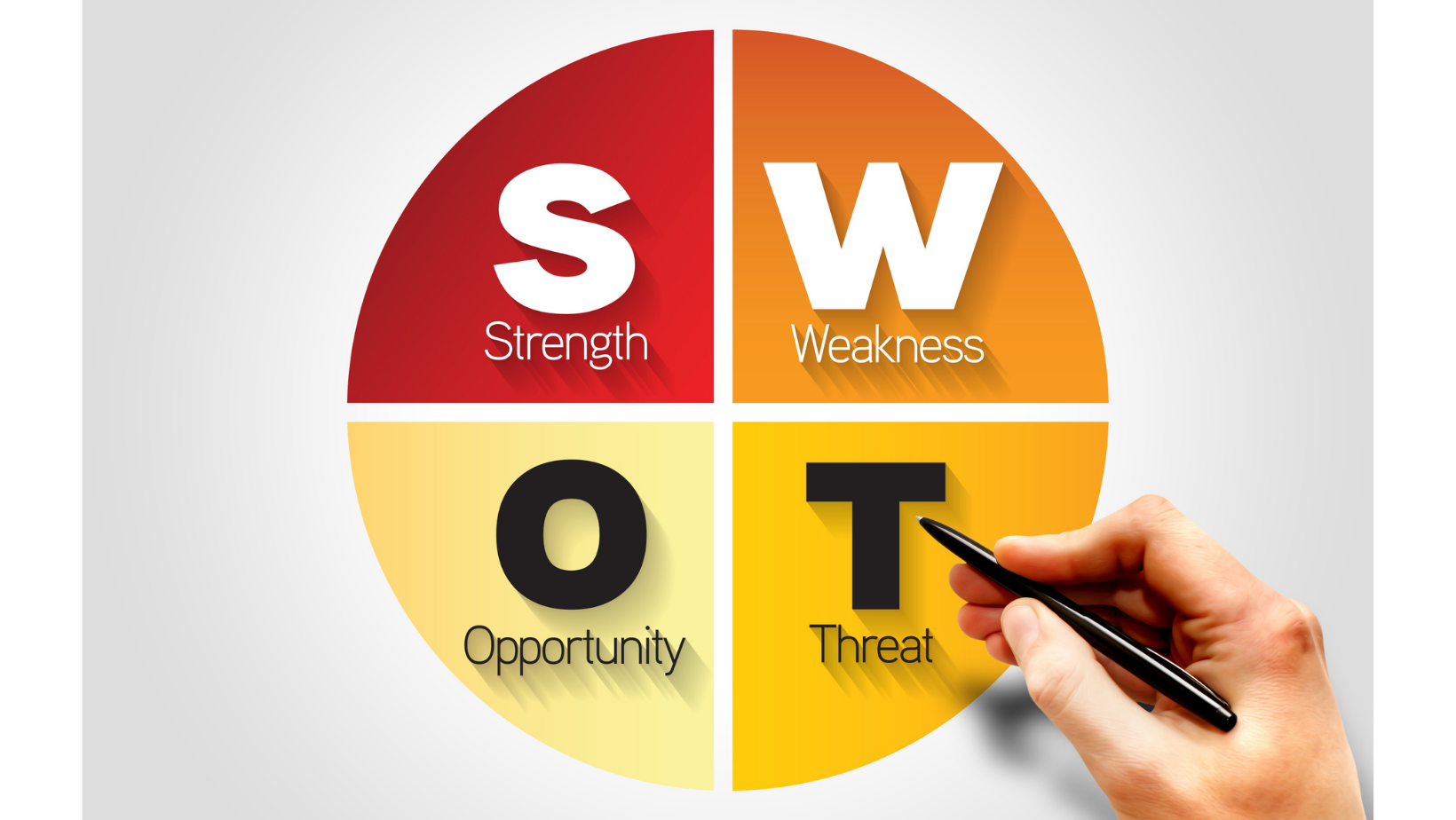
If you haven’t done a SWOT analysis on your business, now is the time to do it. SWOT simply stands for Strengths, Weaknesses, Opportunities and Threats. (Click here to find out how to do a SWOT analysis).

What strengths do you have and what weaknesses can you address and improve on? What opportunities do you have and what threats are there that need to be looked at?

Once you have identified your own, you can make a list of your top competitors and conduct a quick analysis on them. As well as concentrating on your own weaknesses, look at the weaknesses your competitor has – is there a way that you can improve on their weaknesses to make your business stand out? The same applies to threats. What threats do your competitors face that you could turn around or avoid?

What should you know about your competitors?

We all have competitors that do the same or similar to us. Since the Covid pandemic, more people work from home, or have launched their own online business. Consumers are turning increasingly to the internet to find what they want, be it products or services, so it’s even more important to know what other businesses do. Competition from other businesses isn’t just about being up against someone who sells the same as you; they could be offering something that you could also sell, or you might be able to offer a substitute that gives better value.

The best way to find out about your competitors

You will have your own customers and they are a great source of information about your competitors. I don’t mean interrogate your existing customers, but there are ways to ask them. For example, when a new customer buys from you, ask who they bought from before and what made them switch. Or ask them what attracted them to your products or services. You can ask the same of your existing customers.

The same applies when you lose a customer to a competitor – you can ask them what made them go to someone else. It’s sometimes a hard lesson to learn, but it’s best to know because then you can improve.

Look at what your competitors offer  

Here are a few ideas of the things you could look at:

  • The products or services that they offer
  • How much they charge for their products or services
  • Their customer service and how they manage delivery/refunds policies
  • Do they use any kind of loyalty programme or exclusive offers? Do they send out thank you cards or offer special incentives for customers?
  • Do they have an online shop or a website?
  • Look at their brand and how it defines what they do. Do they have a logo, a website, branded product information, leaflets, or flyers?
  • How does the way they speak to potential customers link to their brand? What tone of voice do they use?
  • Their social media pages – how do they manage it and what kind of things do they post?
  • Who owns the business and what their values are?
  • How do they advertise their business? Do they use print items, such as ads in magazines etc?

How to learn more

Learn as much as you can.

  • If they do events, such as fayres or markets, look at the kind of events they attend. Try and get along to one of them if they are close to you to suss out how they display their stall etc. Or, alternatively, go along to a local fayre or market and take note of how the stallholders treat their customers, what they offer and how they interact and set up their tables.
  • Do they work in collaboration with other businesses to get more sales themselves?
  • Buy from your competitor to see how they manage sales and after sales service. Look at the packaging and any little extras they put in with your order.
  • Do an internet search with their business name or personal name to see what comes up. You might be surprised! They might be affiliated to a charity or do something else as well that you wouldn’t know about from their business.
  • Join networking events, face to face or online. Here you can talk to people who do similar things to you. This is great, not just from a ‘finding out how other people do things’ angle, but also to make friends and talk to other like-minded people about business problems you may come across. These groups are often very supportive and within the group, there will be loads of different knowledge and experience. Someone always knows the answer to the question you want to ask. You might even find a business you can collaborate with, where your businesses complement each other. For example, if you do hair for weddings, you may collaborate with a make-up artist so you can offer a package or recommend each other.

Conclusion

Looking at your competitors is not about taking business from that person or being underhand in any way…I can’t stress that enough!

It’s just about researching the market and finding out what other people do and how they run their business, so that you are in a better position to compete in the marketplace. It may give you ideas you hadn’t thought of.

Best of all, we are all on a learning curve with our businesses, and we can all learn from each other. Being around other businesses, you can assess what you can improve on, and you can learn from other’s mistakes.

I hope this article gives you food for thought. What is your opinion on competitor analysis?

How to plan and organise an event

Events are extremely exciting to be involved in, but if you are the person responsible for the planning and organisation on the day, it can seem like a mammoth task. The key to having a successful event is being prepared and being organised is a huge part of that. If all your pre-planning is done meticulously, your event will go swimmingly.

I’ve pulled together a 10-point plan, which should help you think about every angle. This can be applied to anything from organising a craft fayre to a networking event for entrepreneurs.

Define the purpose of your event

What is the purpose of your event?

  • Are you raising money for charity?
  • It might be a networking event where a talk is given on a certain aspect of marketing/tax/pensions etc.
  • You might be teaching an audience something, such as a workshop for a particular craft or hobby
  • You might be organising a craft fayre, pet show or market
  • You could be planning a huge music event

The possibilities are endless, but having a clear purpose helps you to define who your audience is likely to be, what kind of structure you need etc.

If your event has a purpose, people understand what they are going to or signing up to and also know what they might get out of the event, be it professionally, personally, or just for pleasure.

What are your goals and objectives?

What is your ultimate goal? This will be WHY you decided to plan the event in the first place.

This is linked to the purpose of your event…but looks at the end result. What are you hoping that the event will achieve? It could be you want to establish a regular event every few months and this is the first of many. It might be that you want to drive sales for a particular product or make people aware of a particular charity or cause.

Then, look at the objectives.

Try and think of 3-5 objectives that support your ultimate goal.

For example, if this is your second craft event, an objective could be to increase the number of stalls by 10% from last time.

If it’s a charity event, you might want to raise 10% more funds than you did last time.

If it’s a first crafting event, you might have a number of stalls in mind that you want. Similarly, with a charity event, you might have a total amount in mind that you are aiming to raise.

Scope of your event

Once you know the purpose of your event, and the goals and objectives, you can start thinking about the scope of your event. This is the logistical side of things.

These are the key details.

  • When will your event take place? Give yourself at least three months to have time to plan everything.
  • Location – where will your event take place? Finding the perfect location is harder than you think. Depending on what kind of event you are organising, you need to think about the amount of space you need. If you’re organising a music event, you might need somewhere with a stage, for example. If you are having stands or stalls, you need to know how many you are likely to have, so you can ensure that the venue is big enough – and still have space for people to walk around easily – and that the stalls aren’t squashed together.

    You need to think about parking for people who will come to your event and have somewhere that can cater for drinks or something to eat.

    If you’re planning an outside event, you also need to think about a contingency plan in case the weather is bad, or you could end up with a cancellation, which can be avoided if planned up front.
  • How many people are likely to attend your event? This will have an impact on the venue and location you choose. Is it a local event, or are you planning to get people from all over the country to attend? Does your event need to cater for people to stay over? Do you need to look at local hotels or B&Bs?
  • What is your budget? This is an important one. You don’t want to be out of pocket after the event. So, you need to think about how much you will charge for people to attend, have a stall etc. If it’s a networking event or music event, how much will the ticket price be?

    Do you need to hire any special equipment…maybe you have a speaker for a networking event…they’ll need to be heard, so you may need a PA system. You might need equipment for slides etc.

    You can break your budget down into smaller chunks…

    – Venue cost
    – Marketing and promotion
    – Printed material and tickets
    – Speakers or musicians
    – Catering

    Some of these costs, you may be able to recoup by what you make on ticket sales, or pitch fees, but you may have to put some of the money into the event before it starts.
  •  Do you need a team of people to help? If you’re planning a small event, you may be able to do everything yourself, or with the help of a few volunteers, but you need to know how many people you need…and find the right people to help you.
  • With your team, decide on an agenda for the weeks leading up to the event and for the day of the event. Who will do what?

    Allocate specific tasks to the people who will do those tasks best. You will need to advertise and market the event – who will do that?
    You will need to get the right audience, so you need to think about how you will reach that group of people and target them.

    If your event needs to split into different sections – for example, a networking event. How will the day pan out? Will there be several speakers? Which order will they speak in? How long will they speak for?
  • Promote your event. You might put up posters if it’s a local event. Undoubtedly, social media will play a part, so you’ll need to have ads ready to put on social media pages.

    You might have an email list and send out emails to invite people. You might want to advertise on local radio if it’s a local event.

    Think about the best way to reach those that would be most interested in your event.

    If people must pay to participate or pay an entrance fee – how will this work? Do you need to have a float of cash? Will you have something in place to accept card payments?
  • Register participants. If your event means that you’ll have stalls, or several music acts for example, you’ll need to know who they will be in advance, so you can plan for space, catering, chairs, etc. If people will have stalls or stands, do they need electricity for their stand? How much space do they need for their tables? Will they bring their own tables?

    Think about all the logistics that you need to know in advance, so you can ensure that everything is in place, in plenty of time. You don’t want to be running around on the day, as someone suddenly needs electricity, and you don’t have enough extension leads or sockets.

Once you have all of this in place, you will be ready for your event. With the right planning and organisation – and an effective team of people to help you, things will run smoothly.

Risk/Contingency

There will be times when something goes wrong, or something unexpected happens. Wherever possible, try and produce a risk plan before the event. Make a list of all the things that could go wrong and how you will address them. For example, if you are hosting an outside event, what happens if it rains?

Having a contingency or risk plan, will make you feel much more confident if something does go wrong. And remember, even if something does happen, it’s usually something out of your control, such as a power cut or the weather. And there will be times when you just have to run with it and think on your feet.

Measurement after the event

Measurement is something that so many people don’t think of. This is a really important aspect of your planning, as you need to know if your event was a success or not.

It will largely depend on your goals…if you wanted to raise a certain amount of money for charity, for example, you’ll know whether that was a success virtually immediately after the event.

But if your event was something that involves other businesses, through networking or stalls, it’s a good idea to send out a survey after the event to ask what they thought of it, and if it worked for them and their business.

You can ask questions such as:

  • What three things worked well for you?
  • What didn’t work so well?
  • Do you have any ideas for any improvements for next time?
  • Would you come along again if we were to do another event?

You can also ask specific questions about the kind of event you did. You might want to ask about the catering, the venue etc.

Asking for feedback is so important for any future events you decide to do. If you get some good comments or compliments, you can ask if you can use those comments for advertising future events. And you can also use them to shout about how good your event was on social media. You can even put up a post asking people what they thought about your event.

Conclusion

I hope that this post has helped you think about the various aspects of organising or planning an event. If you go through the points and make sure everything is covered, I’m sure you will have a successful and smooth-running event, which will be immensely popular.

Good luck!

Let me know what you think in the comments.

How to market an online course

If you’re planning to create an online course, or even if you’ve already created your online course, you will need to have a robust marketing strategy in place to help you promote it to your target audience.

Before you create your online course

The first strategy really comes into play before you create your course. It’s important to know who you are aiming it at (your target market). So, how do you know this? Think about your ideal client and create a buyer persona.

So, you know who they are and what they do, how old they are, what motivates them and what interests do they have?

Create as many as you need as there may be different types of customers that you have in mind for your course.  

You can refer to these buyer personas when you’re creating your marketing content – it helps to know who your ideal client is, so you can tailor your content specifically to them.

What is your USP (unique selling point)?

Go into Google and look at courses that currently exist, that are based around the subject matter that you want to cover in your course. Make notes of what is included in those courses and how they are presented. Is there anything that they’ve missed? Are there any aspects that they’ve included that you wouldn’t?

Is there anything in the courses of your competitors that you think you could cover better or add more value to? Can you add in extra topics that your competitor doesn’t cover?

Putting a course out there means giving loads of value to the people that sign up. They want it to be jam packed with value, so they know that they’re not wasting their time and money.

Doing this kind of research will lead you to your USP…what is your USP? What is it that you do different to your competitors? What is the one thing that makes your business better than your competitors?

Once you know what that is, you can add it to your marketing messages. And the good thing is that when someone asks you what makes your course so special – or different to XXXX’s course, you have the answer!

Get information up front

Before you start making your course, you need to know if it is something that your audience want! It might be something you want to create, or something you think people will want. But, until you ask them, you don’t really know!

The best way to find this out is to ask! If you have an email list, or an audience on your blog, you can ask them what they’d be interested in learning about – you could send a survey to your email list. You can also ask people on your social media sites, or in the networking groups you belong to. Then create your course around what they want – not what you think they want.

Get to work

Once you know who your audience are and what they want, you can create your course. There’s just a little bit more research to do – what keywords or phrases will people type in to look for your course? You can research similar courses to yours, or you can use a keyword tool to look at the most popular keywords related to your subject. Then you can include those keywords in your title.

Once you are armed with all this information, it’s time to think about preselling your course. You need to treat your online course like a product launch…because basically that’s what it is.

Coming soon!

You want to try and create a buzz around your course, and one way is to create a ‘coming soon’ page. If you treat it the same way that you would treat a new product, you can’t go far wrong by building excitement and a buzz around the launch. You could just do a ‘coming soon’ page on your website, without giving away too much information…just the basic information! Then say that more details will be posted soon.

You can also use your social media pages to start some teaser information about your course. Don’t just talk about yourself and the course though – make sure that you give some valuable information to get your audience’s interest. For example, you could give away a checklist or cheat sheet that is linked to the information in your course.

You could set up a ‘sign up to show your interest’ page, either on your website, or on a hosting site, such as Mailerlite. When someone signs up to show interest, they get your freebie and an email that tells them a little bit more about the course. Then you have their email and can send them more details about the course as they become available.

If you run your own Facebook group, you can promote it there too.

You might send links to interesting articles you’ve found online about similar subjects to yours – you don’t have to just use your own content.

Start a podcast

You could start a podcast to highlight your expertise in your subject and talk about things related to your course material. Podcasts are great for interviews, so if you have done a course before, or have been running a pilot course with a targeted group of people, you could interview one of them to ask what they got from it.

If you do a podcast though, in the same way with anything that you give away, make sure that you don’t use the same information/subject matter that you’ll be using in your course, as they won’t be happy if your online course that they pay for, is the same content as the stuff you’ve been giving away for free!

Connect with your audience via an online webinar

In the same way as you can create a podcast, you can also run regular webinars…or even a one-off online webinar. You can pre-record these and cover some of the things you know that your audience struggles with – and give a solution to some of their pain points. Again, make the subject matter different to the course content you’re creating.

Running these kind of presentations gives your audience an idea of what you’re like to work with. You’ll no doubt get questions, which may give you ideas to include in your online course. It will also give you feedback, which you can use to show the value you give your audience. This all helps give credibility to your business.

Into the launch phase!

Now you’ve done the ‘coming soon’ stuff, which may have gone on for a couple of months or more, now is the time to promote the course date and more details.

You can still use all the things you used pre-launch, such as podcast, social media, your blog, or email newsletter, or even a webinar. Now is the time to ramp up the communications.

Paid Ads

Paid Ads can be an effective way to advertise your online course. Even a simple Facebook post boost can help with this kind of content. You can target them to a specific audience, they don’t have to cost a lot and you can track their success. I can’t specifically say, with hand on heart, that paid Ads are worth it or that they work, as I have never felt the need to use them myself. But it is something I will try when I do decide to create my own online course.

You just have to make sure that you factor in the cost of these Ads, as they can be quite expensive. Just make sure that whichever platform you use for Ads, that it is a platform that your target audience uses.

Team up with others

Another good way to get your course out there is to team up or buddy up with other businesses…preferably not businesses who do the same as you, but those that you know and like – you need to like or be interested in the kind of things your buddy posts in order for this to be successful – otherwise it’s just the same as doing like for like, or follow for follow, which really doesn’t work.

So, ask people who you regularly interact with and agree to like, comment on, and share their posts or stories, as well as doing shout outs to each other.

This helps you, but could also lead to partnerships in the future, especially if the business you partner up with does something that complements your business. They may even be able to be a guest speaker on your course, or be an interviewee on your podcast, blog, or webinar. The possibilities with partnerships is endless.

Teaser Mini Course

Earlier I talked about a teaser on social media for preselling. Another idea would be to create a mini teaser course, just a few weeks before your main course goes live.

This is a free short course that gives people a taste of what you do and the value you give. At the end of the teaser mini course, you can give the option to sign up to your paid course, where they can find out much more and get even more value from you.

The other thing about creating a mini course, is that the audience that sign up will realise how little they actually know about your niche and will be wanting to know more.

Offer a discount

You can also use a discount offer to entice people to sign up. For example, the first three people to sign up get 50% off – or whatever figure you decide to go for.

Create a sales page

You’ve done your ‘coming soon’ page; now it’s time to create your course sales page or landing page. A landing page is a page on your website, or on a hosting site like Mailerlite, that is dedicated to purely selling your online course. This is where you can go to town with advertising what, specifically your course will cover.

Talk about the benefits of the course – what’s in it for your audience? What problems does your course solve? What will your audience go away knowing that they didn’t know before? How will it help them or their business in future?

Include testimonials from those who did your mini course or those who have listened to your podcast, read your blogs, or have commented on your newsletter. You may have feedback from the survey you sent out that you can use. Just remember to always ask permission from the person who gave the feedback if you’re going to use it to advertise your course.

Make sure that the content of your course is really clear, so your audience know exactly what they’re signing up for.

And, don’t forget to include a CTA (call to action), such as a button saying, ‘YES, SIGN ME UP NOW!’ Always make it short and snappy and make it sound urgent, like you mustn’t wait to sign up – do it now!

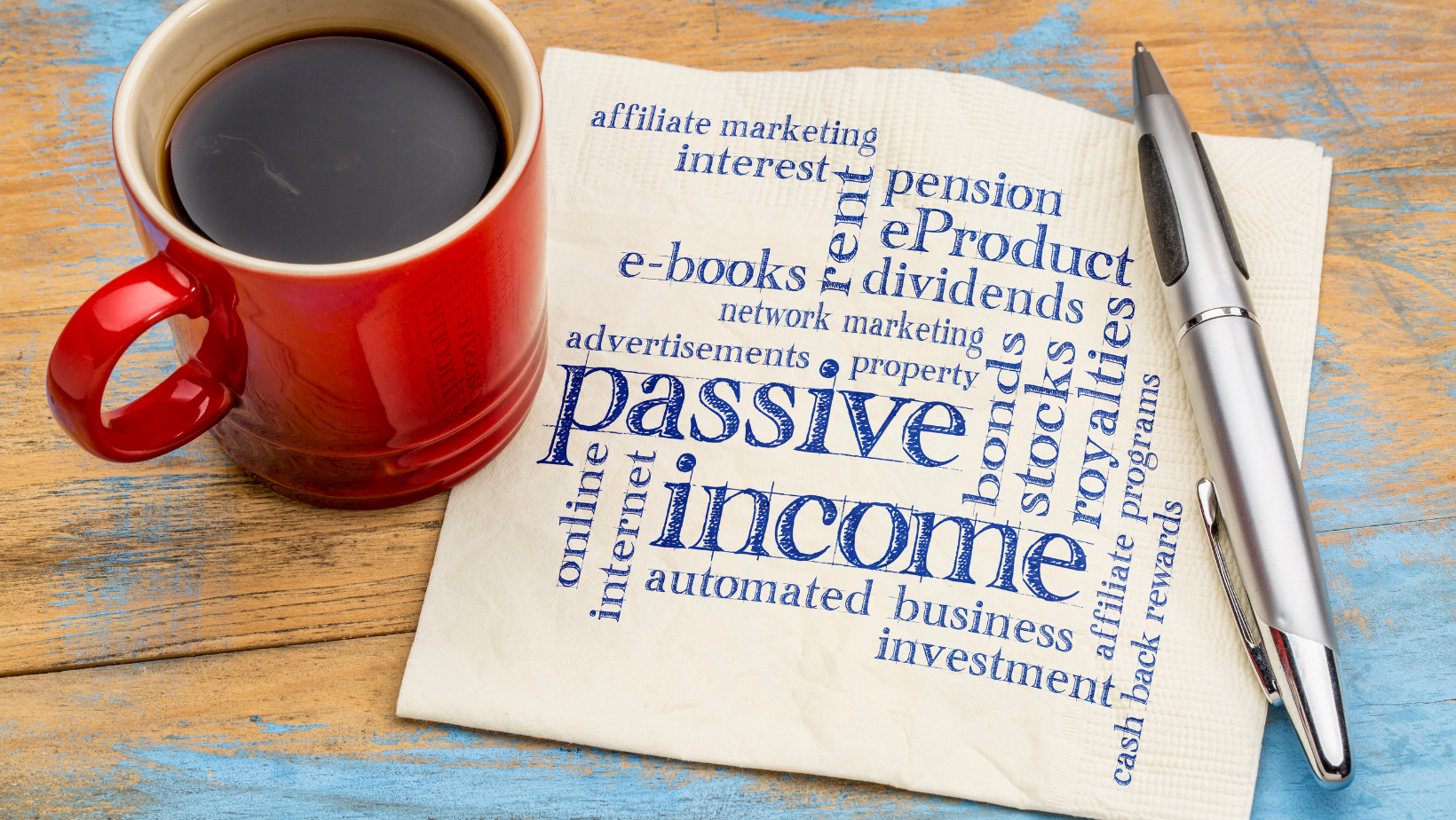
Passive Income

Courses

Your online course may be a course where you are very hands-on and run individual sessions over a period of weeks or months. However, if you record a course with individual modules, you can put it on an online hosting channel, such as Udemy, which is an online learning platform (a marketplace to sell and buy courses online). You make money on this platform by uploading your course and selling it. It’s a free service for those uploading courses and can help you achieve passive income. It won’t make you millions, but it will help give you credibility and the possibility of a regular passive income.

Students on Udemy generally take courses to improve their job-related skills. I have used it several times for course on various social media channels to help me understand them better. The good thing is that you can upload a course on any subject you can think of. I’ve seen everything from cupcake decorating, to car maintenance, interior design to computer skills. There’s something for everyone and courses start from around £15. I’ve even got courses free of charge and have had some great deals during January sales.

eBooks

As well as making passive income from your online course, you could also write a related eBook and sell it on your website, or even upload it to Amazon or a similar book selling site.

Conclusion

Now it’s time for you to get started! Do your research, do a presale ‘coming soon’ campaign, choose the best strategy for you and just do it!

Let me know if you found this post useful and, as always, if you have any questions, please feel free to contact me.  

Small Business Market Trends for 2022

The last couple of years has taken all businesses on one heck of a ride. From being plunged into lockdown with a global pandemic, to the current economic uncertainty, with prices rising and competition fierce.

Every small business out there deserves a huge round of applause for persevering and, in my experience from what I’ve seen on various social media groups, remaining optimistic with a ‘never give up’ attitude.

Over the past couple of years, we have all seen a shift in working from home and lots of new small businesses have sprung up. Some of them from just having more time to work on their hobby…with the realisation it could become more than that.

So, as we start to make our way through 2022, what are the marketing trends going to be this year, that as a small business, you should be aware of?

Online business service

First, the obvious one! Online search traffic has soared since lockdown, with more people than ever shopping online. More people are supporting small businesses, and like the fact they can order gifts for themselves and their loved ones at a very reasonable price, from someone who gives a bespoke, personal service. Reviews I’ve seen from the small businesses I follow all speak of excellent customer service; how the business owner has gone above and beyond to help their customers. This is the kind of service that you don’t get from some of the bigger stores when you order online…it’s more, ‘get your order in and get on with it.’ But a small business will take the time to wrap your order personally, will include a personal note, and will take the time to message you. This all adds to that all important, customer experience; the kind of experience that makes them trust you and come back for more.

Social Media and Instagram

This might seem like another obvious one, but social media is still the best way for you to get your products or services out to your target market.

Facebook is still the leader and continues to be the best platform for small business marketing.

According to https://www.oberlo.ca/blog/facebook-statistics, Facebook has 2.8 billion monthly active users (from 2021 figures). It also has 1.84 billion users that are visiting Facebook daily, using one of Facebook’s core products – Facebook, WhatsApp, Instagram, and Messenger. This is quite mind-blowing!

But Instagram is also part of those figures, and whilst Facebook remains the most popular, Instagram is starting to creep up in terms of popularity. According to figures published by theverge.com, fewer young people use Facebook. From 2019-2021, the percentage of teenagers on Facebook fell by 13% and Facebook itself, is projecting that will drop to 45% by 2023. So, Facebook’s average user is getting older.

This is where Instagram comes in. Instagram is experiencing a steady growth and over 70% of their users are under the age of 35. So, what does that mean for you as a small business?

You are missing a trick if your business is not on Instagram as this trend is set to continue into 2022.

OK, I hear you say, ‘but how can I market my business on Instagram?’ I know from experience how daunting it can be to start a new social media channel and know how to make it successful. Overall, the same principles apply, but there are some things you can do to help your business more.

Reputation Marketing

Reputation Marketing is a strategy to use your customer reviews to promote the reputation of your business in creative ways.

Storytelling is a big part of this, sharing stories of the work you’ve done alongside the reviews you get for a particular item. You can share screenshots of reviews or put images of your products with the review as a caption. Reviews are also good for your brand awareness and social proof.

Social proof is becoming a must – it is estimated that 80% of users go to Instagram for help in making decisions on what they buy from local businesses.    

Instagram SEO (Search Engine Optimisation)

Is there even such a thing? Previously Instagram only allowed users to search for content by hashtags, location tags, usernames, and profile names. In late 2020, Instagram put in place Instagram keyword searching. You can take advantage of this in three ways:

  1. You can search for your target audience or customers. It’s great for finding new people to interact with, start conversations, and build relationships with. This does mean you need to know your audience and know what kind of interests they have outside of your brand, so you know what keywords and phrases to search for.
  2. It also helps your ideal customer find you. If you use specific keywords in your captions, keywords that you know your customers will search for, it makes it easier for them to find you.
  3. It’s also great for conducting market research or looking at your competitors. With this search tool, you can look up your competitor’s keywords. You’ll also be able to see if your customers speak about any pain points, which you can help solve with your products or services.

For example, say you are an artist – Sarah Art. Before this came into play, your post would only appear in an Instagram search if you and your customer searched #sarahart, which to be honest, people didn’t really do. Now you and your customers can just search whatever you want, without using a hashtag, and a list of matches will come up.

Google My Business

2022 is the year to get onto Google My Business…. or Google Business Profile as it’s now called. If you are not taking advantage of this free service, you are really missing a trick.

It is owned by Google’s platform and promotes businesses across Google Search and Google Maps. When you search for a local business, you’ll always be pointed to local Google Business Profiles.

The benefits of this are obvious as your business will be more easily found locally. And if you ask your customers to put their reviews on your Google Business Profile, your Google reviews will be online – they won’t be without a Google Business Profile.

According to safaridigital.com ‘near me’ mobile searches increased by 136% in 2021, where people are trying to find local products or businesses. And over 50% of all ‘near me’ searches will result in an offline store visit.

Previously, users had to type in a postcode or town to search for a local business. But today, local SEO Statistics 2022 reveal that the addition of two words can help users find their desired local service.

If you’re not yet on this platform, I wrote a blog post about it in 2021… The Benefits of using Google My Business

Local Service Ads by Google

Local Service Ads allow you to interact with users who search for the services you offer on Google. Your ads will be shown to customers in your location. Your ad will highlight the most important information for customers to choose your business, such as services offered, service area, hours and reviews.

You only pay if potential customers contact you directly from your ad.

I must admit I haven’t used this service yet, but you can get more information here.

Conclusion

  • Don’t forget to continue using Facebook, but also get yourself on Instagram if you haven’t already done so
  • Use reputation marketing and Instagram reviews to engage with your current followers and reach new customers
  • Strategically caption your Instagram posts, as Instagram SEO is set to become huge in 2022
  • Claim and verify your Google Business Profile (previously Google My Business), so you can be found locally more easily
  • Look into Local Services Ads by Google and see if your business qualifies. They are inexpensive and enable small businesses to capture more leads.

If you find anything in this article a big daunting, please feel free to contact me. I offer Marketing Coaching, along with a free discovery call, so will be very happy to speak to you.

How to find your ideal client on Facebook

It is crucial for any business to know who your ideal client is. It’s always the starting point for any marketing strategy. If you don’t know who to aim your content at, you’re just posting …and you could be hearing crickets.

Whenever you see a business advertising something, you never see the statement, “This is aimed at everyone.”  This is where a lot of businesses can fall down.

By aiming at everyone with a generic offer, it doesn’t naturally capture the attention of anyone in particular. Some businesses will argue that their products are aimed at everyone – for example, a card business. And whilst that might be true, a card business can still niche down. Just look at the very well-known online big companies – they have a website with distinct categories and when they advertise, they pick on a particular client to target. Valentine’s Day is coming up and so you’ll see adverts aimed at couples, husbands, wives, girlfriends, boyfriends, partners etc. So, even if you do have a business that could potentially encompass everyone, you can focus your efforts on particular events during the year…after Valentine’s Day, it will be Mother’s Day and Easter. There is always something to focus on. And if there isn’t an event coming up, you can focus on birthdays, anniversaries, weddings – the list is endless.

For this kind of business, you will have a range of ideal clients.

Where do you start?

This is a question I get asked a lot. If you target the right people, they will feel like you ‘get them’ and so what you have to offer becomes very appealing.

Your current customers

The first place to start is to look at your current customers. Who buys from you and why? Take some time to look at who they are – what age are they? What gender? What do they do for a living? Where do they live? What interests do they have?

This is going to be easier for some businesses to pinpoint than others. For example, if you sell children’s books, your customers are likely to be Mums, Dads, Grandparents, and maybe Aunties and Uncles. But if you think a little wider, you could also target schools and nurseries, children’s birthdays, and Christmas. There are stories about about everything, from tooth fairy to camping…and not just stories. There are also educational books, which gives a whole new raft of clients.

Look at your customers’ habits

This is a little harder. You need to dig a bit deeper. What do they like – what kind of things do they google? Do they prefer Android or Apple? Do they hang out on Facebook or on Instagram? What hobbies and interests do they have? For example, your target market might be Mums. A Mum obviously has children, but she will have other interests – she might love Zumba or Yoga; she might like skydiving or love white knuckle rides at the funfair! She might be really interested in a healthy lifestyle – she might not. She might be Vegan; she might love animals – she might be allergic to animals! So, even though you think you are targeting Mums, you could have the potential to target so many other areas too. And it’s up to you to decide on your niche.

Look at your customers’ goals

Knowing what your customers aspire to can help you with ideas for your content. You might be a wedding planner, but you will know that your customer is not only interested in planning her actual wedding; she also wants to have her hair/make-up/nails done. She wants to have lovely flowers, and evening do with music.

It’s good to be able to see the bigger picture. And if you have contacts with the various other businesses you know she’ll want, that can be part of your service to find the right things for her. That gives you much more scope to advertise your service.

Solve a problem

Does your product or service solve a problem? If you can identify some kind of challenge that your potential customers face – and can give them the solution, you’re onto a winner.

How do you customers decide to buy?

There are different types of buyers. There’s the person who totally buys on impulse; sees it, wants it, buys it. This isn’t always a bad thing – it might be that you offer exactly what that person is looking for at that moment in time – or your product might be something that triggers a memory – ‘my best friend would love that’ and buy.

Then there’s the buyer who likes to do some research, look at the benefits and features of a product, does price comparisons and looks at all the reviews.

If you have customers who will buy on impulse, make sure that your shop or website is easy to use, and they can order and pay easily and quickly.

If your customers like to take their time, ensure your website is up to date, has relevant reviews in a prominent place…and that your product descriptions are spot on.

Who would you like to be your customer?

This sounds like a weird thing to say – surely it’s anyone who wants your products or services? If you’re a service business, you’re sure to have had the odd difficult customer and wouldn’t necessarily want that again, so it is a consideration.

You might prefer to work with Mums, for example, or with people who are like-minded. Again, this is a useful consideration to make when thinking about your ideal client.

Your customers are on Facebook – what next?

OK, so you now know what your ideal customer looks like. Build up a couple of client personas and keep them somewhere to help remind you when you make your content. I talk about this in a previous blog post.

What’s next?

You know your customers are primarily on Facebook.

How do you get to them?

As well as setting up a business Facebook page, so you can keep it separate to your personal stuff, Facebook Groups are THE BEST PLACE to find your ideal customers.

There are Facebook groups for absolutely anything you can think of. Once you know who your ideal customer is – what they like to do – what they are interested in – you can join groups where you know they’ll be. On your Facebook homepage, there is a search box top left of the page. You can search for anything. If you know what your customers like, you can search for them. For example, you could type ‘Groups joined by people who like XXXXXX’

If you go to your personal page and click on Groups – then click on ‘discover,’ Facebook will show you groups that your friends belong to.

Always read the rules of a group before you join. You don’t want to join a group where people just share promotional content all the time. You want groups that are supportive of each other, have conversations, maybe themed days, and who have engaging posts that you can join in with. This is the way to build engagement on your page, as you will be able to put a link to your Facebook page, whilst supporting and talking to other like-minded people.

Facebook groups are a great way to make friends, make connections, ask for and give advice, and to offer your expertise. People will notice you and your business if your name pops up a few times a week, especially if you take the time to engage and have conversations on posts. After all, it’s not called social media for nothing!

I would advise being on no more than 3-5 of these groups as you need to get involved and it can be time consuming, so it’s better to be very well known on a couple of groups, than posting and engaging randomly every month or two on lots of groups.

Start your own group

You really need to think before you start your own group as it is also something that takes up a lot of time. But it also means you have your own group of people who like what you do and have similar things in common. And it gives you valuable insights into your target audience.

Insights

When you have a Facebook business page, you get access to your insights. This gives you lots of valuable information, such as what kind of posts your audience finds most interesting.

When you log into your insights, you’ll automatically see figures from the last seven days, but you can look at the last 28 days.

When you scroll down, you’ll see post insights on your most recent posts. It will tell you what kind of post it is; whether it’s a straightforward post or video for example. It will tell you your reach, and the engagement that post has had, be it comments or likes.

The last section gives you insights into your competitors. Facebook can recommend pages for you to watch here, but you can also add pages, so you can tract a particular competitor’s performance if you want to.

When you are on your insights page, you will also see a list of options on the left-hand side, and you can click on any of these categories. For example, if you click on ‘likes,’ it will show you a tracker of your likes and you can track the last 28 days to see how and when your figures grew. If you click on followers, you can track your followers in the same way and see how many unfollow you too. It’s definitely worth spending a bit of time having a play with your insights to better understand what’s happening on your page. I try and check mine once a week and I’ve found it invaluable for knowing what kind of posts my followers like and find useful.

I hope that this blog post has given you some ideas to help you find your ideal clients on Facebook, and also how to understand them and what they want from you.

Please follow my blog for more posts on marketing your business. And, as always, feel free to get in touch if you have any questions.

Facebook marketing tips for creative businesses

Facebook is a great marketing tool for small businesses. It is one of the most visited websites in the world and perfect for engaging with customers and attracting new ones. From ads to Facebook groups, Facebook has lots of tools that you can use.

Create a business page

A business page is a great way to communicate directly with your target audience. People follow your page because they want to…and want to see more about you and your business. Having a business page also means you get access to Facebook insights, which give useful information about your followers and how they interact with your page.

It’s important to add a profile and cover photo that reflects what your business does. Use high-quality images, as they will in some instances, be the first impression you make on your audience.

Customise your page as much as you can – include your business name, address, and contact information. You can add your website URL, business hours and details of your products. There is even the option of having a Facebook shop for your products.

Use keywords throughout that tell your followers, readers, and Facebook what your page and business is all about.

Tell your story – there’s a section where you can write more about your business, so tell your audience what makes your business unique, how your products provide solutions for them, how you got started. Keep it real and relatable.

Invite people to like your business page. Most of us do this when we first set up a business page, but it’s worth doing it again every few months. Each week I also go through the posts I’ve put up and look at who has liked each post. If someone has liked my post, but are not followers, I invite them.

Be consistent

As with any business strategy, it’s important to be consistent on your social media pages, and Facebook is no exception. Post regularly – as frequently as you can, but once a day at a minimum. If you post regularly every day, your followers will start to recognise that you’re posting every day and will engage more, as they get to know you.

Whilst it’s great to post regularly, if you post the same kind of post every day, your followers will get bored with your content. Use a mixture of posts and avoid using posts to sell your products every day. It’s good to follow the 80/20 rule. 80% engage, entertain, educate, and inspire and 20% to promote and you’re your products. You can share behind the scenes information and photos, tell a bit of your story; entertain with funny memes or ‘fill in the blanks;’ educate your audience about your products or a process you follow. For example, if you’re an artist, you could show a series of posts that show a painting from sketch stage to finished article. Or you could give hints and tips about an aspect of your creative business – a sewing tip or, if you make cakes – a ‘how-to’ video is popular. Click here to see other ideas for posts on Facebook.

Facebook’s algorithm encourages engagement, so try and post something that gets a conversation going. It’s good to remember that it is social media, and we need to be social. Don’t forget to reply to comments and to any private messages promptly.

Ask your audience

As well as asking questions or writing engaging posts that promote a conversation, you can also ask your audience to tag their friends. This can work well, particularly with inspirational quotes. When you post a meaningful post, ask your audience to tag someone who might need to hear the advice the post gives.

You could do a post that just says you are sending out a hug to anyone who needs it today – we all know that sometimes, we just do! Then say, ‘tag a friend who’d like a hug today.’

‘Small Business Saturday’ posts work well too. Ask your followers to share links to their favourite small businesses, or to tell you a bit about their small business and to put a link. Make sure that you visit every single business that comments and puts a link on this post. Click on their business link and like some of their posts and post a couple of comments too – this helps them out with the Algorithm, as well as helping your business.

Facebook Ads

Now, this is something I haven’t felt the need to use, but it does seem to work well for some businesses. If you’re having trouble reaching your target audience, you can do an ad fairly cheaply. You can then target a specific audience by location, age, gender, and interests. There’s also an analytics tool to help you understand which ads drive interest and sales.

Facebook insights

I briefly mentioned this earlier, but this is a useful tool. I check my insights once a week, usually on a Sunday afternoon when I’m scrolling through my feed. Your insights tell you how many people engage with each of your posts and how many people each post reaches. You can look at which kind of posts are the most popular, which helps you decide what to post in the following week.

If you think that posting on social media takes up too much of your time, you can use Facebook’s publishing tools to schedule your posts in advance. And you can batch-make posts. I batch-make my posts for the following week every Friday or Saturday. I don’t like to schedule my posts as I like to be able to be available to reply as quickly as possible. But I have scheduled posts when I’ve been away on holiday.

Start your own Facebook group/join one

Having your own Facebook group will help you build a community around your products or services and can help make your brand more visible. It’s a great way to connect with your customers.

It’s also invaluable to join a good networking group with your target audience or with peers. I belong to a few groups – some are specifically for marketing people where trends etc. are discussed and others are networking with other like-minded businesses. I enjoy both, but I do have my favourites! This is a great way to get your business more well-known, but again, you need to be able to give time every day to network and comment on group posts, as well as interact with other businesses. I’ve met loads of lovely people this way and have bought lots of things from some of the small businesses in those groups.

Facebook features

As well as just posting every day, try out some of the features that are regularly being rolled out.

Facebook Live

Go live to engage with your audience in real time. Your followers will get a notification that you’re ‘live’ and can tune in to watch you. Once you have finished your live, you’re given an option to save a recording of your live so followers who haven’t tuned in can watch it later. Your live video then becomes a post on your page.

Facebook Live can be up to four hours long! Now, I’m not saying do a four-hour video, but you should try and aim for at least 10 minutes. The longer you’re live, the more discoverable your stream will be.

Facebook Video

If you’re not brave enough to go live with video, you can record a video. This way you can edit out anything you don’t like or start again if you hate it! Video content really makes a difference to your figure and video tends to be much more popular that posts. The thing I’ve noticed with video is that when you post it, you get some likes and views, but then suddenly a few weeks later, your figures on that video jump up as it’s shown to people. I’m not sure why, but it’s obviously something to do with the Algorithm!

You can use video to teach your audience something – a step-by-step tutorial, or a how-to video. Again, aim for at least 10 minutes. If you’re teaching your audience something, they’ll stay for as long as your video is engaging!

Facebook Stories

When you post a story, it stays on your feed for 24 hours. Again, stories get more traction and seem to reach more people than posts, so it’s a good idea to include them in your marketing strategy.

PLEASE NOTE: Avoid using video as a sales pitch. People tune in to find out more about you and your business, not to be sold to. I’ve made this mistake – I’m sure lots of us have, but I’ve found the videos that are more popular are ones where I’m being social and ‘having a chat.’

Create a plan

As with anything, what you post on Facebook should be part of your marketing strategy or plan. I try and plan my content a month in advance, so I know what I’m going to do and when. I also make note of any special days for each quarter, so I can plan posts around that – for example, Valentine’s Day or Easter.

I hope that you have found this post useful – if you have any questions, please feel free to comment on this post or send me a message.