
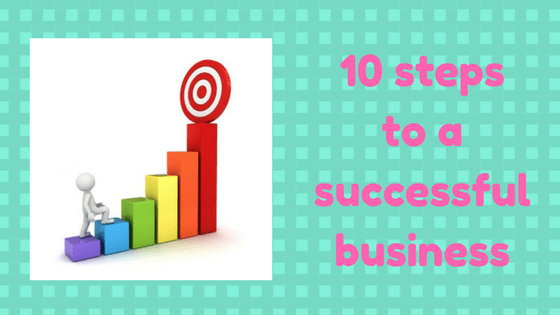
In order to succeed in business, planning and good organisation are key. When starting up in business, most people are full of enthusiasm and it can be such a disappointment to find that simply by switching on your computer and opening your doors for business, that business will automatically come your way. It would be fantastic if it worked that way, but sadly, we all have to work a whole lot harder than that to attract business and be successful.
Here are 10 ways that might help make your business more of a success in 2016.
- Make a plan. Plan your business goals and how you are going to
 achieve them. Having a good business plan forces you to look at the feasibility of your business – what will work and what won’t work. It makes you focus on the important and essential parts of your business, your next steps, tactics and strategies
 - Be organised. Complete a ‘to do’ list every day. This will help you keep on top of things that need to be done now. As you complete each task, tick it off – not only does this give you a sense of achievement, it ensures you don’t forget anything
- Analyse your competition. Look at what your competitors do. Why are they successful? Look at the price, quality and customer service that your competitors offer – why will potential customers choose your products or services over those of your competitors? Are there any barriers in place that may prevent potential customers from choosing your products or services?
- Know what your customers want…not what you think they want.
 What do you your customers like about your products? What do they currently buy from you, why do they buy from you and do they give you repeat business? If you’re not sure of the answers to these questions, it might be worth conducting a short survey to your customers and asking them. Give an incentive to reply, such as 10% off their first order of 2016. And a further 10% off if they recommend a new customer who buys from you. The more you know about your customers, your competitors and the business you’re in, the more likely you are to be successful
 - Provide great service – delight your customers! There have been oodles of books written about customer service and delighting your customers. Some of them advise that you delight them no matter what – I even read somewhere that one company gave a refund to a customer who complained about their tyres….and they didn’t even sell tyres! That’s taking it a bit too far. In order to satisfy your customers, you must deliver exactly what you promised to….to delight them, service must exceed expectations. It really is that simple. Do what you say you will, give your customers what they want (solve a problem they have), and thank them for their custom, inviting them to contact you if you can help them further
- Measure everything you do. Whatever action you take as a result of planning your business goals, ensure that you factor in a way to
 measure whether that particular goal and actions have been successful. By measuring as you go along, if you find something that is not quite working, you can tweak it so it works well. List what needs to be measured, for example, how many people read your Facebook posts or how many comment on a post. Then look at ways to improve this – it might be you monitor your posts and see what kind of post is the most successful and then figure out why. If you have success, shout about it! Your customers will feel reassured they are dealing with the right person
 - Market and advertise. Marketing your business is about planning the future of your business. What tools will you use to promote your business? For example you could…
-Join a business networking group and talk to people at every opportunity, giving out business cards
-Direct marketing – brochures, flyers, sales letters
-Online – website, blogs, articles (give advice, become known as an expert)
-Social media – Facebook, LinkedIn, Twitter, Pinterest etc.
-Advertising – print media, business directories, ads in magazine and online
-Trade shows/markets/craft fayres - Budget. I guess that this one is pretty obvious. You need to know
 what you can and can’t afford to do and plan accordingly. At the very least, it’s a good idea to have business cards – maybe flyers and definitely think about Social Media and your online presence, such as a website.
Can you do some of the promotion yourself or do you need to outsource it? And look at what kind of advertising you can afford. - Learn from your mistakes. We all make mistakes and when you are running your own business, you will undoubtedly make several, especially when you first start up. The trick is to learn from your mistakes. If you make a mistake, own up to it – this creates a culture of openness and honesty in your business. Find out why and how the mistake happened and correct it. If you find you can’t correct it, put plans in place to ensure it doesn’t happen again. If you can’t work out why or how the mistake happened, google it – chances are someone else would have made that mistake in the past and they might have published a solution! Once it’s sorted, move on – don’t continue to dwell on it
- Stand out in the crowd. Starting a business is easy, but staying in business is harder as you have so much competition these days. To stand out in the crowd, you need to do all of the above! Create a great
 experience for your customers; know what your customers want and give it to them; find solutions to your customers’ problems; position yourself as an expert; be different from your competitors and shout about how you are different; shout about your success; give excellent customer service; give special offers to customers who recommend someone new who buys something or uses your service….and above all, be yourself, smile and enjoy running your business – it will show!
I hope these points will help you in your quest to make 2016 a successful year for your business. If you have any more tips, please share them, I’d love to hear from you.
One final tip, if you can’t do everything you want to do yourself, don’t give up, get help.
Images courtesy of 1) Ambro 2) David Castillo Domenici 3) Stuart Miles 4) Metrue 5)Stuart Miles 6)jscreations at FreeDigitalPhotos.net


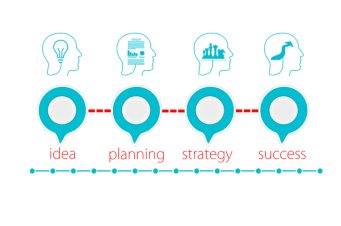 So, you have your own business and you want to promote it – get your product or services out there. How do you go about it? Where do you start? It’s really important to have a content strategy….as this will help you structure exactly what the needs of your business are and what exactly is the right content for your business.
 If you don’t send content out at the right time, then you are wasting your time. You need to firstly understand your audience or intended audience – what do your customers want? Do your customers or potential customers have questions that you can answer? Do you have solutions to your customers’ problems? If you are aware of these things, you can plan to put content out at the right time.
 December and January is the ideal time for you to look at planning for next year. It’s time to take stock and look back over the last year – what worked well for your business and what didn’t work so well? Which way are you going next year?
 If you haven’t asked for feedback, then why not do it now? Why not send out a short survey asking some questions to help you decide which way to go next year – get your current customers’ opinions and ideas – their input could open a whole new market to you.
 Whether you choose to send your newsletter out in print format, or as an online version on e-mail, it’s important to decide the frequency. Most of my clients send out newsletters by email on a monthly basis, so they can be a bit longer than if you are sending out something each week. The most important thing is that the content is timely and relevant, adding some sort of value to your customer. For example, I send out a monthly newsletter for a garden centre – as well as including any news about new stock and special offers, we also include monthly hints and tips on jobs that need doing in the garden that month. We’ve also run a series of articles over a few months on planning the garden for 2014 – this encourages customers to take a good look at their garden, decide what worked well last year and what didn’t, and gives advice on plants and shrubs without doing the ‘hard sell’.
 your website; increase engagement to your brand; create a buzz for a new product or service? The type of goals you have will help you create a more effective newsletter. For example, if you want to send more traffic to your website, you could include an excerpt from an article that will generate interest in your products and then direct them to the full article on your website, or you could just send an introductory paragraph from the newsletter, but keep the full newsletter on your website, so customers have to go to your website to read the full article. Similarly, you could give them a taster of a special offer, but point customers to your website for full details.
 Of course, a newsletter is only one of the marketing tools you can use and it’s always best to use a variety of tools to engage your customers. I’d be interested to hear your thoughts on the role of newsletters. Do you use them for your business?
 Measurable – to ensure that you attain your goals, they need to be measurable; then you can keep an eye on your progress and you will stay on track and reach your target dates. If you have a website for your business, one goal may be to push it further up search engines, so your business can be more easily found by potential customers. Questions you could ask yourself could be:
 Timely – Goals always need to have a timeframe – if you don’t have a timeframe, then there’s no sense of urgency and it’s easy to keep saying ‘I’ll start that tomorrow’…and we all know that tomorrow never comes! If we go back to the weight loss scenario, if you say ‘I want to lose a stone’, but don’t put a time limit on it, it’ll never happen. But, if you give yourself a date (a realistic and attainable date), for example, ‘I want to lose a stone in three months’ – it’s more likely that you’ll succeed.
 You could also consider performing a SWOT analysis on your competitors, as this will give you valuable insight into their strengths and weaknesses…and may identify opportunities for your business that they haven’t thought of.
 A SWOT analysis can be completed by you, but it’s always good to have another opinion, so draft in some help. Ask friends, employees (if you have them) and maybe even some of your customers – ask them what they think are your strengths and weaknesses. You may be surprised at the answers and it may help you to pull together a strategy to help you succeed further or improve an area of your business.




 choosing your products or services?
 – Look at premises you currently work from (it might just be from home). What will you do if your business expands – what premises will you need to ensure your business succeeds?
 – Are you likely to have cash flow problem – if so, how will you deal with it?
 necessary.
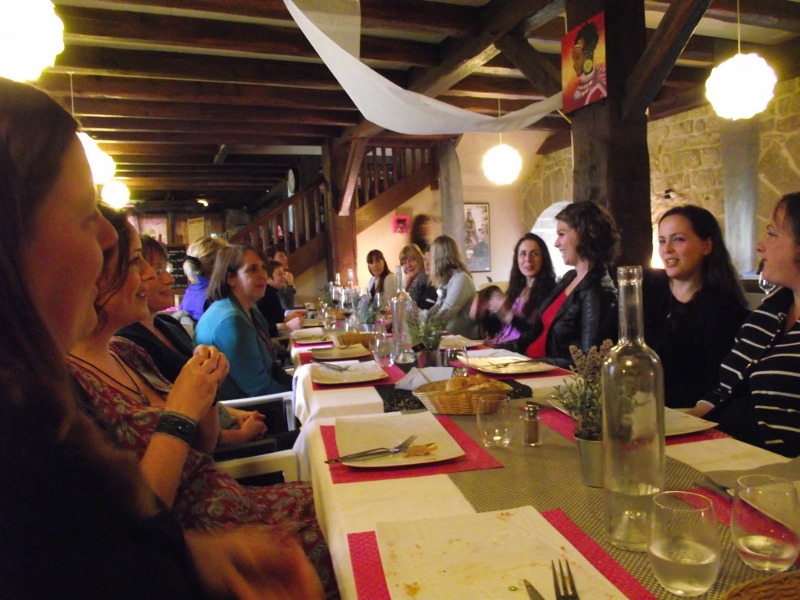
 It’s widely recognised that English is the language of business across the world. Here in rural France, I help people promote their small businesses, and although most of my encounters have been with English business women, I’m lucky enough to have joined a great group, Les Dames de FER, which I spoke about in my last blog, which help and support English and French women in business. Through this group I’ve gained so much knowledge about business life in France and find their training sessions and support invaluable. But what support is there available for French people who need to join a business meeting in the UK and what are the differences between English and French business meetings?
 In the UK, lunch is a very informal affair, especially if like me, you work in an office. It’s accepted that meetings can be conducted over lunch – people will grab a sandwich and take it to a meeting. I nearly always ate my lunch at my desk, whilst carrying on working. However, in France, this is unheard of… here, lunch is an occasion. Except for the big towns and cities, most shops close between 12 – 12.30 and don’t open again until 2 – 2.30pm. In my village, the church bells go mad announcing that it’s lunchtime. The French take their time over lunch, eating a three course meal with wine. And in rural areas, the timing of lunch is very flexible! If you’re trying to get a renovation project completed by tradesmen, you have to be prepared for the great French lunch – they down tools and disappear for a few hours. However, that’s not to say they’re lazy – they start work earlier, usually at around 7am and often work until it gets dark.
![5596899_orig[1] (340x51)](https://cindymobey.blog/wp-content/uploads/2013/11/5596899_orig1-340x51.jpg)


 The Write Way