Driving traffic to your website

You’ve worked hard to get your website up and running and have done everything you can to make sure it includes keywords; the right SEO and you launch – then hear crickets! There is nothing more frustrating, but just like you have to drive traffic to your online shop with a provider, or to your blog, you also must drive traffic to your website. A website, especially a new one, won’t just magically appear on the first page of a google search.

Driving traffic to your website with content

I know that this is probably startlingly obvious, but you can’t get website traffic without content. It is the absolute cornerstone of every other strategy to drive traffic. So, how do you do this?

Have a blog.

I know that this seems like a bit of a pain in the wotsit, but it really does help get people to your website. A blog is where you regularly publish useful content for your audience. No matter what business you are, a blog is a useful tool and there is always something to write about.

It’s been found that businesses that use a blog get on average 55% more website visitors than those that don’t.

Blog ideas could be:

  • A tutorial on how to do something
  • Talk about a particular product or service you offer with details of the benefits to your audience
  • You could use it to tell your story or let your audience know more about you and your business
  • Behind the scenes
  • FAQs
  • How customers use your products or service with testimonials to prove a point
  • Interview someone – maybe a customer about why they love your products or services
  • Educate your audience on what you do or an aspect of what you do
  • Publish a gift guide on your blog highlighting your products – if you offer gift wrapping, talk about this, and give lots of examples and photos

These are just a few ideas but shows that there are lots of different ways to blog.
Have a good ‘hook’ – headline to draw your audience in – A headline that pulls your audience in is an important part of your content.

Invite someone else to write a guest blog on your site – this can work well with someone who does something similar to you, but in a different way. They will then share their guest blog, which could bring new readers to yours and to your website.

Just ensure that you give them guidelines as you don’t want a blog post that is unethical, gives too many spammy links (which could damage your brand) and make sure that the information they give is high quality and original.

A picture tells a thousand words!  

I’ve written a whole blog post on this subject, but good visuals are a must to create charts, graphs, lovely images etc. And don’t forget to put text behind or under the photo to describe it. That helps your SEO.

In much the same say as images, video can really attract visitors to your website and keep them engaged.

If you use YouTube, you can put the link to your website from your YouTube videos in the video description. And in your video, use a call to action in your narrative to point your audience to your website.
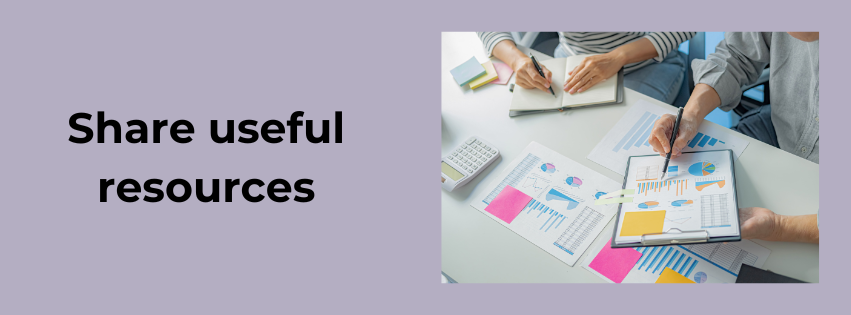
Give your readers useful resources.

This won’t necessarily be relevant to all businesses, but it’s useful to have a resource centre on your website. I have a ‘free resources’ tab on my website and have a load of free downloads to help small businesses. All I ask in return, is that you sign up to my newsletter, then you get a password to get access to the resources.

Resources can be checklists, downloadable guides, how to tutorials, videos, templates, webinars – there are loads of things you can put to help people. What you use for your resources will depend on what you do. A resource centre will encourage people to return to your website over and over again.

Increase traffic with SEO.

Again, I have written several blog posts to help with SEO, but SEO is what helps people find your site in the first place. Here are just some of the basics…

  • Keywords – words and/or phrases that people will type into a search engine. If your website includes the search words people use, it is more likely you will be found. Be aware though, this does take time if your website is new. You can use keyword research tools to help you with this. The Google Keyword planner is a great help for this. You’ll find that there are keywords that have a higher search volume which can make your website harder to rank for, so it’s about striking a happy balance.
  • Long-tail keywords tend to be easier to rank for – as the name suggests, this is more of a phrase rather than just one word. For example, I will tag this blog post with the long-tail keyword ‘Drive traffic to your website’ and ‘How to drive traffic to your website.’
  • Strategic keywords – The next thing to think about is WHERE to put your keywords. Ensure your target keyword is in your title tag, headings, naturally in the body of your article and always within the first 100 words of the text. And don’t forget image keywords in alt text. And if you can, also put it in the meta description (the short description that Google shows along with your title when your article comes up in a search).

Internal links

This is something that is easy to forget when you’re on a roll with writing but try and add at least 1-3 links to other pages on your website, so you keep your readers on your website for longer, which will help with your ranking.

Page speed

This is important as when someone lands on your website, they don’t want to wait for everything to load in order to see your content. I know that I won’t wait for long if a website is slow. 

Make sure that your image sizes are not huge as this slows everything up and ensure that all your plug-ins are working properly.

There is a Google Page Speed Insights tool which can give you a score on your site’s performance and provide suggestions. 

Mobile-friendly

Most visitors to your website will view your site on a mobile phone, so make sure that your website/blog posts are optimised for mobile use. There’s usually a little button when you go into your website’s dashboard so you can check this.

Refresh your content regularly.

Keep your content fresh by updating it regularly. This might be updating your shop contents or changing some of the wording on your homepage or about page. If you do publish blogs, publish them regularly and consistently – and if your blog post is old, ensure that you update it with relevant facts, figures, and dates! 

No matter whether your website ranks on the first page of Google or not, a refresh of content can make all the difference to traffic. You can do this by updating images, ensuring that links are working, adding new keywords, and tweaking words in your meta description every now and again, or updating your product descriptions.

Have a Google Business Profile

A Google Business Profile will really help you get local traffic to your website, so this is a no-brainer. Just like a social media site, although easier, you can add new photos and publish a blog post or update with a photo and text to keep it up to date. Feel free to message me about this if you need more help.
Increasing website traffic using social media

Now you’ve dealt with your website and getting that all up to date and sorted for being found, now it’s time to look at how you can increase your traffic using social media.

Promote your content in social media posts.

As I’ve already said, you can’t just publish something and hope that it’s found. You need to tell people it’s there. Whether you use Facebook, Instagram, X, Pinterest etc, when you publish content, give the link to your website. People who come from another source, other you’re your website are called ‘backlinks,’ and this is a great way for search engines to recognise that your content is valued and being looked for.

For example, you’re launching a new product – give the link to your new product in your shop, so your audience knows where they can buy it. Add your website to your bio so it’s obvious you have one!

If you have a blog or a newsletter, publicise this on your social media sites – people won’t know you have either if you don’t tell them, but don’t overdo this – as with everything, in moderation. I publish a blog post every week and use social media to tell people about it. I also have a newsletter which I publicise every month, either in stories or a post.

Add hashtags – If the social media site you use is hashtag-friendly, such as Instagram, LinkedIn, Facebook, include relevant hashtags to help the reach of your posts. Make sure the hashtags you use aren’t always the same – they need to relevant to the subject your post talks about.   

Ensure that your website has your social media share buttons, so visitors know you are on social media and which social media sites you are on.

Post at the right time – your insights can help you find out the times of the day and week that you are likely to get most engagement from your social media posts. I’ve tried all sorts of times and find the best for me is very early in the morning as the majority of my target audience tend to be online first thing. I also network first thing – and again for an hour at lunchtime (which other businesses see and sometimes will return the favour and look at my post) – and I do it again in the evening, which is where I sometimes end up having conversations. You have to work out what works best for you and your business. 

Facebook groups – if you belong to any Facebook groups, this is also a good way to get yourself known and there will be opportunities to talk about what you do and publish your website URL. Some groups have specific days of the week when you can do this – just be aware of the groups’ rules and regulations to ensure you don’t get banned from a group by violating their rules.

You can also start your own Facebook group and build your own community.

Business directories

There are usually free business directories in your area where you can add a short description of your business and give your website address. Some let you add photos and a bigger description. It’s definitely worth researching these to find what is available locally to you.
Set up an email newsletter.

I have other blog posts in more detail about this, but an email newsletter is invaluable to your business. People sign up to your email because they want to, so you have a captive audience. You can use your newsletter to promote your website, your products, or services, give news to your subscribers, talk about any events you’ll be attending, give news about any webinars you’re hosting, or point them to your social media sites. Love your subscribers and give them value and they will want to keep coming back for more. You can read more about newsletters here.

Other ways to increase your website traffic.

There are other ways to increase your website traffic, which includes:

  • Host an online webinar – people love to learn, and webinars are a great way to reach your target audience and give them free information. You can also upgrade to do paid online webinars once you are getting known.
  • Participate in forums – answer questions and share your knowledge.
  • Attend a conference or convention – there is usually a cost involved in this, but they can be very worthwhile – and you will engage with other like-minded people.
  • Join a networking group or event – these are still out there as a face-to-face event – this can help you get your business name out there and to meet other businesses.
  • Have a stall at a market or event – if you are product-based, this is a great place to give people details of your website. You’re missing a trick if you don’t add a business card with your website details with everything you sell. And have a stock of your cards on display, so people who don’t buy can take one – they may contact you later.  
  • Use paid advertising to promote your business, or if you are promoting a specific event, such as a webinar you’re hosting.

I appreciate that this has been a long blog post, but I hope that it helps you find out a bit more about driving traffic to your website in a variety of ways. As always, feel free to contact me if you have any questions. And check out my website for more details about the services I offer! 
Why a website is important for small businesses!

Why do I need a website?

Ever since lockdown, people are being pushed to shop local and support small businesses – and quite right too! This is possible because of the internet. Small businesses are increasingly on social media, or have online shops, but the problem is that, as a small business, you don’t own those online sites, so if for any reason your business was banned and your social media site taken down – or if an online shop site had a problem with their servers, you wouldn’t be able to do anything about it. But if you have your own website, you own it and you run it how you like.

A website:

  • gives you the opportunity to have an online shopfront and reach customers outside of your local area and it’s a great way to grow your business.
  • Could be the first impression potential customers get about your business and all you do or sell.
  • Can be found on google and other search engines, so having your own website makes you easier to find.
  • Gives your business credibility and gives you an edge over similar businesses that don’t have a website. It also helps you compete against other businesses in your niche.
  • Means you have your own domain name so you can be more easily found online.
  • Is your online catalogue or brochure, telling the world all about you and what you have to offer.     

If I want to find out how to do something or where to buy something, the first thing I do is look online. Most transactions these days take place online and therefore some of the traditional marketing techniques have been replaced with online strategies. However, a surprising number of small businesses do not have a website.

Mind boggling stats!

According to Statista, out of the nearly 8 billion people in the world, 5.35 billion of them, (around 66%) have access to the internet.

And, on average, internet users spend six and a half hours online every day.

Every second, more than 20 million people are looking on the internet, on their mobile devices or PCs, buying everything you can think of….from books to houses, from kitchen gadgets to garden tools. If you, as a business owner don’t have a website, you are missing a trick as your business won’t be found, so you are missing out on potential sales.

There is a cost involved, but it can be cheaper if you do it yourself – there are so many easy-to-follow website hosting companies that are fairly easy to set up. I paid a web designer to do mine as I didn’t have time and prefer to have someone keeping any eye on it, as well as having someone who knows what they’re doing when there’s a problem, or I want some quick updates done. I just find it gives me peace of mind!   

I know that many small crafting businesses use online shops to promote their business, and it works very well for them. Again, there are costs for this service, and at the end of the day, you don’t own your shop, so don’t have any control over it, but I understand why some find this a better option. Your online shop is still open for business 24/7, unless they have any glitches.

Promote your business 24/7!

As the title suggests, having an online presence means that your business is ‘open’ 24 hours a day, 7 days a week….even when you are asleep. Information about your business, your services, what you sell, are there at your customers’ and potential customers’ fingertips. People are always looking online – they research products before they buy and if you have an online presence, and you happen to sell what they want, you could make a sale. If you don’t have a website, you can be almost invisible in searches on search engines…and in this day and age, you can’t afford to be.

Building reputation and credibility

A website gives you the chance to highlight your abilities, your products, and services for the world to see – they can see the quality and price, and if you have an online shop, they can buy directly from you. If you don’t have a website, your potential customers will go to a competitor.

Through your website, you can be seen as an expert in your field, and through the recommendations and comments from satisfied customers, you can be seen to be reliable, trustworthy and that your products are top notch.

When you give out your business card, it will tell potential customers a little about your business. If you’ve given them your card because they’ve seen your stall at a local market, they will assume that they can log onto your website when they get home and see more of your products. Imagine their disappointment if they get home to find no website details…and of course, this will lose potential sales.

Again, you may give a link to your online shop, but it doesn’t give as much information as a website can – and you can’t have a linked email sign up, which helps you promote your products and services even more.

First impression

Not only does having a website make you more credible, but it also shows that your business is established and that you are experienced at what you do. Even if your competitors are stronger than you, a well-built, mobile friendly website can entice customers to choose you instead. You might operate your business from the tiniest desk space in the corner of your dining room, or make your products in your tiny spare bedroom, but when you have a website, your customers don’t see this. All they see is the power of your brand – size doesn’t matter!

Advertise your business

Your website is your ultimate advertising tool. For a relatively small investment in the cost of setting up your website, you can reach millions of people. It is that one brochure that the whole world has access to – no printing and re-printing when you have new products – you just add them online at the click of a button. You can include tons more information and images than you could afford to put into a brochure.

Of course, there is a place in business for brochures and flyers and advertising in local magazines or newspapers, but your online presence is always available, not just for the limited time that you can afford, or until your product set changes. It’s a fantastic marketing tool that is constantly relevant and up to date.

Save you time

Your website can tell people who you are, where you are and what you do. Without a website, you may spend endless wasted time on the telephone or email giving people directions to where you are, giving details of the products you sell or the services you offer. Your website gives all these details in one, easy to access space, available 24/7. Not only does it give these basic details, but it also gives more detailed information about your products. Then, when people do contact you, it’s generally about something more specific or to buy from you or use your services.

Reach a wider audience

Advertising in your local paper, putting out your business cards and attending markets, conventions, and networking events, are all brilliant ways of getting your products and brand out to a wider audience. However, with a website you literally have a worldwide audience. Business often comes from word of mouth, and this is a great way to get local business, but in order to expand and reach customers that don’t know you, the internet is the way forward.

Beat your competition

If you have a business, you only have to look on Facebook or on the internet to know that you have hundreds of competitors who do the same as you. If your competitors have a website, then why shouldn’t you have one? The joy of having a website is that it doesn’t matter how big or how small your business is, it will help you reach more people and increase your sales. Through your website, you can gather information about your customers. You can use your website to host an online survey to find out what your customers want, and online forms can be used to easily contact you to request a quote or ask for further information. When you know what your customers want, you can develop products or services to solve their problems or meet their needs.

Customer Service

Your customers are the most important part of your business. You can improve the service you give them by including FAQs and a Contact Us page. Customers can not only leave comments and recommendations, but they can also ask questions. You can collect your customers email addresses, and with their permission, can send them regular updates about new products. This makes them feel valued and valued customers will come back to you time after time.

I hope that I have helped you to see the benefits of having a website. You may have thought that a website is a waste of money, but it is the exact opposite. You may have to invest a little to get your website written and built professionally, but you will soon get your investment back when new customers find you and start buying from you.

If you’d like to have a look at my website, click on the link below, and as always if you have any questions, don’t hesitate to contact me.

How to promote your website

There has been lots of talk recently about the online shop channels where you can list your products for sale, and how their prices are steadily rising. I’ve noticed a few people in networking groups talking about starting a website, or they have one but aren’t sure how to best promote it. Hopefully this article will give you a few ideas to help you get your website noticed.

Why have one?

According to E-Commerce Statistics, there are more than 2.14 billion online shoppers worldwide, with E-retail sales projected to grow to 5.4 trillion (in dollars) in 2022. And 68% of online shoppers search a product on Google before buying.

So, the more places that your business can be seen and found online, the better. Whilst online shop sites are great and help push your business to their wider audience, you still don’t own it – and they can have glitches that effect your business. With your website, you own it! But why have one?

  • Promote your business 24/7 – you can sell even when you’re asleep!
  • Builds your reputation and credibility. A website gives you the chance to not only show your products or services for the world to see, but they can see the quality and price, can look at recommendations and comments from customers, and a website gives you the space to tell your audience a bit more about yourself and your business – how you started etc. Not everyone will want to know this, but there are those who like to know who they’re buying from, and your website gives that personal service.
  • First impression – Not only does having a website make you more credible, but it also shows that your business is established and that you are experienced at what you do. Even if your competitors are stronger than you, a well-built, mobile friendly website can entice customers to choose you instead. You might operate your business from the tiniest desk space in the corner of your dining room, or make your products in your tiny spare bedroom, but when you have a website, your customers don’t see this. All they see is the power of your brand – size doesn’t matter!
  • Advertise your business – Your website is your ultimate advertising tool. For a relatively small investment in the cost of setting up your website, you can reach millions of people. It is that one brochure that the entire world has access to – no printing and re-printing when you have new products – you just add them online at the click of a button. You can include tons more information and images than you could afford to put into a brochure…or that there is space for in online shop sites or social media. It’s a fantastic marketing tool that is constantly relevant and up to date.
  • Saves you time – Your website can tell people who you are, where you are and what you do. Without a website, you may spend endless wasted time on the telephone or email giving people directions to where you are, giving details of the products you sell or the services you offer. Your website gives all these details in one, easy to access space, available 24/7. Not only does it give these basic details, but it also gives more detailed information about your products. Then, when people do contact you, it’s generally about something more specific or to actually buy from you or use your services.
  • Reach a huge audience – A website puts you in front of a worldwide audience. Business often comes from word of mouth, and this is a fantastic way to get local business. You may have business cards that you give out at craft fayres or commercial networking events, which is great, but to expand and reach customers that don’t know you, the internet is the way forward. And if you do give out business cards, having your own website looks professional and gives something for the recipients to look at when they get home after an event.
  • Customer Services – Your customers are the most important part of your business. You can improve the service you give them by including FAQs and a Contact Us page on your website. Customers can not only leave comments and recommendations, but they can also ask questions. You can collect your customers email addresses, and with their permission, can send them regular updates about new products or services through your email newsletter. This makes them feel valued and valued customers will come back to you time after time.

How to promote your website

Now you know the importance of having a website and its benefits, how do you promote it to reach that wider audience?

Before I start on this, make sure that your website homepage gives readers the information they need, quickly and succinctly. You need to include:

  • Who you are
  • What you can do for them – the main benefits or your products/services
  • How they can contact you
  • How they can make a purchase
  • CTA – call to action – what you want them to do next.
  • Links to your social media pages

OK. Let’s look at the promotion.

SEO – Search Engine Optimisation

Now, I see this title and often glaze over! But it doesn’t have to be like that. SEO is just a matter of making sure that your website content includes the terms, keywords, and phrases that your potential customers will use to search for businesses like yours. This involves you knowing who your customers are and what they type into search. Have a brainstorm, produce ideas, and look at what words/phrases your competitor uses.

You can also use a free keywords tool (https://www.wordstream.com/keywords/

You can type in your website address, or your competitor’s website address…then choose your business category from a dropdown box, and the country you are in – it will then show you the most popular down to the least popular keywords that people search for. I must admit, it’s pretty amazing! Try it!

If you have these keywords in your website, in headings or subheadings, as well as in the text, the more likely you will be found by search engines. Focus on your product and service keywords first. For example, if you sell gardening equipment, you might include keywords such as, gardening…gardening tools, growing a garden.

The only thing I would say to avoid is using too many keywords – Google and other search engines will notice if your content is stuffed with keywords – the copy must still be relevant and make sense!   

And don’t forget to optimise images, by adding alternate text, using keywords.

Content Marketing

Content marketing is great as, not only does it improve your SEO, but it also gives useful information for your target audience. There are lots of different ways to include content marketing in your website.

  • Blogging is the obvious one. You can use your blog to give useful information that will help your audience; you can use it to talk about your products or services; use it to introduce new products or talk about special offers or products for a certain time of year, such as Easter or Christmas; is you have a book published or an article published in a magazine, you can give an excerpt and talk about it.

    A blog is a very versatile tool and helps bring traffic, and so potential custom, to your website.
  • Email newsletter is the other most popular form of content marketing for websites. You can have a pop-up box or a ‘click here’ button on your website, which asks your readers to subscribe to your email newsletter. When they sign up, it’s a good idea to have a lead magnet (a freebie that they get for signing up – could be 10% discount on their first order, or a free gift, E-book, checklist, workbook, audio or video, or even a free mini-course. Whatever you choose, it’s important to have something to entice them in.

    Once you have subscribers, you have your own email list and can send out regular emails, whether it be once a week or once a month, and share a bit about yourself, talk about things you’re doing, ask questions, promote your blog, promote your products and share valuable information with them. They have chosen to sign up, or opt-in, so they already like your business. Now it’s down to you to keep them interested…just don’t bombard them with sales talk and selling products, or they will unsubscribe. I also don’t advise sending emails too often. I unsubscribe if I’m getting emails every couple of days as it clogs up my inbox. I only send my email newsletter out once a month, but once a week is OK too – it’s up to you.
  • Podcasts are also good and work much in the same way as a newsletter, but you are talking to your audience via audio. Potential customers can sign up and, the good thing with podcasts is that they can be listened to when your audience are driving to and from work, doing the housework or just sitting quietly. It’s a great tool and becoming increasingly popular.
  • Video is another form of content marketing that can help you promote your business. You can share it on your website, in newsletters, on your social media pages, and you can set up your own YouTube channel to host the videos and reach another audience that way. Video is taking over and set to become even bigger in 2022, so it’s worth thinking about.

Whether you choose blogging, email, podcasts, or video, when you share them in your social media, or on other sites, you can put a link to your website pointing your readers or listeners to go check it out.

Social Media

We all know how effective social media can be in helping us promote our businesses. So long as you post regularly, consistently and give a varied array of posts, you will engage with your target audience. Networking is crucial to social media success, so make sure you join RELEVANT networking groups that will help your business.

You can do the odd post about your website and include a link; you can give a taster of a blog post and include a link. And you can advertise your email subscription. This can be done through posts, reels, or stories – or even live video…and always put a link to your website, so you are driving traffic back.

Update your email signature

This is one that people often don’t think about, but it’s the perfect place to promote your website. Just add your website URL under your name in your signature. It’s easy to do and can be highly effective.

Business Cards

You might send out business cards or thank you cards out with your orders. Make sure they include your website address. Another simple and effective way to promote your business.

Google My Business

Google My Business, or Google Business Profile as it’s now changed its name to, is a free must-have resource if your business relies on local people. It’s simple to use; you register your business and when someone searches for you or something you do, your business will be highlighted to them if they are local to you. You can link your website to your account, share photos and post short paragraph posts, which has an option to include a link. I share my blog posts on mine, as well as posting from time to time about my website and email newsletter.

You can add opening hours, contact information and a host of other things to make it easier for customers to find you in search engine results. The only stipulation is that you must have a Gmail email account to set it up. But worth it.

These are just a few ideas – there are loads more out there, but for starters, these are the ones I would advise to help you get traffic to your website.

As always, if you have any questions, or need help promoting your website, please feel free to message me.

Website strategy to increase conversions

With all the problems that people seem to be encountering with social media sites at the moment, it’s now even more important to ensure that you have a website. Social media sites are dependent on algorithms and they decide who sees and who doesn’t see your business page. But if you have a website, you own it and your domain, and are in control of how it’s seen by your target audience.

The most obvious reason to have a website is to convert your visitors into customers. Your website is your shop front and, if your products or services are what your audience is looking for, you’re more likely to get customers that buy from you.

A good homepage

The first thing people will see when they visit your website is your homepage. It can feel a bit overwhelming to try and decide what you want your website visitors to see first and it’s really tempting to give as much information as possible on that first page. You want to show off your products, services, awards, contact info etc., but keeping your homepage (and the rest of your website) simple is the key to more conversions.

  • Keep text to a minimum so it’s easier for your visitors to scan the page and focus on the headlines.
  • Have good headlines
  • Don’t have too many tabs that people have to go into to find what they want, and keep the navigation simple
  • Have a clear message on what you want your visitors to do – this is via a Call to Action (CTA). Position this before they have to scroll, so near the middle of the page. This could be asking people to sign up to your newsletter or sign up to a service for free. It could be a direct link to your product page
  • Your homepage design needs to make it obvious what you offer your customers in a clear and concise way
  • Use your brand colours, but don’t overwhelm you visitors with colour – again, simplicity is the best way to go

Conduct a website analysis

The first step to making sure your website is effective is to conduct a website analysis.

  1. Review your navigation bar (or tabs) to ensure that anyone visiting your site can easily find and access what they’re looking for – are they labelled clearly
  2. Look at the font sizes and colours – are they easy to read? Can any images be seen and do they load quickly?
  3. Check out your website on all devices – desktop, iPad or tablet and mobile – most people use a mobile these days and it needs to be easily viewed or people will find one that is.
  4. If you use Google Chrome, log into other browsers, such as Firefox or Bing and make sure it can be loaded easily from others, as well as the one you use.
  5. How long does it take for each page to load? People will lose patience really quickly if your site pages don’t load quickly.
  6. Look at your content – is it easy to understand, written in plain English and more importantly, written with your target audience in mind? Does it give them solutions to their problems and tackle their biggest challenges? Are your headlines attention grabbing?

Once you have all this information, you can focus on fixing anything that doesn’t work or that needs a little tweaking!

Search Engine Optimisation

The next thing to look at is to ensure that your website is optimised for SEO. This is all about making your website attractive to search engines, such as the browsers that your audience use.   

Use keywords and keyword phrases that are relevant to your business, and words and phrases that you think your audience will use when looking for your type of products or services.

Keyword research is crucial to your website being found and ranked on search engines. There are lots of keyword research sites out there that you can use – the Google Keyword Tool is a good one. It will help you find terms that are relevant to your type of business and help you understand how many people are searching for those terms online.

Once you have a list of your keywords and phrases, plan your content to include them. I don’t mean changing your content to absolutely stuff it full of keywords so that your content no longer makes sense or is valuable, but use some them to help your content – still make sure that your content is informational and entertaining, so it adds value to your visitors once they arrive.   

On-site optimisation – Another way to boost your SEO is to look at your headlines, Meta descriptions, images and image tags. Use keywords in these.

Link Building is another important factor. Search engines look for content links to help determine whether the content on your site is valuable. You can do this by submitting your site to different business directories, register your website with Google My Business, and to other browsers, such as Bing.

Add a blog to your website, giving valuable information about you, your business, your special offers, competitions or discounts. A blog can help you be seen as an expert in your field. You can share the blog link to social media, which will help drive traffic from there to your website.

Set up an email list – if you haven’t yet got an email list, it’s a good idea to set one up, that your visitors can sign up to. This gives you their email address. You can then send them a monthly email giving details of new products or services, special offers or discounts. In order to be compliant with GDPR, you must get the permission of anyone who gives you their email address – they must know that you will be emailing them with your newsletter and it must be clear that this is what they are signing up to.  

Adding a pop-up on your site is the best way to get people to sign up to your email list – AND if you ensure you use the double opt-in, you will be  compliant with the General Data Protection Regulations (GDPR). As well as a pop-up, you can also set up a landing page, which entices people to sign up to your newsletter, by offering them something for free in exchange for their email address. This could be a checklist, eBook or pdf. It could be a recording, a podcast or instructional video. People like to get freebies and this is the ideal opportunity to do this for your customers and get something back in return.

Add testimonials – add a testimonial or review of your products or services on your website. It’s a good idea to put a testimonial on your homepage – this is social proof that you can be trusted and that your business is what you say it is – or that you do what you say you do. Generally, before people buy anything, they look at reviews or recommendations.

Images – make sure your images are good quality, clear and are not too large in size and don’t use too many. This makes your page slower to load. Use images in jpg format wherever possible as png format is slower. DO NOT take images from Google – they are often subject to copyright and you could find yourself with big fines. Use your own photos, or find images on a site whose images are free for commercial use. Sites such as unsplash, pixabay or pexels are good. When you add an image, add a caption to your image (this can be hidden), as this helps with SEO.

Paid ads – you can also use paid ads to boost your visibility and bring more visitors to your website. This could be through Google or through social media sites. You can also tailor your ads to a particular target audience by age, gender or interests.  

Although not done as much as it used to be, if your local area has a freebie paper or magazine, you could advertise in there too. This still works for a lot of people.  

Social Media

Social Media can help you in driving traffic to your website. Pick a couple of sites to focus on and use content to attract and engage your target audience. Don’t try and use loads of sites as being on social media is very time consuming, so ensure you do at least two sites really well…research your target audience, so you know which sites they hang out on and use those for your content.  

Keep your branding consistent on both website and social media, so your customers know that it’s you. As I said before, you can use social media to publicise your blogs – give your audience a taster sentence, then put the link to your full blog article. On social media, you can also show the human side of you too, by posting the odd personal thing – what you did at the weekend, or a photo of your pet or a family day out. This helps your audience relate to you on a more personal level and let them get to know you better.   

Contact details

Finally, make sure that visitors to your website know how to contact you. Give them your telephone number and email address. Make sure that this is prominent and obvious on your website, so that visitors don’t have to go searching for it. Usually, this is either on the homepage, on a tab at the top of the page, and also in the footer of your website. If your business has physical premises, make sure you include your business address.   

I hope this has helped you think about your website and how you can maximise the opportunities you have to convert your visitors to customers.

If you need help with your small business, feel free to email me – cindymobey@outlook.com