Driving traffic to your website

You’ve worked hard to get your website up and running and have done everything you can to make sure it includes keywords; the right SEO and you launch – then hear crickets! There is nothing more frustrating, but just like you have to drive traffic to your online shop with a provider, or to your blog, you also must drive traffic to your website. A website, especially a new one, won’t just magically appear on the first page of a google search.

Driving traffic to your website with content

I know that this is probably startlingly obvious, but you can’t get website traffic without content. It is the absolute cornerstone of every other strategy to drive traffic. So, how do you do this?

Have a blog.

I know that this seems like a bit of a pain in the wotsit, but it really does help get people to your website. A blog is where you regularly publish useful content for your audience. No matter what business you are, a blog is a useful tool and there is always something to write about.

It’s been found that businesses that use a blog get on average 55% more website visitors than those that don’t.

Blog ideas could be:

  • A tutorial on how to do something
  • Talk about a particular product or service you offer with details of the benefits to your audience
  • You could use it to tell your story or let your audience know more about you and your business
  • Behind the scenes
  • FAQs
  • How customers use your products or service with testimonials to prove a point
  • Interview someone – maybe a customer about why they love your products or services
  • Educate your audience on what you do or an aspect of what you do
  • Publish a gift guide on your blog highlighting your products – if you offer gift wrapping, talk about this, and give lots of examples and photos

These are just a few ideas but shows that there are lots of different ways to blog.

Have a good ‘hook’ – headline to draw your audience in – A headline that pulls your audience in is an important part of your content.

Invite someone else to write a guest blog on your site – this can work well with someone who does something similar to you, but in a different way. They will then share their guest blog, which could bring new readers to yours and to your website.

Just ensure that you give them guidelines as you don’t want a blog post that is unethical, gives too many spammy links (which could damage your brand) and make sure that the information they give is high quality and original.

A picture tells a thousand words!  

I’ve written a whole blog post on this subject, but good visuals are a must to create charts, graphs, lovely images etc. And don’t forget to put text behind or under the photo to describe it. That helps your SEO.

In much the same say as images, video can really attract visitors to your website and keep them engaged.

If you use YouTube, you can put the link to your website from your YouTube videos in the video description. And in your video, use a call to action in your narrative to point your audience to your website.

Give your readers useful resources.

This won’t necessarily be relevant to all businesses, but it’s useful to have a resource centre on your website. I have a ‘free resources’ tab on my website and have a load of free downloads to help small businesses. All I ask in return, is that you sign up to my newsletter, then you get a password to get access to the resources.

Resources can be checklists, downloadable guides, how to tutorials, videos, templates, webinars – there are loads of things you can put to help people. What you use for your resources will depend on what you do. A resource centre will encourage people to return to your website over and over again.

Increase traffic with SEO.

Again, I have written several blog posts to help with SEO, but SEO is what helps people find your site in the first place. Here are just some of the basics…

  • Keywords – words and/or phrases that people will type into a search engine. If your website includes the search words people use, it is more likely you will be found. Be aware though, this does take time if your website is new. You can use keyword research tools to help you with this. The Google Keyword planner is a great help for this. You’ll find that there are keywords that have a higher search volume which can make your website harder to rank for, so it’s about striking a happy balance.
  • Long-tail keywords tend to be easier to rank for – as the name suggests, this is more of a phrase rather than just one word. For example, I will tag this blog post with the long-tail keyword ‘Drive traffic to your website’ and ‘How to drive traffic to your website.’
  • Strategic keywords – The next thing to think about is WHERE to put your keywords. Ensure your target keyword is in your title tag, headings, naturally in the body of your article and always within the first 100 words of the text. And don’t forget image keywords in alt text. And if you can, also put it in the meta description (the short description that Google shows along with your title when your article comes up in a search).

Internal links

This is something that is easy to forget when you’re on a roll with writing but try and add at least 1-3 links to other pages on your website, so you keep your readers on your website for longer, which will help with your ranking.

Page speed

This is important as when someone lands on your website, they don’t want to wait for everything to load in order to see your content. I know that I won’t wait for long if a website is slow. 

Make sure that your image sizes are not huge as this slows everything up and ensure that all your plug-ins are working properly.

There is a Google Page Speed Insights tool which can give you a score on your site’s performance and provide suggestions. 

Mobile-friendly

Most visitors to your website will view your site on a mobile phone, so make sure that your website/blog posts are optimised for mobile use. There’s usually a little button when you go into your website’s dashboard so you can check this.

Refresh your content regularly.

Keep your content fresh by updating it regularly. This might be updating your shop contents or changing some of the wording on your homepage or about page. If you do publish blogs, publish them regularly and consistently – and if your blog post is old, ensure that you update it with relevant facts, figures, and dates! 

No matter whether your website ranks on the first page of Google or not, a refresh of content can make all the difference to traffic. You can do this by updating images, ensuring that links are working, adding new keywords, and tweaking words in your meta description every now and again, or updating your product descriptions.

Have a Google Business Profile

A Google Business Profile will really help you get local traffic to your website, so this is a no-brainer. Just like a social media site, although easier, you can add new photos and publish a blog post or update with a photo and text to keep it up to date. Feel free to message me about this if you need more help.

Increasing website traffic using social media

Now you’ve dealt with your website and getting that all up to date and sorted for being found, now it’s time to look at how you can increase your traffic using social media.

Promote your content in social media posts.

As I’ve already said, you can’t just publish something and hope that it’s found. You need to tell people it’s there. Whether you use Facebook, Instagram, X, Pinterest etc, when you publish content, give the link to your website. People who come from another source, other you’re your website are called ‘backlinks,’ and this is a great way for search engines to recognise that your content is valued and being looked for.

For example, you’re launching a new product – give the link to your new product in your shop, so your audience knows where they can buy it. Add your website to your bio so it’s obvious you have one!

If you have a blog or a newsletter, publicise this on your social media sites – people won’t know you have either if you don’t tell them, but don’t overdo this – as with everything, in moderation. I publish a blog post every week and use social media to tell people about it. I also have a newsletter which I publicise every month, either in stories or a post.

Add hashtags – If the social media site you use is hashtag-friendly, such as Instagram, LinkedIn, Facebook, include relevant hashtags to help the reach of your posts. Make sure the hashtags you use aren’t always the same – they need to relevant to the subject your post talks about.   

Ensure that your website has your social media share buttons, so visitors know you are on social media and which social media sites you are on.

Post at the right time – your insights can help you find out the times of the day and week that you are likely to get most engagement from your social media posts. I’ve tried all sorts of times and find the best for me is very early in the morning as the majority of my target audience tend to be online first thing. I also network first thing – and again for an hour at lunchtime (which other businesses see and sometimes will return the favour and look at my post) – and I do it again in the evening, which is where I sometimes end up having conversations. You have to work out what works best for you and your business. 

Facebook groups – if you belong to any Facebook groups, this is also a good way to get yourself known and there will be opportunities to talk about what you do and publish your website URL. Some groups have specific days of the week when you can do this – just be aware of the groups’ rules and regulations to ensure you don’t get banned from a group by violating their rules.

You can also start your own Facebook group and build your own community.

Business directories

There are usually free business directories in your area where you can add a short description of your business and give your website address. Some let you add photos and a bigger description. It’s definitely worth researching these to find what is available locally to you.

Set up an email newsletter.

I have other blog posts in more detail about this, but an email newsletter is invaluable to your business. People sign up to your email because they want to, so you have a captive audience. You can use your newsletter to promote your website, your products, or services, give news to your subscribers, talk about any events you’ll be attending, give news about any webinars you’re hosting, or point them to your social media sites. Love your subscribers and give them value and they will want to keep coming back for more. You can read more about newsletters here.

Other ways to increase your website traffic.

There are other ways to increase your website traffic, which includes:

  • Host an online webinar – people love to learn, and webinars are a great way to reach your target audience and give them free information. You can also upgrade to do paid online webinars once you are getting known.
  • Participate in forums – answer questions and share your knowledge.
  • Attend a conference or convention – there is usually a cost involved in this, but they can be very worthwhile – and you will engage with other like-minded people.
  • Join a networking group or event – these are still out there as a face-to-face event – this can help you get your business name out there and to meet other businesses.
  • Have a stall at a market or event – if you are product-based, this is a great place to give people details of your website. You’re missing a trick if you don’t add a business card with your website details with everything you sell. And have a stock of your cards on display, so people who don’t buy can take one – they may contact you later.  
  • Use paid advertising to promote your business, or if you are promoting a specific event, such as a webinar you’re hosting.

I appreciate that this has been a long blog post, but I hope that it helps you find out a bit more about driving traffic to your website in a variety of ways. As always, feel free to contact me if you have any questions. And check out my website for more details about the services I offer! 

Why a website is important for small businesses!

Why do I need a website?

Ever since lockdown, people are being pushed to shop local and support small businesses – and quite right too! This is possible because of the internet. Small businesses are increasingly on social media, or have online shops, but the problem is that, as a small business, you don’t own those online sites, so if for any reason your business was banned and your social media site taken down – or if an online shop site had a problem with their servers, you wouldn’t be able to do anything about it. But if you have your own website, you own it and you run it how you like.

A website:

  • gives you the opportunity to have an online shopfront and reach customers outside of your local area and it’s a great way to grow your business.
  • Could be the first impression potential customers get about your business and all you do or sell.
  • Can be found on google and other search engines, so having your own website makes you easier to find.
  • Gives your business credibility and gives you an edge over similar businesses that don’t have a website. It also helps you compete against other businesses in your niche.
  • Means you have your own domain name so you can be more easily found online.
  • Is your online catalogue or brochure, telling the world all about you and what you have to offer.     

If I want to find out how to do something or where to buy something, the first thing I do is look online. Most transactions these days take place online and therefore some of the traditional marketing techniques have been replaced with online strategies. However, a surprising number of small businesses do not have a website.

Mind boggling stats!

According to Statista, out of the nearly 8 billion people in the world, 5.35 billion of them, (around 66%) have access to the internet.

And, on average, internet users spend six and a half hours online every day.

Every second, more than 20 million people are looking on the internet, on their mobile devices or PCs, buying everything you can think of….from books to houses, from kitchen gadgets to garden tools. If you, as a business owner don’t have a website, you are missing a trick as your business won’t be found, so you are missing out on potential sales.

There is a cost involved, but it can be cheaper if you do it yourself – there are so many easy-to-follow website hosting companies that are fairly easy to set up. I paid a web designer to do mine as I didn’t have time and prefer to have someone keeping any eye on it, as well as having someone who knows what they’re doing when there’s a problem, or I want some quick updates done. I just find it gives me peace of mind!   

I know that many small crafting businesses use online shops to promote their business, and it works very well for them. Again, there are costs for this service, and at the end of the day, you don’t own your shop, so don’t have any control over it, but I understand why some find this a better option. Your online shop is still open for business 24/7, unless they have any glitches.

Promote your business 24/7!

As the title suggests, having an online presence means that your business is ‘open’ 24 hours a day, 7 days a week….even when you are asleep. Information about your business, your services, what you sell, are there at your customers’ and potential customers’ fingertips. People are always looking online – they research products before they buy and if you have an online presence, and you happen to sell what they want, you could make a sale. If you don’t have a website, you can be almost invisible in searches on search engines…and in this day and age, you can’t afford to be.

Building reputation and credibility

A website gives you the chance to highlight your abilities, your products, and services for the world to see – they can see the quality and price, and if you have an online shop, they can buy directly from you. If you don’t have a website, your potential customers will go to a competitor.

Through your website, you can be seen as an expert in your field, and through the recommendations and comments from satisfied customers, you can be seen to be reliable, trustworthy and that your products are top notch.

When you give out your business card, it will tell potential customers a little about your business. If you’ve given them your card because they’ve seen your stall at a local market, they will assume that they can log onto your website when they get home and see more of your products. Imagine their disappointment if they get home to find no website details…and of course, this will lose potential sales.

Again, you may give a link to your online shop, but it doesn’t give as much information as a website can – and you can’t have a linked email sign up, which helps you promote your products and services even more.

First impression

Not only does having a website make you more credible, but it also shows that your business is established and that you are experienced at what you do. Even if your competitors are stronger than you, a well-built, mobile friendly website can entice customers to choose you instead. You might operate your business from the tiniest desk space in the corner of your dining room, or make your products in your tiny spare bedroom, but when you have a website, your customers don’t see this. All they see is the power of your brand – size doesn’t matter!

Advertise your business

Your website is your ultimate advertising tool. For a relatively small investment in the cost of setting up your website, you can reach millions of people. It is that one brochure that the whole world has access to – no printing and re-printing when you have new products – you just add them online at the click of a button. You can include tons more information and images than you could afford to put into a brochure.

Of course, there is a place in business for brochures and flyers and advertising in local magazines or newspapers, but your online presence is always available, not just for the limited time that you can afford, or until your product set changes. It’s a fantastic marketing tool that is constantly relevant and up to date.

Save you time

Your website can tell people who you are, where you are and what you do. Without a website, you may spend endless wasted time on the telephone or email giving people directions to where you are, giving details of the products you sell or the services you offer. Your website gives all these details in one, easy to access space, available 24/7. Not only does it give these basic details, but it also gives more detailed information about your products. Then, when people do contact you, it’s generally about something more specific or to buy from you or use your services.

Reach a wider audience

Advertising in your local paper, putting out your business cards and attending markets, conventions, and networking events, are all brilliant ways of getting your products and brand out to a wider audience. However, with a website you literally have a worldwide audience. Business often comes from word of mouth, and this is a great way to get local business, but in order to expand and reach customers that don’t know you, the internet is the way forward.

Beat your competition

If you have a business, you only have to look on Facebook or on the internet to know that you have hundreds of competitors who do the same as you. If your competitors have a website, then why shouldn’t you have one? The joy of having a website is that it doesn’t matter how big or how small your business is, it will help you reach more people and increase your sales. Through your website, you can gather information about your customers. You can use your website to host an online survey to find out what your customers want, and online forms can be used to easily contact you to request a quote or ask for further information. When you know what your customers want, you can develop products or services to solve their problems or meet their needs.

Customer Service

Your customers are the most important part of your business. You can improve the service you give them by including FAQs and a Contact Us page. Customers can not only leave comments and recommendations, but they can also ask questions. You can collect your customers email addresses, and with their permission, can send them regular updates about new products. This makes them feel valued and valued customers will come back to you time after time.

I hope that I have helped you to see the benefits of having a website. You may have thought that a website is a waste of money, but it is the exact opposite. You may have to invest a little to get your website written and built professionally, but you will soon get your investment back when new customers find you and start buying from you.

If you’d like to have a look at my website, click on the link below, and as always if you have any questions, don’t hesitate to contact me.

Reasons why content marketing is crucial for small businesses

Content marketing and its value really can’t be stressed enough – especially in this digital age where, according to zippia.com, 62%, (that’s 4.9 billion) of the global population use the internet. It is an immensely powerful marketing strategy that can help your small business become highly visible to your target audience.

By producing quality content regularly, you build trust, authority, and credibility with your audience, which helps you stand out from your competition.

The Content Marketing Institute defines content marketing as…

“…a marketing technique of creating and distributing valuable, relevant, and consistent content to attract and acquire a clearly defined audience – with the objective of driving profitable customer action.”

One of the key words here is ‘valuable’ – content that will speak to your potential customers, information that they want and need; information that solves a problem or pain point.

Ways content marketing can help  

Content writing is more than just publishing posts on social media. There are many different types of content marketing and these include:

  • Blogs
  • Video
  • Social Media content
  • Email newsletters
  • Infographics
  • Case Studies
  • Checklists
  • E-books
  • Memes
  • User-generated content
  • Podcasts
  • Customer testimonials
  • Webinars
  • Success stories
  • Interactive content

What does all this content do for your business?

With 62% of the global population using the internet, you have a huge market for your products or services, especially if you trade worldwide. So, let’s look at some reasons for taking time to create all this content.

Get your business found on search engines

With all those people online, there will be potential customers out there looking for exactly what you have to offer. If you are not online, you won’t be found. You can put your business online in many ways. You can set up an online shop, through Etsy or Shopify, or one of the other online shopping host channels, but these can be expensive, especially with the fee increases we’ve seen recently.

Having your own website is a great step to take, as it is yours. You do have to pay an annual fee, but this can be done fairly cheaply, and worth it as your website can not only host your shop, but it can also tell your audience a bit about you, and you can add a blog and advertise your email newsletter all in one place.

The other thing I would definitely advocate is setting up a Google Business Profile, (which used to be called Google my business), which is fabulous for being found locally. Again, this includes a profile, you can post and share blog posts, as well as adding photos and videos.

More traffic to your website

Linking in with being found on search engines is that content marketing helps push more traffic to your website. If you blog about a problem that you solve or write an article on your website about what your business can do for your customers, when they do a search online, your article or website will appear. Once they’re on your website, it is likely they will have a look around, visit your shop and look at your details…and if they like what they see, they are likely to return in the future.

It’s important to have a CTA (call to action) on every page of your website, which tells your visitors what to do next. You can use these buttons to tell your audience to ‘buy now,’ or ‘sign up for my email newsletter,’ or point them to your courses, training or coaching and to your customer testimonials – in fact, anything that keeps them on your site.

More sales

When a potential customer finds a site they like, or feel that a site speaks to them personally, they will return again and again. And if they are returning, they are more likely to convert to customers.

Make sure that your website includes customer testimonials about the benefits that your products or services give. I always like to read about a product before I buy it, and if there are great testimonials, which show me how a product will benefit me, I’m more likely to press that ‘buy now’ button.

Testimonials are also proof, not just that you have good products, but also you have impeccable customer service, which goes a long way to getting that button pressed too.

Establishes you as an expert

Writing valuable content that speaks to your audience, also has the added bonus of setting you up as an expert in your field. If you’re sharing content that serves your customers and gives them valuable tips or information, they’ll want to know more. Setting yourself up as an expert promotes trust with your audience and engages them to want to know more about you and your products or services…and what’s in it for them!

Enhances your brand   

This might sound a bit harsh, but generally people are not really interested in your brand or in you, they are more interested in themselves – in their wants and needs. It’s not about being selfish, it’s human nature. When someone first looks at your website, shop, social media business page, they are not interested in your brand, no matter how hard you’ve worked on it. They are interested in what you can do for them, what you have that they might like, or something that makes their life easier. This is hard to hear, but it has an upside.

If you are providing something they’re interested in for whatever reason, or if your social media pages entertain or educate them, they will then become interested in your brand, as they will see it, and therefore you, as something they can relate to.

If you are consistently publishing new, unique content on your blog or website and promoting it to your social media pages – or if you are publishing new, unique content to your social media pages, consistently, more people will get to see your name or business name and will start to relate. If they like what they see, they’re more likely to share your posts, or tell their friends and family about your wonderful products or fabulous services, so your audience will start to grow, which is when your brand really shines through. This all takes time and is not something you can achieve overnight.

Helps you compete with your competitors

I’m not talking about copying or doing the same as your competitors, but there is something to be said to ensuring that you’re using the same (and more) marketing channels as your competitors. When your business and brand is not in a place where your competitor is, you’re potentially losing out on business.

It’s worth doing research on your competitors and finding out more about them, so that your business is in the right places to compete.

Improve customer relationships

Having good relationships with your customers goes without saying, we all know that. But it’s even more important in this digital age, as customers have so much choice when it comes to who they want to do business with. And it’s important to remember that customers are willing to pay more for a better experience.

Content marketing is the best way to show your customers and potential customers that you understand their problems or pain points…and that your products or services solve those problems. If you have a website, you could add a list of FAQs to help explain how your products or services solve those problems, or you can write about it in your blog or email newsletter.

This really helps improve those customer relationships, instill trust, and encourages them to spread the word about your business.

Helps your overall marketing strategy

Content marketing is just one aspect of your marketing strategy, but it is the glue that holds each activity together to help you grow your business. If you can align all your marketing activities with your content, it will help you achieve your goals and keep them coordinated with everything else you do.

For example, you decide to create an e-book alongside a downloadable checklist. You can promote this on social media, or in Facebook ads. You can also send it to your customers in your email newsletter, and you can promote it on your website. You could even write a blog post about it and how it solves a particular problem. So, just this one piece of content will help support your multi-channel marketing strategy.

Content marketing is good value for your business

Finally, if you research and write your content yourself, it is an economical option and costs you nothing but your time. You’ll learn a lot from the research you do, and you’ll find more content you can use as you go.

Not everyone wants to write their own content, and if your business is very busy, it may be worth you outsourcing some of the copywriting work. This is still excellent value for money, as you’ll be asking for expert help from someone who already knows how everything works and will know about your kind of business.

Conclusion

Content marketing is crucial for small businesses. One of the biggest challenges that you face as a small business is reaching your potential customers. To create brand awareness without access to a huge budget for marketing campaigns, content marketing is your answer. Having the right kind of content marketing strategy in place to ensure that you reach your target audience, will help your business stand out from your competitors and build trust, authority, and credibility with your customers.

If you struggle to get to grips with your content marketing strategy, or need help to write your content, contact me for a free 30-minute chat to see how I can help. Have a good week!

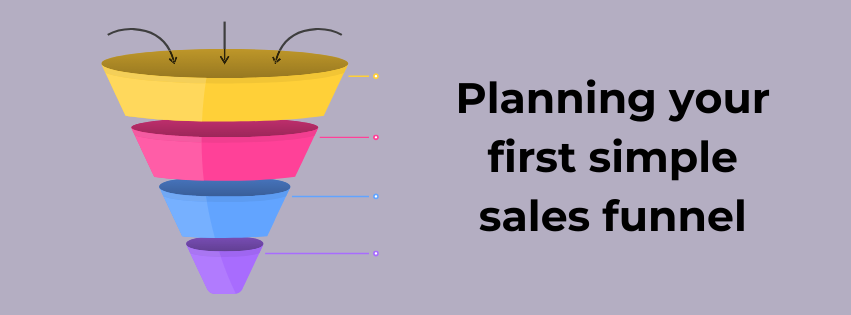
Planning your first simple sales funnel

A sales funnel is the journey you take your customer on to lead them from follower who may or may not be interested in what you do, to getting a sale or a sign up to one of your services.

My last blog looked at how to create a sales funnel, which gave information about all the various steps of a sales funnel. This blog post breaks things down even more and gives you an example of a very simple first sales funnel.

Step 1 – free content

The awareness stage focuses on attracting potential customers. This typically starts online with social media posts and/or blog posts or maybe YouTube videos – FREE information that you give out. This is where your potential customers enter your funnel –the awareness stage.  

Potential customers could stay at this stage for a long time – they love your content and enjoy learning the things you teach them or show them. So free content moves them into the education stage.

Step 2 – you introduce your low-cost offer.

I’m going to cover two ways to introduce a low-cost offer to entice potential customer to buy.

Social media offer

With social media, you can offer a substantial discount to get a customer through that first hurdle of buying from you. I often see ‘Tenner Tuesday’ or ‘Fiver Friday’ on Facebook. This is a risk-free and low-cost way for a potential customer to try out your products or services.

This is a good way to get that first customer, but there are no guarantees that they’ll buy again from you, because other than seeing your business and your products on social media, they may not look for you again. If you have a website or online shop, it’s important to give them details of this so that they have a further opportunity to look at your products/services.  

Opt-in offer.

If you have a website, then you can set up an opt-in offer that encourages your potential customers to subscribe to your email newsletter.

Opt-in content is still available to your potential customers free of charge, but this is where you get an email address in exchange for the content. Subscribing to your email newsletter can be the first step towards the decision stage, where they say ‘yes’ to something.    

So, your opt-in offer is something you give away for free to get someone to subscribe to your newsletter. What you offer will depend on the type of business you run. It could be:

  • An e-Book or PDF
  • A checklist
  • A free small product (although I wouldn’t advise this as it will cost you money for postage)
  • A small discount
  • A tutorial on ‘how to’ do something
  • A webinar or video series

This is called a lead magnet, because it attracts a potential customer with the free content, (like a magnet), which entices someone to give their email address (lead).  

So, they sign up via your website or link you’ve put on social media, and they receive their free content, in exchange for their email address. You now have them signed up to your newsletter – and they have said that first ‘yes.’

Step 3 – have a further offer within your newsletter.  

When someone signs up to your newsletter, they will usually get a thank you email, with their free offer attached or a link to download it or go to it (if it’s a video or tutorial).

Then you have a small email sequence that begins to nurture that relationship, and you can suggest a further offer, which is a low-cost offer. This low-cost offer is very low risk to the potential customer, and low risk to you as it doesn’t cost you much, if anything, depending on what it is. It means that your potential customers can try out your paid offer without spending a lot.

What you offer, again will depend on what kind of business you are. For example, you could offer a low-cost webinar or tutorial, that you send them online, or that is on your website in a hidden page. It could be you offer an incentive to buy something with a discount (like your Tenner Tuesday or Fiver Friday) if you’re a product-based business.  

If they take you up on the low-cost offer, they have taken the first step to being a customer and your funnel is working! And so long as your low-cost offer gives them great value and they love it, they are more likely to buy from you again – and pay a little more for your higher cost products or services.

It takes time.

It takes time for potential customers to decide to take you up on one of your more expensive products or services, but by nurturing that relationship through your email newsletter, where they learn more about you and your business, and get to know you more, there is a chance they will convert to a regular customer. You can also continue to nurture this relationship on social media.

The decision stage and action stage can take a while for your follower on social media, or subscriber to your newsletter to trust you enough to buy from you, but it will happen. By creating the odd offer or discount every now and again, it will further encourage that undecided someone to convert to a buyer or client.   

Once you’ve mastered that all important simple funnel, you can move on to something more complicated, such as upsells and downsells, or even move them to a more profitable funnel, which if you have email marketing, you can do through segmenting your market – which is another blog post in future!

If you find this all a bit too complicated, you can book a free call with me to discuss how I can help you move forward and create your own sales funnel.  


Building your SEO strategy – Part 1

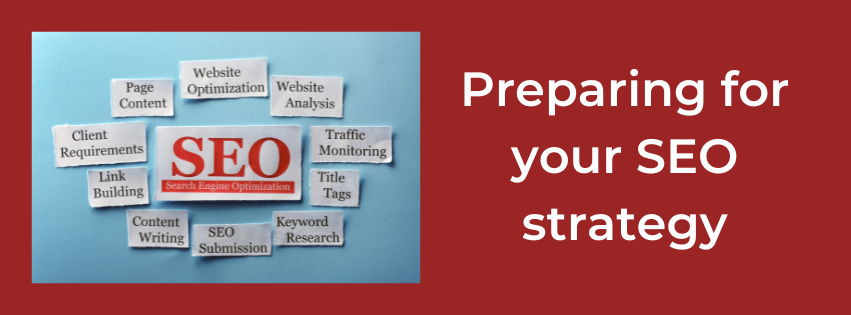
Preparing for your SEO strategy  

Whether you have a small business or are part of a bigger corporate, SEO (Search Engine Optimization) is a must for your website to help you rank higher on Google and other search engines.

Building your SEO strategy sounds complicated and may make you want to immediately zone out and not read more – but trust me, I’m going to try and keep it simple! It’s really just a plan!

Your SEO strategy is simply the process of organising your website’s content to improve your chances of appearing in search results – a way of maximising your opportunities to get organic traffic from search engine results pages, (SERPs).

Having a strategy or plan, helps you keep on track when you create your content. It helps you see that you need to create content that people are looking for and searching for, rather than creating content you think they’re looking for, or posting what you want to post.

When you just react and post without a plan, your content will appear unorganised and scattered – this is when search engine bots have a problem indexing your site, understanding exactly what you do and therefore, have a problem ranking your pages.

BUT WE CAN FIX THIS! However, as it’s such a big subject, I’m going to do this over a few blog posts, so you don’t feel too overwhelmed!

Steps to helping create an SEO strategy.

Here are few simple steps to follow:

Make a list of keywords.

This is always the first step to take. Use Google search to help you with this. OK, let’s go with an example…

You make candles – you sell them at markets and on your website – and you also use social media. You make all sorts of candles for all sorts of occasions, some standard that people can buy and some bespoke.

Your keyword search starts with Google – type in candles or put the word twice (as I did – candles candles).

Google will then suggest loads of options, such as:

  • Beeswax candles.
  • Votive candles
  • Scented candles
  • Four candles (!!! This made me smile – if you know the Two Ronnies sketch)
  • Birthday candles
  • Cake candles
  • Soy candles
  • Specialist candles
  • Candles near me

You’ll know that these are good keywords to use for SEO as they come straight from Google and so you know this is what people are already searching for.

You will find that short-tail keywords (search words using just one word – such as ‘candle’) are more popular as most people will start with just one word when looking for something specific.

Long-tail keywords (such as ‘candles for special occasions), won’t be as popular in the volume of people looking for them, but they tend to be generally easier to rank for and obviously attract people who are searching for something more specific. 

I’d say type in several different words and short phrases into Google and see what comes up – try and have a list of at least 10 keywords.

You can then check them in a keyword checker (there are some free sites out there, such as  https://www.wordstream.com/keywords or Ubersuggest) which will give you the number of people searching that keyword and whether they’re low, medium or high volume.  

Look at Google’s first page.

Once you’ve got your list of keywords, type them one at a time into Google search and look at the first 10 entries that come up.  This shows you the businesses that currently rank for that keyword, and the kind of thing (maybe a list or a business itself) that people are looking for when using that keyword. Make a note of what comes up in the search and what kind of things, such as lists or blog posts that come up.

Analyse your competitors. 

Most of us will know who our main competitors are, but to find out who Google thinks your competitors are, you can use a free tool, such as Semrush, to help you. You simply type the URL of your website into their search, then click on ‘Domain overview’ and scroll down where you’ll find a further search called ‘Main organic competitors.’ If you click on this and then click on ‘view all,’ you will get loads of information about keywords. It will show a list of all your competitors, plus the most common keywords that you share, as well as telling you how much traffic those keywords pull in.

Where you see a lot of common keywords, you’ll have your list of at least 4-5 competitors.

Keyword gap

You can now use the Semrush ‘Keyword Gap Tool.

The ‘gap’ refers to the keywords that your competitors are ranking for, but that you’re NOT ranking for.

This tool will help you identify those gaps, so you can then use them on your website or blog, therefore optimising your existing content with those keywords – or creating new pages to use them.

To use this tool, you simply put the URL of your website and then the URLs of four of your competitors and press ‘compare’ and scroll down to ‘all keywords details for…’ and click on the ‘missing’ tab. You’ll get a huge list and then it’s up to you to sort through which of those missing keywords would be relevant to your business and to your website. 

There are lots of other uses that Semrush can help you with in analysing your competitors and your website, so it’s worth going on and having a play – and it’s really interesting!

These are the first few steps for SEO and will help get you prepared to look at your SEO strategy. Next time we’ll look at how to use this new-found knowledge to help you rank on Google.

If this all feels a bit too overwhelming, I can help you with your SEO strategy through 1:1 coaching. Just contact me to find out more.

Creating problem solving content for product-based businesses

Over the past few weeks, I’ve had a lot of people ask about how to create problem solving content. And why would you need to do that, especially if you’re a product-based business? There is a lot of information out there about problem solving for service-based businesses, so this article is for all my product-selling followers! And by writing this and creating social media content around this subject, I’m creating problem solving content!

What is problem solving content and why do you need it?

The first thing I want to say is that you need to address your customers’ problems or pain points, without them feeling you’re giving them the hard sell. This is a real turn-off!

With social media being such a popular medium, it makes sense to have some engaging content that makes them think. Everyone loves to read a story and people love to be able to express their opinions or join in with a debate, so let’s look at how you can address this.

Problem solving content captures your followers’ attention by giving them an answer to a particular question or concern they might have. And provides tangible examples to illustrate your points.

Why do you need it? It helps your customers and potential customers imagine how they can use your product and that it is something they NEED in their life! Being able to picture themselves using your product and the benefits it brings is half the battle to getting a sale.

Understand your audience’s problems.  

I know I bang on about this all the time, but the first step to creating the content is understanding what problems your customers may have. This once again boils down to knowing your target audience and what challenges they face, what they might be interested in and any obstacles they might have (or excuses) for not being interested in what you have to offer.

One of the ways to obtain this information is to ask questions or conduct polls on social media, asking for feedback from your audience. For example, you may have a very popular product – ask WHY your customers like this particular product.

And ask what else they would like to see from you.

Give your audience solutions they understand and can relate to.

Once you understand the problems or worries your audience has, it’s time to think of ways to show them the solution – one they will understand and be able to relate to.

Don’t just tell them how to solve a problem, show them. You can use case studies, examples from reviews or recommendations, or an online tutorial or short video to illustrate how your product can solve a problem. This helps make your content interesting, engaging and gives them ideas as to how your products can be used.

Let me give you a few examples for different kinds of products:

You sell jewellery – it’s always exciting to show images and maybe slide shows of your jewellery, but if you have a customer who has bought something from you for a particular occasion, ask them to send you a photo of themselves wearing your jewellery. You can then use their review with a photo – it packs more punch.

Give ideas as to how a particular piece of jewellery could work. You might sell earring and necklace sets that would be perfect for a bride to wear on her wedding day. Photograph those sets with a wedding inspired background – if you use Canva, there are wedding inspired backgrounds you can use. Then, instead of just focusing on the bride, why not show other sets that may be in different colours that could be gifted to bridesmaids? If you do jewellery with different length chains, you can say that in your content.

If you make your own jewellery, show the process in step-by-step photos or be brave and do a time lapse video, stating that you offer a bespoke service for those special pieces or gifts.  

You make hair accessories – you can use all the same ideas as for jewellery, but also you can include children in your marketing. Children love hair accessories for many different occasions, such as going to school (could you offer scrunchies or hairbands in school colours for example?), or the same with a bit of bling for parties.

When you are advertising your products, show or give ideas as to how they can be used. If you do adult accessories, (as someone with long hair that gets in my way), you could push the angle of headbands/scrunchies are not only stylish and pretty but keep your hair out of your face when you’re gardening or at the gym.

You sell gift items – this is a broad category. You might sell soft toys, handmade items or personalised items, or a host of other things. But the principle is still the same. Give potential customers ideas on how they can be used and what events they could be used for. This could be birthday’s, Christmas, Easter, Valentine’s Day, Mother’s Day, Father’s Day, birth of a baby, christening, wedding – the list is endless. But if you have products that could be adapted to all these special dates, you have a bigger market for your products.

If you have safety features or must have safety certificates for your products, mention this, so people are happy that a product is safe to gift to children for example.

You sell beauty products, personal products, or home cleaning products – there are lots of ways to show and tell that these products solve problems. For skin products or personal products, it could be that it will make your skin glow, help with skin problems, is an effective deodorant, softens your skin after shaving – the list is endless. The key here is to do videos of you using the products or having lots of before and after photos from customers, or photos of customers using your products. Reviews about how it helped solve a particular beauty or personal problem will also give you social proof that your products work and are worth investing in. Tell customers that they don’t contain any nasty chemicals and if they are allergy friendly.

The same applies to cleaning products – are they eco-friendly and don’t contain harsh chemicals?  Do they work? Create videos showing you using the products, for example on a sink – before and after. Use customer reviews to give you social proof.

I could go on with all the different types of business out there, but the principles are the same, no matter what business you are in.

Be honest with your audience.

This goes without saying, but transparency is really important. Be honest about what customers can expect from your products and their solutions. Don’t promise something you can’t deliver or you’re not sure is correct.

Always set realistic expectations.

Engage with your audience.

This is more important than a lot of people realise. Talk to your audience. When they make a comment on your post, always reply to it and if necessary ask questions and engage in a conversation. If someone asks a specific question, answer it or if you think it might be more personal, reply that you will send them a private message – and ensure that you do!

Ask for feedback on your products, your content, your videos and ask if there is anything else your audience would like to see.  

Do you write a blog or have your own newsletter?

If you write a blog, you can use it to go into more detail about a particular product. A post on social media shouldn’t be too long or people won’t read it, but if they read your blog or have signed up to your newsletter, you have a captive audience, who WANT to know more or find out more about you and your business, including your products.

So, if you create a post that you could give a lot more detail about, write a blog post about it and advertise that on your social media account. And if you have a newsletter, include a paragraph every time about one of your products and how it solves a problem. Again, you can advertise this on your social media posts. This not only offers a more in-depth service, but it also directs traffic to your website or blog.  

Final thoughts

You need to know your target audience and what they want. You must understand what kind of problems they have that your products can solve.

If you feel you are struggling with how to create problem solving content for your business, I can help. Sometimes it’s a case of ‘two heads are better than one.’ I offer an hour’s brainstorming session, where we can discuss your business, find out more about your target audience and set a plan in place to create that problem solving content that will speak to your customers and ultimately get more sales. Either message me or drop me an email to make an appointment – cindymobey@outlook.com

Now, put your thinking cap on and get creative!

Find your niche and market, market, market

If you’re going to make a success of marketing your business, you need to hone in on what is the best niche for you to be in. What will sell well? What will make you the most money?

What is a niche market?

A business niche is a focused area of a broader market that your business specifically deals with. It doesn’t matter whether your business is in a unique industry or a saturated market, it’s really important to differentiate yourself from your competition, as this is what helps you to win your audience.

You might like everything you do, but in order to be a successful business, you need to be able to distinguish your brand from your competitors, find what you are really good at and establish yourself as a dominant leader in that area. Even the biggest names can’t be everything to everyone; there are always going to be those small groups of people who need a particular product or service not met by the bigger companies…which is where the small business can step in.

What are you good at? 

This first question is probably the most important. It’s not ‘what would you like to be good at?’ You need to be really honest with yourself – where do your talents really lie? What skills do you have? What do you enjoy doing? Once you have decided what you are good at, make a list of your skills and talent in that area. For example, if you love knitting, crocheting and sewing, which one do you excel in?

Once you know which you are best at…let’s say knitting for example, then you need to look at what skills and talent you have. So, it might be knitting baby clothes, knitting adult clothes, knitting toys – put the things you enjoy making most at the top of the list and so on, down to the ones you least enjoy.

What do potential customers need from your list? 

This is where you need to do some research. Of the things you are best at making, what is popular? You can look on Etsy, eBay, Shopify and Amazon – are the products you are good at making doing well? Make a list of the things people need from your list of what you do well…then look at these questions and do some research.

  • Do you solve a particular problem for customers?
  • Is your product(s) something that people will come back for time and time again? This is important for repeat business.
  • If there are other people selling the same as you, can you offer something unique that they don’t?
  • Who does your product appeal to? Can you expand that to include other groups? For example, if your product appeals to an older age group, can you make it more appealing to a younger audience. The bigger your product appeal, the more you will sell.

What will people pay for?

Now you know what is marketable, which do you think people will pay the most money for…put your products in order of price…from high to low. You now have your niche – your list of the products you like to make, that you’re good at making, that have a potential audience and that are sellable.

Market, market, market

Now you have your niche and know what is marketable, it’s time to actually market it. If you are a small business, marketing is all the more important as you won’t necessarily have a huge brand following, nor the money to spend on expensive and extensive advertising. So, part of your marketing strategy will be to stand out in the crowd. I wrote this article a while ago, but it is still relevant and will give you some tips on standing out in the crowd.

How to make your business stand out in the crowd!

Hopefully you will pick up some great tips!

You should try to spend at least an hour a day promoting your business…and some things are much easier than others – here are some quick-win tips to help you promote your business that don’t cost the earth.

  • Always remember that YOU are your business. No matter what you do or where you are, everywhere is a business promotion opportunity. Your image largely reflects on your business. Although we all try not to, most of us do judge people on our first impression of them…so make sure that you always give a great first impression.
  • Your social media pages are the obvious choice for this list – they don’t cost anything and you can reach your target audience by publishing the right kind of content that will appeal to them.
  • Always carry business cards as you never know who you might meet and if you don’t carry them, you could be missing an opportunity to get someone to contact you.
  • Can you leave flyers or business cards at places where your potential customers are likely to be…at the gym, hairdressers, beauty salon – places you know that your target market hangs out!
  • Talk to people wherever you go – if you’re in the Doctor’s surgery waiting room, strike up a conversation with someone…too many of us sit in silence in these places…do you take your children to sport events? If you do, you’re likely to be hanging around with other parents…talk to them. There are always opportunities to strike up conversations and promote your business.
  • Attend networking events…again, this puts you in front of potential customers face to face…sell yourself and your business.
  • Sponsor a local event or charity – or run a small event for charity in your own home or garden.
  • Host a seminar or training event and share your skills – a great way to get your business name out there.
  • Collaborate with another business which complements yours and vice versa. For example, if you do hair for weddings, you could collaborate with someone who does make up or flowers. Promote each other’s business on social media and on your websites.
  • Give your website/social media pages a facelift to keep it fresh and don’t forget to regularly change your cover photo and profile pics so they are up to date.

There are many other small ways you can promote your business and, as I said earlier, it doesn’t have to cost the earth – the most valuable thing you can invest in your business is your time.

If you have any questions, or would like to have a chat about your niche and target audience, contact me or message me on social media. Alternatively you can email me – cindymobey@outlook.com

Are hashtags still viable in 2024?

Did you know that hashtags have been around for about 20 years on social media?

Originally they were used to help filter and organise conversations on Twitter, but over the past several years, Instagram and then Facebook have adopted them to help businesses to be seen and found on search engines.

For the purposes of this article, I’m going to talk about Instagram and Facebook.

What are hashtags?

Hashtags are used on social media platforms. A hashtag is a sign (#) followed by a word or phrase. The word or phrase that businesses use will depend on what kind of business they are, or what their social media posts are about. That word or phrase is seen as a category for search engines.

For example, I often use the hashtag, #smallbizmarketingtips when I post on Instagram. I’m a marketing coach and content creator helping small businesses. So, this hashtag is relevant to my business. I often post tips for small businesses to help them with their marketing. Using this hashtag does what it says on the tin – it marks that particular post into the #smallbizmarketingtips category.

Not only does it categorise my content, so that when someone searches for #smallbizmarketingtips, my posts are often included under that hashtag, it also helps individual businesses find an array of tips from lots of different marketing businesses.

In a nutshell, a hashtag helps social media users connect with other businesses over specific topics and popular content – and acts as an invitation to discuss, view and engage with all sorts of content online.

Should you use hashtags?

Yes, absolutely. Using hashtags increases your chances of being seen on social media and in search engines. For example, hashtags help Instagram know exactly what your content is about and helps IG suggest that content to people who are interested in that topic. It also helps show that content to users who are searching for specific topic too.

How do I find hashtags?

There are a few ways to do this…

  • You can simply put a search into Google. Just type in ‘hashtags for XXXX’,  (whatever business you are in). A list of hashtags will appear…usually it shows you the top 10 or more for that category.
  • You can use a hashtag generator tool. Some of these tools are free, but I haven’t found any that you don’t have to register for – and often there is a catch or hidden fee somewhere!  
  • Simply log into your Instagram account, go to the search and type in # followed by whatever you are looking for. You will then be shown the top posts that have posted under that category. It also tells you how many posts fall under that category.

Do not use hashtags that have millions and millions of posts under it – your post will just get lost. I always advise using hashtags that have under a million…and mix it up. So, use a couple that have between 700k and a million posts, a few that have between 200k – 700k, and the rest under 200k, making sure you use some that are under 50k. This gives you the best chance for your posts to be shared in that category. I actually also use hashtags that only have between 500 – 1k posts, as I know my posts will feature in that category and it gets my business out there.

How many hashtags should I use?

It really depends on what you want to achieve. On Instagram, you can use up to 30 hashtags per post, but new info suggests 5-10 max.

There is no hard and fast rule, however if you keep your hashtag numbers lower, you can connect with your specific audience better.

Facebook is slightly different. A study conducted by thesmallbusinessblog.net looked at over 200,000 brand posts on Facebook.

The study found that content with one or two hashtags had 593 interactions on average, compared to 416 engagements for posts with 3-5 hashtags and 188 interactions for posts with 10+ hashtags. From this, it’s clear that Facebook posts with fewer hashtags tend to perform better.

Are hashtags still popular in 2024?

That’s a BIG, FAT YES!

Including a hashtag strategy in your marketing will help you build your brand. There’s never been a better time to put relevant hashtags in your social media posts. They play an important role in connecting potential customers to your business.

I can help you build your hashtag strategy, so contact me to get started!

The Instagram Algorithm in plain English!

I’ve been reading a lot about the Instagram algorithm (and the Facebook one too) and, although I eventually understood, it took a while as so many articles are written in such an unnecessarily complicated way. So, I thought I would write one, taking details from the research I’ve done, and put it into plain English! I hope this helps.

What is the Instagram algorithm?

Basically, it’s a way to look at the content on Instagram and rank it into a particular order. The algorithm decides what content is shown and what order it’s shown in each Instagram user’s feed. It also uses this same information to decide what is shown on the Explore Page, Reels feed and hashtag pages.

The algorithm takes every bit of information into account and analyses every piece of content that is posted. It also looks at any captions or alt text on images and hashtags. It then decides what and how it is going to give relevant content to each user, ensuring that they all have access to subjects they are most interested in.

It knows what you like and want to see as it looks at, not just what posts, stories or reels you post, but what posts, stories or reels you look at, as well as considering any other interests or behaviours you show on Instagram.

For example, I post mainly marketing tips and quotes for small businesses on my feed, with the occasional light-hearted post thrown in.

As well as looking at other businesses’ marketing posts, I also look at foodie, keto and recipe type posts, and reels. And I love following photographers, crafters, artists, and some fun stuff.

So, these are the kind of posts that are fed into my suggestions.

How does it work     

Every time you go onto Instagram, the algorithm scans through all the available content to decide what to show you.

It looks at three particular factors:

Your relationships – it looks at the content you post and the people who look at it – and vice versa. Do you follow each other? Do you leave comments on each other’s posts? Do you message each other? If you regularly interact with the same user, you’re more likely to see any new content that they post – again, the same vice versa.

This is important for your small business. If you are constantly responding to messages and comments – and sending/posting them, it can help improve your visibility on Instagram.

Your interests – the algorithm looks at the type of content you interact with. When it notices that you tend to look at similar types of content, it will give you more of the same.

Is it relevant? The algorithm will decide how relevant each piece of content is, if it fits with any current trending topics and whether the content is evergreen or timeless. The most recent posts are considered more relevant than older ones for example.

How often you use IG – If you don’t use IG very often you will only see things that are directly relevant to you, so you might find you seeing only posts from your friends and family.

Another thing that is considered is how many people you follow. The more people you follow, the more accounts are competing for space in your feed.

How long you spend on IG – this is called session time. If you don’t spend much time on IG, as I said above, you’re more likely to mainly see posts from your friends and family, whereas if you spend a significant amount of time on IG every day, you will start seeing more posts that you are interested in, and similar businesses to your own. Also, you’re more likely to see more posts from those you follow and interact with.

Why do you see what you see in your feed?

Every day you will see lots of posts and stories that the IG algorithm predicts you will like, based on:

  • The accounts you follow
  • How many likes those posts get
  • How many times you’ve interacted with that account in the past (through likes, comments, profile visits, follows and saves etc.)
  • What kind of posts or stories you look at and interact with

After it’s assessed all these things, the algorithm has an idea about what other kinds of posts you might be interested in, and then pushes them to your feed and stories. This might be accounts you already follow, but it also shows you posts that it thinks you’ll like from people you don’t yet follow. It will also suggest accounts that you might be interested in.

In the same way that the IG algorithm looks at all these different things and rewards quality, engaging content and pushes it your way, it also rewards quality, engaging content that you post by pushing your account to others.

There are strict guidelines about posts

Just the same as any other social media platform, there are strict guidelines about what is not acceptable. Posts that contain misinformation, or of a political nature, or content that is potentially upsetting or sensitive are not liked, so if you post this kind of thing – or if your images or videos are low resolution, you might find that your posts are not pushed to other accounts.

The best way to get seen on IG

The best way to get seen on IG is to post a variety of posts regularly, such as carousels, single posts, images, reels, video, stories etc. When posting reels or stories, use the filters, effects, stickers, polls, links, music etc that is there to help you, as this makes your posts more interesting.

Check out your insights

Your insights will give you information about your audience and what kind of posts they like best, so keep an eye on this on a regular basis. It also tells you what time is best for you to post to get the maximum reach for your account.

Getting more engagement on a story or reel can be as simple as adding a sticker or poll. It’s about experimenting with all the options available to you, to find what works best for your business and followers. Ask questions so that you encourage your audience to engage with your posts, and always reply to comments and DMs.

Why are hashtags important?

Whilst the IG algorithm can evaluate certain things, it can’t recognise what’s in a photo or image you’ve posted. This is one way that hashtags come into their own. For example, if you’re a pet photographer and you post photos you’ve taken of customers’ pets, the algorithm won’t know this – but it will recognise the hashtags, such as #cutecats or #dogsofinstagram. Using accurate and descriptive hashtags that are relevant to your post will help the algorithm understand your post, and so push it to people it knows are interested in that subject.

Conclusion

To sum up, the IG algorithm evaluates content and ranks it. It looks at what you and others like and matches up accounts it thinks will resonate with you all. Hashtags help it to categorise posts, so it pushes those posts to what it thinks are the relevant audience.

You can help the algorithm get your posts noticed by doing a variety of different types of posts, using all the gimmicks available, posting regularly, and engaging with people who comment on your post, and with those whom you comment on.

Use your insights to help you know what your audience find most interesting and engaging and to find out when is the best time to reach your maximum audience.

Instagram is a social media platform…so you must be sociable. You can’t just post and run and hope that what you post is seen.

If you found this helpful, please leave a comment below. And if you have any questions, or need help with your Instagram posts and marketing, please feel free to drop me an email – cindymobey@outlook.com  

Alternatively you can check out my website.  

Personal vs Business Facebook page for networking?

Is it better to use my personal profile, or my business profile on social media for networking? This is a question that seems to be out there a lot lately, and there is plenty of conflicting information. Some seem to be on the side of using your personal profile and others talk about the benefits of using your business profile. So, in this article, I’m going to try and unravel the various opinions, then you can make up your own mind as to what would be best for your small business.

According to Facebook itself, your personal page should NOT be used exclusively for business purposes – you should set up a business page. If you do promote your business on your personal page, make sure you read Facebook’s terms of service to make sure you don’t go against their rules – if you do, your account could be shut down.

That being said, you can use your personal page to indirectly promote awareness of your business. So, what does that mean?

What is the difference between a personal page and a business page?  

Personal page  

When you decide to have a Facebook profile, you must set up a personal page as you sign up as an individual. The purpose of your personal page is to stay connected with family and friends – that is, people that you already know. You can connect with ‘friends of friends,’ and with people you meet inside Facebook groups.

You can join groups via your personal page, which means that you do start to accumulate ‘friendships’ with people you don’t personally know. You can also join groups from your business page, but only if the admins of that group allow members to join from their business page – which in my experience is very few, so I tend to join groups from my personal page.

Your personal page will also show you with your family, and maybe out with friends at parties etc. This kind of content, especially if it shows you doing things that would be inappropriate or harmful to your business, wouldn’t be the kind of thing you’d necessarily want your business associates and customers seeing. For example, family members may not want their wedding or family photos in the public eye.

However, you can adjust your personal page to make it more professional, for those times when you do want to share something about your business, such as making your posts public. Just remember, if there is a post you only want friends and family to see, you will need to adjust this setting each time you post something personal.

There is value in using your personal page to help your business’s visibility. The connections you have with people on your personal page can be stronger than with business pages – people may be more likely to trust your business as they know you and personal pages tend to have a greater reach than business pages.

Your friends on your personal page are more likely to see an update from your personal page, than from following your business page, and if you share some of your updates about your business on your personal page, you have the potential of reaching a completely different network of people. But you do have to be careful that your content is not all about business, or you risk violating Facebook rules and regulations. It is a bit of a minefield.

So, what kind of content can you share?

  • Share news about winning an award or if your business gets into local or national news.
  • Share details of charity events that you support.
  • Blog posts
  • Photos from a conference you attend, or a networking event. Or, if you have a team, you could share about a company picnic or outing.
  • Client stories
  • Business tips

But as Facebook rules state that you cannot use your personal page solely for business, you have to be sensible and pick and choose what you share – and not bombard your personal page with content. It’s about getting the balance right.

Business page

Your business page is all about your brand and your business – or about a cause that is close to your heart. It’s a no-brainer to use a business page as the benefits are huge.

You can set up ads, promote your products and services every day through posts and stories.

The good bits about a business page are that you can:

  • See insights, which is data about your followers – when they’re online, which posts or stories were the most popular and a host of other useful data.
  • Advertise – pay to reach a specific target audience, which helps with targeted campaigns.
  • You can plan and schedule posts for weeks ahead.
  • You can also outsource your business page to a social media manager, so they can post and manage your page for you.
  • Tagging – you can tag other businesses and they can tag you in posts using your business name.
  • Collect and share reviews – social proof is a must for every small business.
  • Set up an event and invite followers.

Your business page is the place where your customers know where to find you – as it uses your business name. You can communicate directly with your customers to answer their questions, asking them questions and getting feedback.

Your business posts help you grow your community, giving your customers the opportunity to share your posts with their friends and family and so creating a digital ‘word of mouth’ as such!

You can also choose to boost a post to a specific audience by their geographic location, age, interests, and lots more. This can work well if you do your research well and know exactly who you want to target.

You can add website or online shop details so your followers can click directly from your page from their mobile devices, so don’t have to do a separate google search.

The downside to a business page is that Facebook’s algorithm tends to prioritise content from personal pages over business pages. They want you to advertise or use boosted posts to help you increase your visibility, so it takes more effort to get your page established.

Talking of effort, managing a business page takes a lot of time and effort to create and post content, respond to messages and posts, and maintain a consistent strategy to stay active and keep your audience engaged, but once you get it right and get organised, it is very rewarding and brings in the business.   

Networking Conclusion

Networking on Facebook is about building professional relationships with other businesses or group members and about creating a good reputation for your business.

Growing your network and followers will increase your visibility and will help establish yourself as an expert in your line of business.  

And we’re back to that original question – Is it better to use your personal page or your business page to network?

My conclusion is to use BOTH! I know (!), but after all the research I’ve done, I’ve come to the conclusion that both have their merits and by using both, you will reach a larger audience.

So, use them together, engage with your audience using one united voice. Interact in groups from both (some groups will only allow you to interact with groups from your personal page) and publish your content on your business page, but still share the odd post/blog with your personal page, and definitely share good news about your business on both, as it’s relevant to you both personally and professionally.  

It’s about striking the right balance and not overdoing the promotional business stuff on your personal page, as you’ll risk violating FB rules.   

I really hope this has helped you see the differences between the pages and help with your decision on how to network effectively – use both! It makes sense!

If you’d like any help with your business page or don’t have the time to consistently post or create posts, drop me a message, and we can have a chat about how I can support you through content help or coaching.

Alternatively, check out my website for more information.