How to conduct a SWOT analysis for your small business

business-3543809_640

Whether you’re new to running your own small business, or whether you’ve been going for a while, conducting a SWOT analysis can help your business get on the right track. I tend to glaze over when someone talks about something that sounds like it will be difficult, or something that I might not understand, but SWOT analysis is a very simple concept, which can give you great insight into your business and generate ideas to take your business forward.

What is SWOT analysis

The term SWOT is an acronym devised from four words; Strengths, Weaknesses, Opportunities and Threats. Conducting analysis on your business in these four key areas help you look at internal and external factors that affect or have the potential to affect your business. It’s a good idea to conduct this analysis before you set up your business and marketing plan as it will help you develop your business strategy.

chain-690088_640You could also consider performing a SWOT analysis on your competitors, as this will give you valuable insight into their strengths and weaknesses…and may identify opportunities for your business that they haven’t thought of.

Where do you start?

A SWOT analysis is about making a list in four key areas:

Strengths – list what your strengths are…the aspects of your business or project that gives you an advantage over others. What do you do well?

Weaknesses – these are factors that put you at a disadvantage to your competitors – what don’t you do so well?

Strengths and Weaknesses are the internal factors of your business.

Opportunities – what are the opportunities you can see for your business? You might be able to spot opportunities from new technology, new potential markets for your products or services, or even lifestyle changes or local events.

Take a good look at your strengths and see if any of those can be converted into opportunities. Similarly, you may be able to work on your weaknesses to eradicate them and open up new opportunities.

Threats – do you have any hurdles you have to overcome with your business? Are any of your weaknesses a serious threat to your business? Look at what your competitors are doing to be successful – is there something you can change to compete? Of course, there are other threats to take into consideration, such as bad debts or loans.

Opportunities and Threats are the external factors of your business.

Who can help you?

positive-letters-2355685_640A SWOT analysis can be completed by you, but it’s always good to have another opinion, so draft in some help. Ask friends, employees (if you have them) and maybe even some of your customers – ask them what they think are your strengths and weaknesses. You may be surprised at the answers and it may help you to pull together a strategy to help you succeed further or improve an area of your business.

arrow-1538708_640

Action plan  

Once you have all the information you need, you can devise a strategy to capitalise on your opportunities and reduce your threats. Concentrate on these two areas first as they are the most likely factors that will affect your business and your future success.

Then you can work on your weaknesses and protect and increase your strengths.

When you have completed the analysis, go through your business and marketing plan to see if you can enhance any particular area of your plan.

Print off my FREE Conduct a SWOT Analysis worksheet and get started now!I

Happy planning!

Email: cindymobey@outlook.com

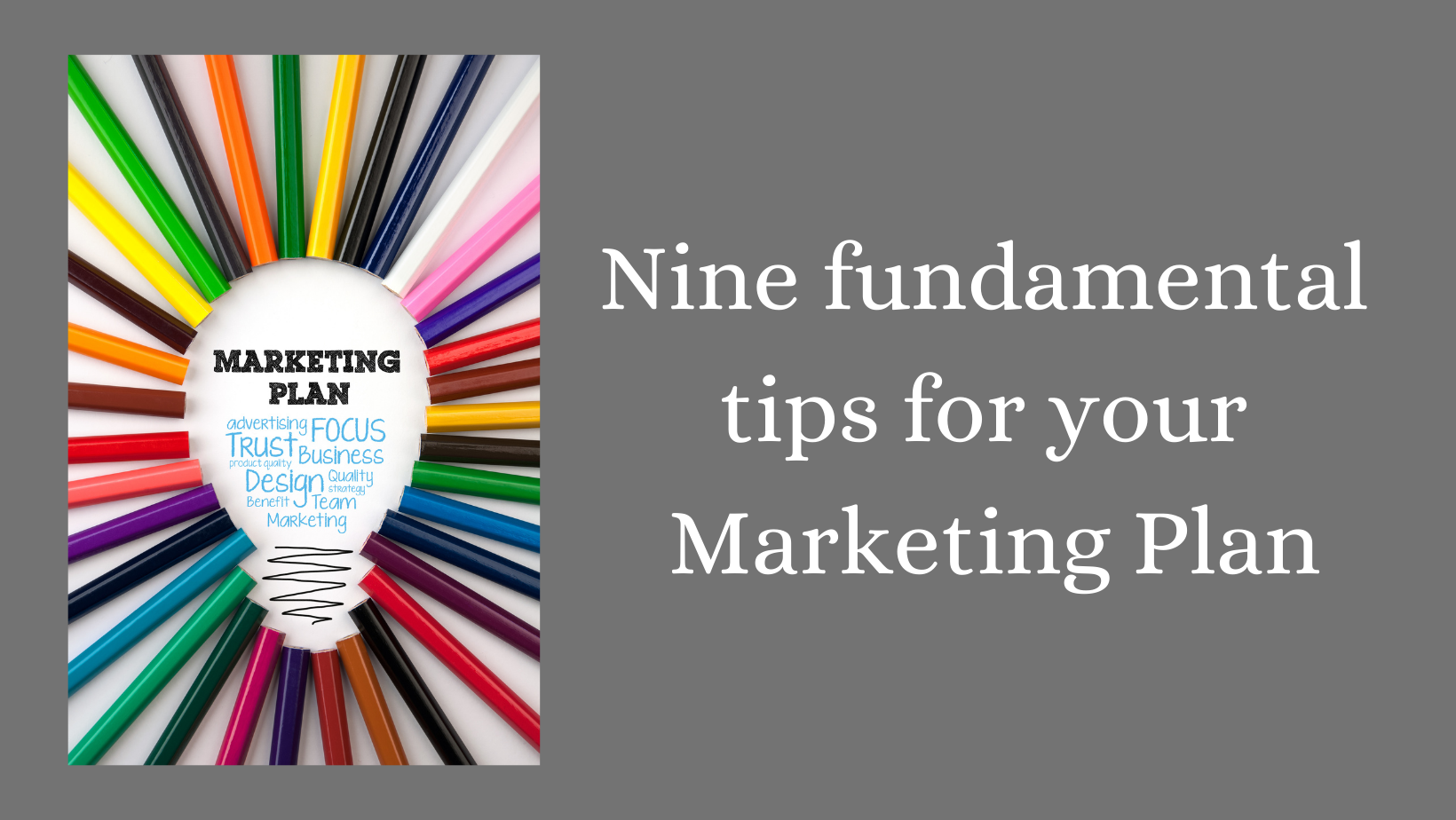
Nine fundamental tips for your marketing plan

If you think about marketing, advertising automatically springs to mind. However, marketing (or promoting) your business, is more than just advertising. It helps you to ascertain who your customers are, which customers you want to target and how to get them to choose your products above others in the marketplace.

A marketing plan will also include your existing customers – retention of customers is just as important as gaining new ones, so you need to look at continually reviewing and improving your offer to ensure you stand out from your competitors.

Here are nine fundamental tips on what to include in a marketing plan to ensure you cover the essentials…

  1. Executive Summary – Although the executive summary is at the beginning of the marketing plan, it should be written last. The summary will help you ensure that your plan makes sense and that you haven’t missed anything out.
    The summary should include details of your business, company name and contact details; what your business is about; your key objectives and your strategy for achieving your objectives.
    This helps you to ensure that your marketing plan, your marketing strategy and your overall business strategy all work together.
  2. Vision or Mission Statement – This is a statement that includes what your business is, who you’re selling to, what you’re selling and what is your unique selling proposition that makes you stand out from the crowd.
  3. The four Ps – once you know what your vision or mission is – your strategy – look at the four Ps…
    Product(s) – what is it about your product that makes your customers want to buy it? Do you need to change your products in any way to meet your customers’ needs?
    Pricing – how do you aim to compete with your competitor’s pricing – do you want to match it… undercut them… or do you want to charge more for a more quality product and service?
    Place – where and how are you going to sell your products? Do you sell them yourself or outsource them to retail outlets?
    Promotion – how are you going to let your existing and potential customers know about your products? This includes thinking about advertising, PR, direct mail and personal selling.
  4. Market Analysis – this is where you need to do copious research into what your competitors do and what the state of the marketplace is in relation to the products you sell.
    – Who are your competitors and how well are they doing?
    – What makes your competitors successful?
    – Who are your customers and potential customers – what are their geographic area and income levels?
    – What are your sales and distribution levels – what is your set up?
    – How well have your products sold in the past?
  5. Your target markets – it’s crucial to know exactly who your customers are and what they’re looking for. Take time to understand what your customers want and need and understand why they buy particular products. You’ll be able to target your market more easily if you know who you’re talking to, and what their problems are. Everyone buys products for different reasons.
    If you have an existing customer base, you can easily find out some of this information, by sending them a simple survey, asking them a few questions – maybe give them an incentive to reply, such as all replies will be put into a prize draw to win one of your popular products.
    If you’re not sure who your target market is – try this exercise. Write a description of one of your products – for example, if you were selling mobile phones, you might say it’s small and easy to use. Then write the features – in the case of a mobile, it might be that you can use it anywhere and it’s useful in a crisis. Then make a list of who needs this product – with a mobile it might be people under 20 to keep in touch with friends and parents/people in business to keep in touch with business partners when away from home or office/ for older people it’s good to have in case they have an accident in the home or need to keep in touch with relatives or carers…. You get the idea!
    Then try and decide which will be your target market and which will be your secondary markets…probably best not to have more than two or three secondary markets at most.
  6. Marketing objectives – In this section, you are planning the future of your business. What objectives do you want to achieve? Each objective should include a description of what you intend to achieve and should include numbers to aim for. For example you might want to sell more of a particular product, but just saying you want to sell more isn’t enough – you need to be precise, so you have something concrete to aim for, maybe sell 40% more of that product over the next 12 months. This gives you a solid objective.
    Pull together a timeline of your objectives – what you want to achieve and by when. This makes it easier for you to review at a later date.
  7. Promotion strategies – what tools will you use to promote your business? You could use:
    – Networking – join a business networking group and talk to people at
    every opportunity
    – Direct marketing – brochures, flyers, sales letters
    – Online – website, blogs, articles (give advice, become known as an
    expert).
    – Social media – Facebook, LinkedIn, Twitter etc.
    – Video – embedded into social media or via your own YouTube channel
    – Advertising – print media, business directories, ads in magazine and
    online
    – Press releases
    – Direct or personal selling
    – Trade shows/markets/craft fayres
  8. Budget – Along with promotion strategies comes budget. You need to know what you can and can’t afford to do and plan accordingly. Can you do some of the promotion yourself or do you need to outsource it?
  9. Measurement – you should aim to review your marketing plan every couple of months. Look at your various promotion methods and determine which ones work best for you and which don’t.
    You can survey existing customers for feedback; ask for feedback and recommendations; look at what your most popular products are and why. Then you will know what you need to do in future.

Pulling together a marketing plan isn’t something that can be done in just a few hours, it can take days – or even weeks – to ensure you have the right information and conduct the necessary research.

Now it’s time to take action!

Ten essential tips in making a good business plan

business-idea-1240825_640.jpg
A good business plan is exactly what it says on the tin – a plan for your business; how it’s going to succeed and what you need to do to make it grow.

Having a business plan forces you to look at the feasibility of your business, what will work and what won’t work….and makes you focus on the important and essential parts of your business – your next steps, tactics and strategies.

stickies-2852375_640

Here are a few tips on what to include, making sure you cover the essentials.

  1. Executive Summary – this is a brief overview of the whole plan. Detail what you do, how your business will make money and why customers will want to buy your product or services. This is best done after you have completed the rest of your plan.
  2. Analyse your market – it is worth investing some quality time in researching your market.
    – Look at what your competitors do – how are they successful and what makes them stand out from the rest?
    – Look at the price, quality and customer service that your competitors offer – then you can work out how to compete.
    – Where are the opportunities for your business – why will potential customers choose your products over those of your competitors?
    – Are there any barriers in place that may prevent potential customers from business-plan-2061634_640choosing your products or services?
    – If your business is already up and running, what do your customers like about your products, what do they buy; why do they buy from you and do they give you repeat business?
    The more you know about your customers, your competitors and the business you are in, the more likely you are to be successful.
  3. Business description – what it is, what you do.
    – Include a brief history of how and why you started your business.
    – Include your vision or mission statement – factors which you think will make your business a success
    – What is the current position of your business?
  4. Business goals – what are your business goals. For example, if you’re already in business, by what percentage do you wish to grow by this time next year? How many customers do you expect to have by this time next year?
    Ensure your business goals are SMART. 
  5. Management teams and employees – If you employ others, give details of your management team and employees and what their roles are.
    – How do they work together?
    – Do they all know what is expected of them and how they can help improve the business?
  6. Operations – what is in place now and what do you plan for the future?
    money-2696228_640– Look at premises you currently work from (it might just be from home). What will you do if your business expands – what premises will you need to ensure your business succeeds?
    – Who are your suppliers? What happens if you lose one of your suppliers and do you have others as a back-up?
    – Do you need to have any training in a specific area to help your business move forward? For example, if you’re a hairdresser, how do you keep on top of current styles?
    – Is there any equipment or materials you may need to invest in? For example, wear and tear on your current equipment – or maybe you may need more advanced software in the future.
    – If you run an online shop, what happens if you get overrun with orders – can you keep up with them and get them out on time with packaging and postage?
  7. Financials – keep a record of what you spend and what you receive.
    piggy-bank-2889046_640– Are you likely to have cash flow problem – if so, how will you deal with it?

    – How much does your business currently cost to run and what is it likely to cost in one year – or two years’ time.
  8. Marketing strategy – this is where you define your tactics and strategies to ensure that you are successful – only needs to be brief in the business plan – you can be more specific in your marketing plan.
  9. Risk analysis – what could go wrong – look at best and worst case scenarios.
    – If something goes wrong, how will you deal with it?
    – Include your contingency plan
  10. Measurement – this is a really important aspect in a business or marketing plan, but often something that is overlooked. Measuring everything you do ensures you know what works and what doesn’t. You can then plan a different approach if algebra-1238600_640necessary.
    – List what needs to be measured – such as how many people look at your business Facebook page or Tweets on Twitter. How can you improve on this?
    – How will you measure your success – what does success look like to your particular business?
    – Shout about your success – your customers will feel reassured they are dealing with the right business

Once you have finished your business plan, you can write your Executive Summary.  Then leave it alone for a few days and go back to it with a fresh pair of eyes. You can then make any necessary adjustments.

time-3222267_640 (1)

I can’t tell you how long it will take you to complete your business plan – every plan is different and it will depend on you. Business planning takes time – you need to spend quality time on researching and planning your business and marketing strategies.

Take time out at least once every three months to review your plan. Some things you planned will have gone well, others not so well. A business plan is a working document. It’s never finished…always a ‘work in progress’.  Having a business plan won’t guarantee you success, but it will go a long way to helping!

Business Plan  click on this link to download your free business plan template.

If you need help writing and researching your business plan, please feel free to contact me by email – cindymobey@outlook.com or via my website, www.cindyfreelancewriter.com


Cross-cultural communication and the great French lunch!

meeting-1453895_640It’s widely recognised that English is the language of business across the world. Here in rural France, I help people promote their small businesses, and although most of my encounters have been with English business women, I’m lucky enough to have joined a great group, Les Dames de FER, which I spoke about in my last blog, which help and support English and French women in business. Through this group I’ve gained so much knowledge about business life in France and find their training sessions and support invaluable. But what support is there available for French people who need to join a business meeting in the UK and what are the differences between English and French business meetings?

British diplomacy

Back in the UK, business meetings are mainly fairly formal and the British are known for their ‘stiff upper lip’ and the ‘grin and bear it’ attitude. Diplomacy is just something the British naturally do. For example, if I was in a business meeting in the UK, and didn’t agree with what someone was saying, I wouldn’t have dreamed of directly disagreeing with them. I would have said something like ‘Yes, that’s really good and it could work – alternatively we could look at it this way’.  But, whether in a business meeting in France or just in general conversation, the French are much more direct and will say exactly what they mean – if they say no, they mean no! There’s no misunderstanding.

When I first came here, I wasn’t used to the direct approach and thought the people were a bit abrupt, but I’ve come to realise that I was wrong –  this is the French way and no offence is meant – it’s just that they state facts.  But the British worry about causing offence or hurting someone’s feelings by disagreeing, so will say things such as ‘I see your point, but….’ which as a British person, I know this means they don’t necessarily agree with me. However, to a non-native English speaker, ‘I see your point….’ means it’s agreeable. The business English language barrier can cause confusion for non-native English speakers. And it’s not just in business that there are cultural differences.

French differences

Since moving to France I’ve noticed many cultural differences; in some ways it’s like stepping back a few decades. Most shops close on a Sunday and often Mondays too. Banks don’t open on a Monday either. And of course, there is the French lunch hour (or two!)

restaurant-1763081_640In the UK, lunch is a very informal affair, especially if like me, you work in an office. It’s accepted that meetings can be conducted over lunch – people will grab a sandwich and take it to a meeting. I nearly always ate my lunch at my desk, whilst carrying on working.  However, in France, this is unheard of… here, lunch is an occasion. Except for the big towns and cities, most shops close between 12 – 12.30 and don’t open again until 2 – 2.30pm. In my village, the church bells go mad announcing that it’s lunchtime. The French take their time over lunch, eating a three course meal with wine. And in rural areas, the timing of lunch is very flexible! If you’re trying to get a renovation project completed by tradesmen, you have to be prepared for the great French lunch – they down tools and disappear for a few hours. However, that’s not to say they’re lazy – they start work earlier, usually at around 7am and often work until it gets dark.

Time is something that is very loosely followed in France too – if a meeting is to start at 10am, it rarely starts on time – people will mill around chatting with a coffee. Everything is very laid back and informal. However, once a meeting starts, things are done in a methodical and direct way with conclusions and any action to take all very clear and concise….…and of course, if a meeting is conducted in the morning, it finishes dead on 12…..time for lunch!

5596899_orig[1] (340x51)Just as I continue to learn about cross-cultural communication in France, with the help of Les Dames de FER, it’s important for non-native English speakers who conduct their business globally, to not only learn the English language in order to compete in the English business market place, they also need to learn the complexities of cross cultural communications – including all the foibles of business English and diplomacy.

There are several companies that help non-native English speakers compete in the business marketplace. Executive Language Tutors is one such company. Based in London, their courses give men and women in business the confidence to perform and communicate in the professional workplace. Their courses range from elocution and accent reduction, to learn business English and cross-cultural communication.

Les Dames de FER and me

27

When I first became an Auto Entrepreneur in France, it was a daunting prospect. I’d worked for a large, global company in the UK and the thought of going it alone, in a new country, where I didn’t speak the language very well was scary to say the least. I joined a French class, so I could learn more about the language, and it was at one of these lessons that I heard about a group called Les Dames de FER. Set up to support small business women in rural France, I decided it was a good idea to join. It was the best decision I made.

Les Dames dLes Dames de FER lunche FER hold networking meetings, where like-minded women meet up and talk about their businesses, share information and experiences and support each other. There are regular sessions run by members to share their skills, such as social networking, blogging and the legal system, to name a few. I have found it an invaluable group to belong to and have made loads of helpful contacts. If you have a problem, there is always someone to talk to and someone always knows the answer.

President of Les Dames de FER

President of Les Dames de FER

As a freelance writer and marketing and communications consultant, I help people to promote their small businesses, sharing my skills with my clients and helping them with building their business and marketing plans, as well as writing website content, blogs and business articles. Being part of the Les Dames de FER group has helped me find new clients through networking with other members and the Foire Commerciale (Trade fayre) that they ran in September, gave us all a great opportunity to have a stand and show exactly what we could do and brought us a whole new group of potential clients.

Even though some of the seminars held are on subjects I know about, it’s still worthwhile going along as you always pick up extra hints and tips and it’s good to be able to discuss a particular subject with other experienced people. They are always very positive sessions and I always leave feeling fired up about my business and confident that I have a valuable service to offer to my clients.

I’ll never be a millionaire, but what I do have is worth much more than money can buy. I have a business, doing something I love and am passionate about, I have grown in self-confidence and have met loads of lovely like-minded women. The support of Les Dames de FER is second to none and I’d highly recommend them to anyone who runs their own small business here in France.

If you’d like to find out more about Les Dames de FER, take a look at their website, where you can find the application form to join.

http://www.lesdamesdefer.fr/