Artificial intelligence – what it is and how it’s used

Although most of us won’t be aware, Artificial Intelligence or AI has been used in day-to-day life for years. Virtual assistants like Siri or Alexa are great examples of AI in practice, supporting humans and making things more convenient.

But when ChatGPT launched, it made AI available to everyone and that’s when people started talking about machine learning and the ethics that brought up. 

This article looks at the basics and throws up quite a few questions!    

What is it?

I’m sure a lot of us have seen futuristic sci-fi films that show AI as sinister robots who become obsessed with getting rid of humanity! It makes for good viewing but isn’t what AI actually is.

AI refers to a machine or computer system’s ability to perform tasks that would normally need human intelligence. It is still guided by humans in that it needs programming for the systems to analyse data, learn by experiences and make smart decisions.

AI has great potential by enabling machines to solve complex problems and think intuitively, which takes it beyond automation.

The ethical question

AI is very powerful as it has the ability to act on vast amounts of data in seconds, but it’s vitally important that it is implemented responsibly – and that’s down to the programming. If AI were trained using date that hadn’t been properly checked and validated, it could replicate harmful biases about race, religion, upbringing, or other human characteristics. This could have disastrous results if that were then used in health, recruitment, or law for example! 

One of the key ethical concerns is around privacy and data protection. AI systems automatically collect data from databases across the world and there is a need to ensure that any personal information is protected and used responsibly. For example, facial recognition technology – often used on our phones or on social media platforms, raises questions about consent and potential misuse.  
Machine learning

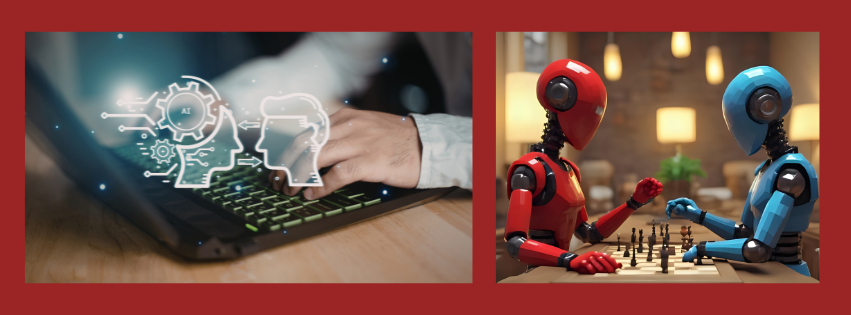
Machine learning is about the ability of a computer system to learn from data without being explicitly programmed. A good example is spam filtering in emails – the email platforms can learn which messages are useful and which one could be potential harmful or useless.

Machine learning is all about algorithms, which are trained on massive amounts of data, which they learn to analyse to identify patterns, relationships, and trends. The one you’ll be most familiar with is the social media algorithms, which help the various platforms to push the right kind of ads to the right people, recognise things that go against community standards and ultimately can ban or restrict accounts. As we all know, they don’t always get it right and it can be very frustrating. 

Is AI a good thing?

AI has its place, as it can be used to teach machines to do mundane, boring jobs, such as assembling cars for example. They can do the job more quickly than humans, don’t need to take breaks or have a holiday and as they have no emotion (yet!) they don’t get bored or tired.

The downside is that companies and governments want to use it for lots of other tasks, mainly because it’s cheaper than paying a person, which brings up the ‘machines are going to take over our jobs’ scenario.

The future

It’s inevitable that technology will only advance and it’s increasingly likely that AI will be used in many different fields. But it’s important that it works flawlessly without threatening humans and their fundamental rights.

If we go back to the algorithm example, it’s important that humans still audit them properly to ensure that AI is functioning properly and not learning errors, which often happens with social media.

 It’s likely that AI will take over more tasks in the health and care sector, in education and in business. In my opinion, it just needs to be very closely monitored to ensure that it doesn’t take over peoples’ jobs and livelihoods. And the ethical side definitely needs to have plenty of built in controls to ensure that personal data and privacy is maintained to the highest level.
The pros and cons of neuromarketing

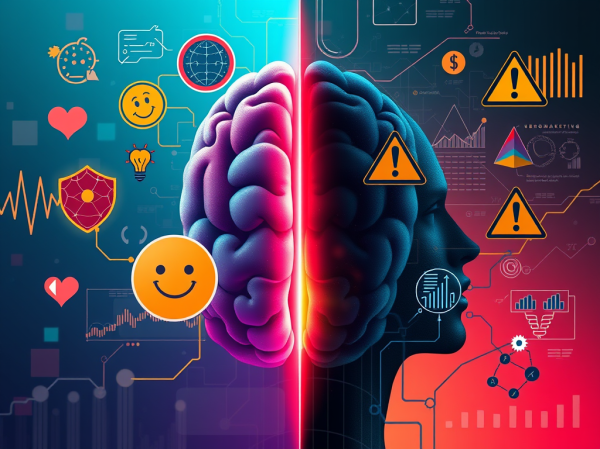
In my last blog, I talked about neuromarketing, what it is and how it works. So, we know that neuromarketing helps brands to improve customer engagement and enables businesses to personalise experiences and to predict how successful certain marketing campaigns will be. But there are also risks and limitations attached to neuromarketing – obviously, its high cost, but also interpreting the data can be very complicated and there are certain ethical concerns. So, this blog looks at the pros and cons of neuromarketing.  

Everyone tends to focus on the pros, but I wanted to look at both sides of the coin.

The pros of neuromarketing

There are several gaps in traditional marketing and neuromarketing tools can help to cover those, giving a better understanding of consumer behaviour, as well as great insights into why consumers decide to buy one product over another.

Observational research

Neuromarketing data doesn’t just come from information that customers provide via surveys etc, it also provides information from observation, such as facial expressions, eye movements, shifts of the mouse etc. Most of this data comes from the subconscious reactions of the people taking part in the research. Some argue that neuromarketing tells you more about consumers’ true desires and attitudes as opposed to controlled answers to questionnaires.

Emotional measurement

Neuromarketing measures physiological reactions, often related to emotional responses. This gives valuable data about consumer reactions to particular parts of an advertisement or video – and which part provokes a positive reaction or a negative reaction. Then advertising can be tweaked accordingly.

Reliable results

As neuromarketing research reaches the unconscious part of a consumer’s mind, the data provides a better understanding of the process behind automatic reactions. This helps researchers determine more reliable results as their analysis looks more comprehensively at consumers’ decision-making patterns.

Let me explain this a bit simpler – we can all lie consciously, but our brains can’t because we can’t control our subconscious minds. As neuromarketing accesses the unconscious mind, the data is more reliable as they are based on true reactions to products or websites/packaging for example. This information can then be used to improve things to give a better customer experience.  

Conclusion

The advantages of neuromarketing gives:

  • An enhanced understanding of consumers – how people think and feel during decision-making.
  • More customer engagement – More emotionally relevant content creates stronger connections.
  • Better personalisation of products – the insights that neuromarketing gives, help marketers tailor products, services, and content to individual preferences.
  • Helps predict successful marketing campaigns – knowing what makes consumers react positively means that marketers can use that data to ensure that their marketing campaigns perform better.
  • Reduces speculative marketing – more relevant marketing cuts through the general marketing noise so it reaches the right people more quickly.    

The cons of neuromarketing

Concerns about ethics

I think this is the one that bothers me the most. It’s about the ethical question – is neuromarketing getting inside the brain of customers…and is that a good thing?

Some would argue that neuromarketing does things that a good psychologist does – it simply ‘learns’ the behaviour patterns of consumers and the data gives smart outcomes.

Specific skills are needed

Now, no matter how much high-quality data and knowledge you can gain from neuromarketing tools, it’s necessary for someone with a scientific background to help the machines and tools to understand the data.

Technology can be taught to interpret the brainwaves and graphs, but someone still needs to make sense of the statistics and what they mean to specific market research.

Expensive equipment

Neuromarketing equipment used to be expensive, but as technology is developed, it has become more attainable to smaller companies – not quite the tens of thousands it used to cost. However, it’s still a lot of money to have to spend. This must be a consideration.  

Privacy and GDPR

Privacy policies and the General Data Protection Regulations must be considered. Businesses, no matter how big or small have responsibilities around customer data and the more technology you rely on, the higher the risk for leakage of data.

Technology must be robust enough for customers to be able to trust that their personal data is protected, but ultimately, there will be people out there who will attempt to get inside the data (and brains of customers) which interferes with their right to privacy. I know this sounds a little far-fetched, but it’s got to be a consideration.

Conclusion

The disadvantages of neuromarketing does come with its own limitations and strategic risks.

  • The cost – specialised neuromarketing tools and experts make it expensive to run.
  • Ethical concerns – Using brain data brings up issues around privacy and customer manipulation.
  • Complicated analysis – whilst machines can be programmed to look at data, interpreting brain signals still needs advanced knowledge and tools.
  • Not always relevant – results from lab settings don’t always apply to all everyday situations.

So, although neuromarketing is going to become increasingly commonplace, there are still quite a few issues to be ironed out, and it won’t be easily available for all businesses. It can be a very powerful took, but it comes with challenges related to cost, ethics, and interpretation of data.

What do you think?