
When I worked for a large company in the UK, I was mega organised. When I first moved to rural France and started as a freelancer, I become the opposite. There always seemed to be so much to do, it was difficult to focus on one thing at a time. I soon realised that if I was going to be more successful and work well from home, I needed to be more organised. I always have a list of things going around in my head, and my partner says I constantly ‘narrate my life’, saying out loud what I need to do next. I think that this is because I have so much to remember that I try and organise myself out loud!
So, after putting on my thinking cap, it seemed the obvious way forward was to go back to what worked well for me in a company environment – not all would work, but these are the areas I came up with that would work for me….I hope it helps you too!
To do list
 When I worked for a large company in the UK, I always worked from a ‘to do’ list. It is what it says on the tin. Make a list of all the jobs you need to do, either on a weekly or daily basis. Don’t write it on a scrap of paper – get an exercise book, put the date at the top and write your list, ticking off each one as you do it. It’s a great feeling of achievement to put a tick against an activity that’s been done.
Set a deadline
 For each task you have to do, set a deadline. Look at your to do list and give each item a realistic deadline – the key here is about being realistic. Try not to be too optimistic as you want to be sure that what you estimate is achievable.
Prioritise your work
Once you have your to do list and have deadlines set against each task, the next thing to look at is what is most important or urgent. Prioritise your list so you keep on top of things.
One step at a time
 Do you have a big project with a looming deadline? Sometimes, this can feel overwhelming. If this is you, try chopping the project into bite sized chunks. This makes everything seem more manageable and you feel much more in control.
Set your hours
Working from home, it’s a good idea to set the number of hours you want to work every day. If you don’t do this, you will constantly be distracted by ‘Oh, I’ll just put the washing on’, or you’ll go to get a coffee and think, ‘whilst I’m here I’ll just wash up’. All these ‘I’ll just…..’ stop you from getting on with your work.
Decide on the number of hours you will work every day and try to stick to it. The number of hours and how you decide when to start and stop will depend on what you do for a living. I know that I have to feed and sort out the chickens and the cat, wash up breakfast things and have a quick tidy up before I can start work. I also like to shower and get dressed – I just can’t work in my PJs! So I rarely start work before 9.30am – 10am…and that’s OK as that’s what I need to do. Everyone is different, so do what is best for you and your situation.
Multi-tasking
 If you start a number of jobs, you’ll probably find you don’t get any of them done. Prioritising tasks will help with this, as will having a list. Try and complete a job before going onto something else. As I write for a living, I will write one piece from start to finish, including the research. Then I’ll save it and come back to review it the following day. It’s easy to look at that to do list and do all the quick and easy stuff and leave the more involved stuff for another time. This works for some – for me, I’ll try and mix it up a bit. I know that I’m more focussed in the morning, so I tend to do the more complicated things then. Later on, I will do some of the easier things and will often revisit something I’ve written the day before.
Interruptions and distractions
It doesn’t matter how organised you are, you are always going to get interruptions, especially if you work from home. The phone might ring or a friend might turn up unexpectedly. If you need to get a particular  piece of work done urgently, put your answer machine on and if you don’t have one, ignore the phone ringing. If I have something urgent to do, I let my friends know, so they don’t disturb me. However, the things I find most distracting are Facebook and email. If my Facebook is switched on in the background, it continuously pings and alerts me to messages or notifications …. I just can’t leave it – I HAVE to look! So, when working to a deadline or on something that needs all of my concentration, I log out, then the distraction is taken away. The same applies to emails. If I know I have new emails, I just HAVE to look!
So, I work for a couple of hours, then have a cuppa and check emails and Facebook, or ring back anyone who might need me on the phone. Then it’s back to work again and everything is switched off once again.
Review your work
No matter what kind of work you do and how busy you are, you need to book a meeting with yourself to review how things are going! How often you do this will depend on what you do, but make sure you set  aside a half day, at least once a month, to look at your to do list. What have you achieved? What went well and what didn’t go so well? What still needs to be done? Is there something you keep putting to the bottom of the pile? It could be something you are not confident with, something you are struggling to start or just that you don’t want to do it. If this is the case, it might be worth looking to outsource this…let someone else take the strain, someone who is more of an expert than you are.
By reviewing your work you will learn what kind of work you find easier and what needs more concentration, so in future you can prioritise more effectively.
Managing your workload will alleviate some of the anxiety and you’ll know exactly where you are and what you’re doing. I hope this blog has given you some ideas and pointers to being more organised. If you work from home, I’d be very interested to know how you organise your day.
Images courtesy of 1 – 3) Stuart Miles 4) iosphere 5) Danilo Rizzuti 6) Stuart Miles at FreeDigitalPhotos.net








 As the title suggests, having an online presence means that your business is ‘open’ 24 hours a day, 7 days a week….even when you are asleep. Information about your business, your services, what you sell, are there at your customers’ and potential customers’ fingertips. People are always looking online – they research products before they buy and if you have an online presence, and you happen to sell what they want, you could make a sale. If you don’t have a website, you are invisible….and in this day and age, you can’t afford to be.
 Through your website, you can be seen as an expert in your field, and through the recommendations and comments from satisfied customers, you can be seen to be reliable, trustworthy and that your products are top notch.
 Not only does having a website make you more credible, it also shows that your business is established and that you are experienced at what you do. Even if your competitors are stronger than you, a well-built, mobile friendly website can entice customers to choose you instead. You might operate your business from the tiniest desk space in the corner of your dining room, or make your products in your tiny spare bedroom, but when you have a website, your customers don’t see this. All they see is the power of your brand – size doesn’t matter!
 products – you just add them online at the click of a button. You can include tons more information and images than you could afford to put into a brochure.
 website, you may spend endless wasted time on the telephone or email giving people directions to where you are, giving details of the products you sell or the services you offer. Your website gives all these details in one, easy to access space, available 24/7. Not only does it give these basic details, it also gives more detailed information about your products. Then, when people do contact you, it’s generally about something more specific or to actually buy from you or use your services.
 Advertising in your local paper, putting out your business cards and attending markets, conventions and networking events, are all brilliant ways of getting your products and brand out to a wider audience. However, with a website you literally have a worldwide audience. Business often comes from word of mouth and this is a great way to get local business, but in order to expand and reach customers that don’t know you, the internet is the way forward.
 website, then why shouldn’t you have one? The joy of having a website is that it doesn’t matter how big or how small your business is, it will help you reach more people and increase your sales. Through your website, you can gather information about your customers. You can use your website to host an online survey to find out what your customers want and online forms can be used to easily contact you to request a quote or ask for further information. When you know what your customers want, you can develop products or services to solve their problems or meet their needs.
 customers email addresses, and with their permission, can send them regular updates about new products. This makes them feel valued and valued customers will come back to you time after time.
 achieve them. Having a
  What do you your customers like about your products? What do they currently buy from you, why do they buy from you and do they give you repeat business? If you’re not sure of the answers to these questions, it might be worth conducting a short survey to your customers and asking them. Give an incentive to reply, such as 10% off their first order of 2016. And a further 10% off if they recommend a new customer who buys from you. The more you know about your customers, your competitors and the business you’re in, the more likely you are to be successful
 measure whether that particular goal and actions have been successful. By measuring as you go along, if you find something that is not quite working, you can tweak it so it works well. List what needs to be measured, for example, how many people read your Facebook posts or how many comment on a post. Then look at ways to improve this – it might be you monitor your posts and see what kind of post is the most successful and then figure out why. If you have success, shout about it! Your customers will feel reassured they are dealing with the right person
 what you can and can’t afford to do and plan accordingly. At the very least, it’s a good idea to have business cards – maybe flyers and definitely think about Social Media and your online presence, such as a website.
 experience for your customers; know what your customers want and give it to them; find solutions to your customers’ problems; position yourself as an expert; be different from your competitors and shout about how you are different; shout about your success; give excellent customer service; give special offers to customers who recommend someone new who buys something or uses your service….and above all, be yourself, smile and enjoy running your business – it will show!
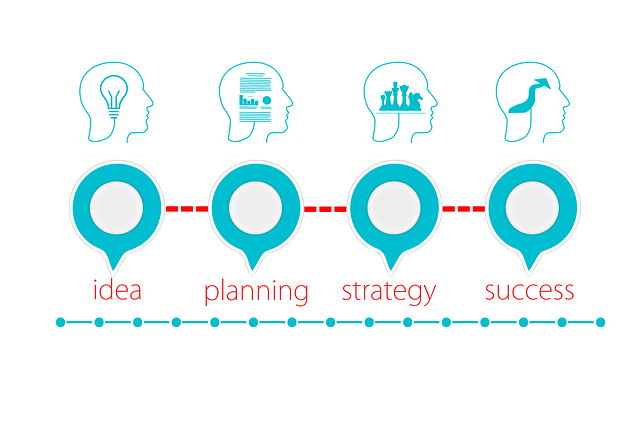 So, you have your own business and you want to promote it – get your product or services out there. How do you go about it? Where do you start? It’s really important to have a content strategy….as this will help you structure exactly what the needs of your business are and what exactly is the right content for your business.
 If you don’t send content out at the right time, then you are wasting your time. You need to firstly understand your audience or intended audience – what do your customers want? Do your customers or potential customers have questions that you can answer? Do you have solutions to your customers’ problems? If you are aware of these things, you can plan to put content out at the right time.
 December and January is the ideal time for you to look at planning for next year. It’s time to take stock and look back over the last year – what worked well for your business and what didn’t work so well? Which way are you going next year?
 If you haven’t asked for feedback, then why not do it now? Why not send out a short survey asking some questions to help you decide which way to go next year – get your current customers’ opinions and ideas – their input could open a whole new market to you.
 Whether you choose to send your newsletter out in print format, or as an online version on e-mail, it’s important to decide the frequency. Most of my clients send out newsletters by email on a monthly basis, so they can be a bit longer than if you are sending out something each week. The most important thing is that the content is timely and relevant, adding some sort of value to your customer. For example, I send out a monthly newsletter for a garden centre – as well as including any news about new stock and special offers, we also include monthly hints and tips on jobs that need doing in the garden that month. We’ve also run a series of articles over a few months on planning the garden for 2014 – this encourages customers to take a good look at their garden, decide what worked well last year and what didn’t, and gives advice on plants and shrubs without doing the ‘hard sell’.
 your website; increase engagement to your brand; create a buzz for a new product or service? The type of goals you have will help you create a more effective newsletter. For example, if you want to send more traffic to your website, you could include an excerpt from an article that will generate interest in your products and then direct them to the full article on your website, or you could just send an introductory paragraph from the newsletter, but keep the full newsletter on your website, so customers have to go to your website to read the full article. Similarly, you could give them a taster of a special offer, but point customers to your website for full details.
 Of course, a newsletter is only one of the marketing tools you can use and it’s always best to use a variety of tools to engage your customers. I’d be interested to hear your thoughts on the role of newsletters. Do you use them for your business?
 Measurable – to ensure that you attain your goals, they need to be measurable; then you can keep an eye on your progress and you will stay on track and reach your target dates. If you have a website for your business, one goal may be to push it further up search engines, so your business can be more easily found by potential customers. Questions you could ask yourself could be:
 Timely – Goals always need to have a timeframe – if you don’t have a timeframe, then there’s no sense of urgency and it’s easy to keep saying ‘I’ll start that tomorrow’…and we all know that tomorrow never comes! If we go back to the weight loss scenario, if you say ‘I want to lose a stone’, but don’t put a time limit on it, it’ll never happen. But, if you give yourself a date (a realistic and attainable date), for example, ‘I want to lose a stone in three months’ – it’s more likely that you’ll succeed.
 You could also consider performing a SWOT analysis on your competitors, as this will give you valuable insight into their strengths and weaknesses…and may identify opportunities for your business that they haven’t thought of.
 A SWOT analysis can be completed by you, but it’s always good to have another opinion, so draft in some help. Ask friends, employees (if you have them) and maybe even some of your customers – ask them what they think are your strengths and weaknesses. You may be surprised at the answers and it may help you to pull together a strategy to help you succeed further or improve an area of your business.
 It’s widely recognised that English is the language of business across the world. Here in rural France, I help people promote their small businesses, and although most of my encounters have been with English business women, I’m lucky enough to have joined a great group, Les Dames de FER, which I spoke about in my last blog, which help and support English and French women in business. Through this group I’ve gained so much knowledge about business life in France and find their training sessions and support invaluable. But what support is there available for French people who need to join a business meeting in the UK and what are the differences between English and French business meetings?
 In the UK, lunch is a very informal affair, especially if like me, you work in an office. It’s accepted that meetings can be conducted over lunch – people will grab a sandwich and take it to a meeting. I nearly always ate my lunch at my desk, whilst carrying on working. However, in France, this is unheard of… here, lunch is an occasion. Except for the big towns and cities, most shops close between 12 – 12.30 and don’t open again until 2 – 2.30pm. In my village, the church bells go mad announcing that it’s lunchtime. The French take their time over lunch, eating a three course meal with wine. And in rural areas, the timing of lunch is very flexible! If you’re trying to get a renovation project completed by tradesmen, you have to be prepared for the great French lunch – they down tools and disappear for a few hours. However, that’s not to say they’re lazy – they start work earlier, usually at around 7am and often work until it gets dark.
![5596899_orig[1] (340x51)](https://cindymobey.blog/wp-content/uploads/2013/11/5596899_orig1-340x51.jpg)


 The Write Way