The pros and cons of neuromarketing

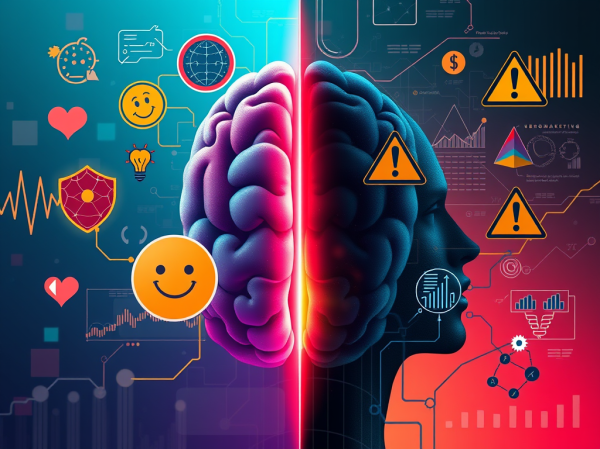
In my last blog, I talked about neuromarketing, what it is and how it works. So, we know that neuromarketing helps brands to improve customer engagement and enables businesses to personalise experiences and to predict how successful certain marketing campaigns will be. But there are also risks and limitations attached to neuromarketing – obviously, its high cost, but also interpreting the data can be very complicated and there are certain ethical concerns. So, this blog looks at the pros and cons of neuromarketing.  

Everyone tends to focus on the pros, but I wanted to look at both sides of the coin.
The pros of neuromarketing

There are several gaps in traditional marketing and neuromarketing tools can help to cover those, giving a better understanding of consumer behaviour, as well as great insights into why consumers decide to buy one product over another.

Observational research

Neuromarketing data doesn’t just come from information that customers provide via surveys etc, it also provides information from observation, such as facial expressions, eye movements, shifts of the mouse etc. Most of this data comes from the subconscious reactions of the people taking part in the research. Some argue that neuromarketing tells you more about consumers’ true desires and attitudes as opposed to controlled answers to questionnaires.

Emotional measurement

Neuromarketing measures physiological reactions, often related to emotional responses. This gives valuable data about consumer reactions to particular parts of an advertisement or video – and which part provokes a positive reaction or a negative reaction. Then advertising can be tweaked accordingly.

Reliable results

As neuromarketing research reaches the unconscious part of a consumer’s mind, the data provides a better understanding of the process behind automatic reactions. This helps researchers determine more reliable results as their analysis looks more comprehensively at consumers’ decision-making patterns.

Let me explain this a bit simpler – we can all lie consciously, but our brains can’t because we can’t control our subconscious minds. As neuromarketing accesses the unconscious mind, the data is more reliable as they are based on true reactions to products or websites/packaging for example. This information can then be used to improve things to give a better customer experience.  

Conclusion

The advantages of neuromarketing gives:

  • An enhanced understanding of consumers – how people think and feel during decision-making.
  • More customer engagement – More emotionally relevant content creates stronger connections.
  • Better personalisation of products – the insights that neuromarketing gives, help marketers tailor products, services, and content to individual preferences.
  • Helps predict successful marketing campaigns – knowing what makes consumers react positively means that marketers can use that data to ensure that their marketing campaigns perform better.
  • Reduces speculative marketing – more relevant marketing cuts through the general marketing noise so it reaches the right people more quickly.    
The cons of neuromarketing

Concerns about ethics

I think this is the one that bothers me the most. It’s about the ethical question – is neuromarketing getting inside the brain of customers…and is that a good thing?

Some would argue that neuromarketing does things that a good psychologist does – it simply ‘learns’ the behaviour patterns of consumers and the data gives smart outcomes.

Specific skills are needed

Now, no matter how much high-quality data and knowledge you can gain from neuromarketing tools, it’s necessary for someone with a scientific background to help the machines and tools to understand the data.

Technology can be taught to interpret the brainwaves and graphs, but someone still needs to make sense of the statistics and what they mean to specific market research.

Expensive equipment

Neuromarketing equipment used to be expensive, but as technology is developed, it has become more attainable to smaller companies – not quite the tens of thousands it used to cost. However, it’s still a lot of money to have to spend. This must be a consideration.  

Privacy and GDPR

Privacy policies and the General Data Protection Regulations must be considered. Businesses, no matter how big or small have responsibilities around customer data and the more technology you rely on, the higher the risk for leakage of data.

Technology must be robust enough for customers to be able to trust that their personal data is protected, but ultimately, there will be people out there who will attempt to get inside the data (and brains of customers) which interferes with their right to privacy. I know this sounds a little far-fetched, but it’s got to be a consideration.

Conclusion

The disadvantages of neuromarketing does come with its own limitations and strategic risks.

  • The cost – specialised neuromarketing tools and experts make it expensive to run.
  • Ethical concerns – Using brain data brings up issues around privacy and customer manipulation.
  • Complicated analysis – whilst machines can be programmed to look at data, interpreting brain signals still needs advanced knowledge and tools.
  • Not always relevant – results from lab settings don’t always apply to all everyday situations.

So, although neuromarketing is going to become increasingly commonplace, there are still quite a few issues to be ironed out, and it won’t be easily available for all businesses. It can be a very powerful took, but it comes with challenges related to cost, ethics, and interpretation of data.

What do you think?

Neuromarketing and how it works!

Neuromarketing is about using neuroscience to help understand consumer behaviour by studying brain activity, physiological responses and subconscious decision making.

Have you ever wondered what makes you choose one brand over another – even when they seem to be identical? Or why one particular ad you see on TV, on social media, or hear on the radio sticks in your mind for days? The answer to this is about your subconscious thought and subconscious reactions of your brain.

Neuromarketing is a fascinating subject, which attempts to understand how consumers respond to advertising and products. It’s not just about asking people what they think, it about looking directly at brain activity and physiological responses to see what really attracts attention and triggers an emotional connection.

IT’S NOT ABOUT – mind control or finding a magical ‘buy now’ button in your brain. It’s not about manipulating people, but about gaining a clearer understanding about what they really want or need. By scientifically measuring non-conscious responses, brands can build better products, create clearer messaging and design more enjoyable customer experiences.

How does neuromarketing work?

In order to find out how the brain and body reacts when a person is exposed to marketing materials, several studies have been done. The most common method involves volunteer test subjects – and uses electroencephalography (EEG) to measure electrical activity in the brain, which helps identify moments of excitement, focus or even frustration.

Observing facial expressions for emotional responses and biometrics to measure changes in the heart rate or skin response are also tools that are used. Software then helps to analyse the data so that researchers can pinpoint exactly which elements of an ad or product are most impactful.

Traditional market research includes things like focus groups and surveys – these are of course, valuable, BUT they rely on the participants accurately giving their own feelings or intentions. Our decisions are often made based on pre-conceived ideas about certain products – or influenced by friends, family or subconscious emotions or biases.

Neuromarketing captures the reactions that people can’t or don’t consciously articulate. A survey can tell you that a customer LIKED your ad, but neuromarketing can show WHICH SPECIFIC PART of an ad sparked the most emotional engagement. So, gives a deeper understanding.

The ethics

Neuromarketing certainly has many benefits, but the ethics shouldn’t be overlooked. Although there is nothing that currently offers comprehensive neuromarketing regulations, there are ethical guidelines for those that conduct this research.

  • Participants must give their informed consent – which means they must fully understand the purpose of any study they take part in, including the risks and benefits.
  • Privacy and data security is key – participants personal data etc must be completely secure to protect the privacy of participants and compliance with date protection regulations such as the relevant GDPR regulation and other associated laws and regulations according to the country conducting the research.
  • Disclosure and transparency – I find this a bit worrying – while is it not mandatory to disclose specific neuromarketing techniques, such as eye-tracking on a website (I wasn’t aware this was a thing!) the principle of transparency is an ethical one. Brands must consider disclosing to consumers their data collection and research methods, to ensure transparency regarding the purpose and impact of the research. Then consumers can make an informed decision about participation. This means it is important to READ PRIVACY POLICIES on websites, if you suspect that neuromarketing techniques may be used.

This thought suddenly struck me – a lot of our personal devices – phones and tablets – ask for eye recognition. Does that mean that when you look at ads on that device, your responses could be recorded for research purposes? Or am I being paranoid?

Maybe I’m overthinking here! This is the extreme end of neuromarketing, and small businesses obviously would not be able to either afford or manage this kind of research.

So, how can you harness the power of neuromarketing without having a state-of-the-art research techniques and equipment?

Neuromarketing for small businesses

Neuromarketing has thrown up six basic human needs that can help with strategies for businesses.

Certainty – Consumers want to know that they can trust a brand or business. Customers like the assurance of knowing that a particular business delivers on its promises, has transparent messaging and are consistent on caring for its customers.

Variety – They say that variety is the spice of life and consumers like a bit of variety or something unpredictable. Consumers these days go from Facebook to Instagram to TikTok and engage with social media and SMS texting. Using different platforms as a small business gives your customers that variety- you can offer limited time promotions, discounts or deals when they least expect it. It might be you do this on stories only – or on Instagram only. These unexpected things excite and captivate your audience and keep them wanting more.

Significance – I’ve said this loads of times, but your customers – in fact not just customers, all of us, want to feel valued. Several small businesses have specific groups on social media to help make customers feel special, and they help by giving exclusive ‘sneak a peeks’ or offers. You can also make customers feel special by personalising brand stories and rewarding loyal customers with exclusive benefits. It’s this making them feel valued and special that can make your brand stand out in the crowd and lift your brand from good to unforgettable.

Connection – I know – I bang on about this a lot too – but connecting with your audience in a genuine way is what helps a business to thrive and grow. It’s about being transparent, authentic, and sowing that you genuinely care about them Engage with your followers through social media, responding to comments and messages and listen to any suggestions and opinions – or even ask for suggestions and opinions as this also helps them feel valued.   

Growth -Show how your products or services help your customers. You can provide educational content to help customers expand their knowledge and skills or give suggestions for how your products can be used in their homes.

Contribution – This is about how your business is conscious of its footprint in the world and that it matters to you. It might be about your eco-friendly initiatives or how you get involved in a community or charity initiative. Consumers are more likely to support businesses that align with their personal values and what matters to them.   

Conclusion

In my opinion, these are the gentler, more people-friendly ways for small businesses to use neuromarketing. It’s not about manipulating your customers, it’s more about understanding consumer behaviour and what makes people tick. This is a basic marketing strategy, but using some of the research results from more in-depth neuromarketing research can help us understand what and why consumers want to buy. Connecting with customers on an emotional level is key to building lasting brand loyalty and knowing what resonates with them helps them come back for more and give you repeat business

Contact me if you need help with your marketing.