
Right person, right time, right reasons…RIGHT CONTENT!

brainstorm-4222728_640

business-3189797_640.pngSo, you have your own business and you want to promote it – get your product or services out there. How do you go about it? Where do you start? It’s really important to have a content strategy….as this will help you structure exactly what the needs of your business are and what exactly is the right content for your business.

Anything you put out about your business needs to go to the right people at the right time and for the right reasons….and of course, the right content is crucial.

If the content is NOT right, then the people you are hoping to reach won’t read it. Whatever content you put out needs to be valuable to your potential reader, so make sure your content is useful and relevant – what’s in it for your reader? Does it solve a problem for them? Does it give them a solution that they need?

If you DON’T target the right people, then your content won’t be read and definitely won’t be acted upon. You need to ensure that you know who your audience are – just sending content to ‘people’ in general won’t cut the mustard, you need to be specific.

thought-2123971_640If you don’t send content out at the right time, then you are wasting your time. You need to firstly understand your audience or intended audience – what do your customers want? Do your customers or potential customers have questions that you can answer? Do you have solutions to your customers’ problems? If you are aware of these things, you can plan to put content out at the right time.

If you’re NOT putting content out for the right reasons, you are also wasting your time. When you are writing your business plan for the year, you will include measurable business goals. These goals are usually a reason for sharing some kind of promotional content to pull in more customers, or address an issue that your customers may have. The content you publish won’t necessarily sell your wares, but can help to set yourself up as an expert in your field. This, in turn inspires confidence in your abilities and business, which can lead to those all-important recommendations.

Plan your content for 2016

computer-1185626_640December and January is the ideal time for you to look at planning for next year. It’s time to take stock and look back over the last year – what worked well for your business and what didn’t work so well? Which way are you going next year?

Take the time to look at last year’s business or marketing plan (or both) and decide what you need to change to make next year more successful.

Have you ever asked your customers for feedback? Amongst that feedback, is there anything you can address to make your business more attractive? Do your customers have any problems you can solve? If you can pinpoint what it is that your customers want, that you are not currently giving them, you have the greatest opportunity to truly delight them in solving those problems.

future-2372183_640.jpgIf you haven’t asked for feedback, then why not do it now? Why not send out a short survey asking some questions to help you decide which way to go next year – get your current customers’ opinions and ideas – their input could open a whole new market to you.

Once you know what your customers want and have a new plan for next year, with new goals, you are ready to plan your content strategy and will be one step closer to a successful 2016!




Be SMART with your business goals

goals-2691265_640
And so we’re into another year – can’t believe that it’s 2014 already. At this time of year, I review my business and marketing plan from last year; look at what worked well and what didn’t and decide on new objectives and goals for the coming year. But where do you start?

When I worked for a big company in the UK, business planning was all around SMART objectives and this translates well to the small business too. So, what is SMART?

  • S – Specific
  • M – Measurable
  • A – Attainable
  • R – Realistic
  • T – Timely

It’s a good idea to use the measures above to think about your goals – so let’s have a look at them all in turn.

Specific – if your goals are general, you are less likely to achieve them – for example, my New Year’s Resolution usually includes something around losing weight! But as everyone who’s ever tried to lose weight knows, if you just say ‘this year I want to lose weight’, it’s unlikely to happen. However if you make the goals more specific, you are more likely to be successful – for example, goals could be ‘I’m going to join a gym and go three times a week’ and ‘I’m going to join a slimming club and follow a structured diet’. So, in order to be specific, think about:

  • Who is involved?
  • What do I want to achieve?
  • Where – Identify a location
  • When – Establish a time frame
  • Which – Identify requirements and constraints
  • Why – Specific reasons, purpose or benefits of accomplishing the goal

carpenter-3509492_640Measurable – to ensure that you attain your goals, they need to be measurable; then you can keep an eye on your progress and you will stay on track and reach your target dates. If you have a website for your business, one goal may be to push it further up search engines, so your business can be more easily found by potential customers.   Questions you could ask yourself could be:

  • How will I know when I’ve achieved a goal?
  • What does success in a particular goal look like?
  • How will you measure the success?

Attainable – Once you have your list of goals, you can start to think about how you can achieve them. Look at each of them in turn and make sure that they are attainable. In the TV programme, ‘Only Fools and Horses’ Del-boy was always saying ‘this time next year – we’ll be millionaires’ – a great goal, but not necessarily attainable…and too generalised!

Think about how you can turn your goals into reality – by writing them down, being specific, may give you further ideas or may highlight opportunities that you may have previously missed.

Realistic – it’s really important that all your goals are realistic. You must be both able and willing to work towards them. You are the only one who can decide what is realistic and achievable for you – some people like to set high targets and goals and get more satisfaction out of the challenge; others prefer to set several smaller goals that will work towards the higher target. It’s up to you which approach you take…but make sure your goals are realistic for you.

time-3222267_640 (1)Timely – Goals always need to have a timeframe – if you don’t have a timeframe, then there’s no sense of urgency and it’s easy to keep saying ‘I’ll start that tomorrow’…and we all know that tomorrow never comes! If we go back to the weight loss scenario, if you say ‘I want to lose a stone’, but don’t put a time limit on it,  it’ll never happen. But, if you give yourself a date (a realistic and attainable date), for example, ‘I want to lose a stone in three  months’ – it’s more likely that you’ll succeed.


By keeping your objectives/goals SMART, you’ll be able to keep a tight rein on how your business is progressing and achieving what you want it to achieve.

Good luck and if you have any further ideas on the subject, please let me know!

How to conduct a SWOT analysis for your small business

business-3543809_640

Whether you’re new to running your own small business, or whether you’ve been going for a while, conducting a SWOT analysis can help your business get on the right track. I tend to glaze over when someone talks about something that sounds like it will be difficult, or something that I might not understand, but SWOT analysis is a very simple concept, which can give you great insight into your business and generate ideas to take your business forward.

What is SWOT analysis

The term SWOT is an acronym devised from four words; Strengths, Weaknesses, Opportunities and Threats. Conducting analysis on your business in these four key areas help you look at internal and external factors that affect or have the potential to affect your business. It’s a good idea to conduct this analysis before you set up your business and marketing plan as it will help you develop your business strategy.

chain-690088_640You could also consider performing a SWOT analysis on your competitors, as this will give you valuable insight into their strengths and weaknesses…and may identify opportunities for your business that they haven’t thought of.

Where do you start?

A SWOT analysis is about making a list in four key areas:

Strengths – list what your strengths are…the aspects of your business or project that gives you an advantage over others. What do you do well?

Weaknesses – these are factors that put you at a disadvantage to your competitors – what don’t you do so well?

Strengths and Weaknesses are the internal factors of your business.

Opportunities – what are the opportunities you can see for your business? You might be able to spot opportunities from new technology, new potential markets for your products or services, or even lifestyle changes or local events.

Take a good look at your strengths and see if any of those can be converted into opportunities. Similarly, you may be able to work on your weaknesses to eradicate them and open up new opportunities.

Threats – do you have any hurdles you have to overcome with your business? Are any of your weaknesses a serious threat to your business? Look at what your competitors are doing to be successful – is there something you can change to compete? Of course, there are other threats to take into consideration, such as bad debts or loans.

Opportunities and Threats are the external factors of your business.

Who can help you?

positive-letters-2355685_640A SWOT analysis can be completed by you, but it’s always good to have another opinion, so draft in some help. Ask friends, employees (if you have them) and maybe even some of your customers – ask them what they think are your strengths and weaknesses. You may be surprised at the answers and it may help you to pull together a strategy to help you succeed further or improve an area of your business.

arrow-1538708_640

Action plan  

Once you have all the information you need, you can devise a strategy to capitalise on your opportunities and reduce your threats. Concentrate on these two areas first as they are the most likely factors that will affect your business and your future success.

Then you can work on your weaknesses and protect and increase your strengths.

When you have completed the analysis, go through your business and marketing plan to see if you can enhance any particular area of your plan.

Print off my FREE Conduct a SWOT Analysis worksheet and get started now!I

Happy planning!

Email: cindymobey@outlook.com

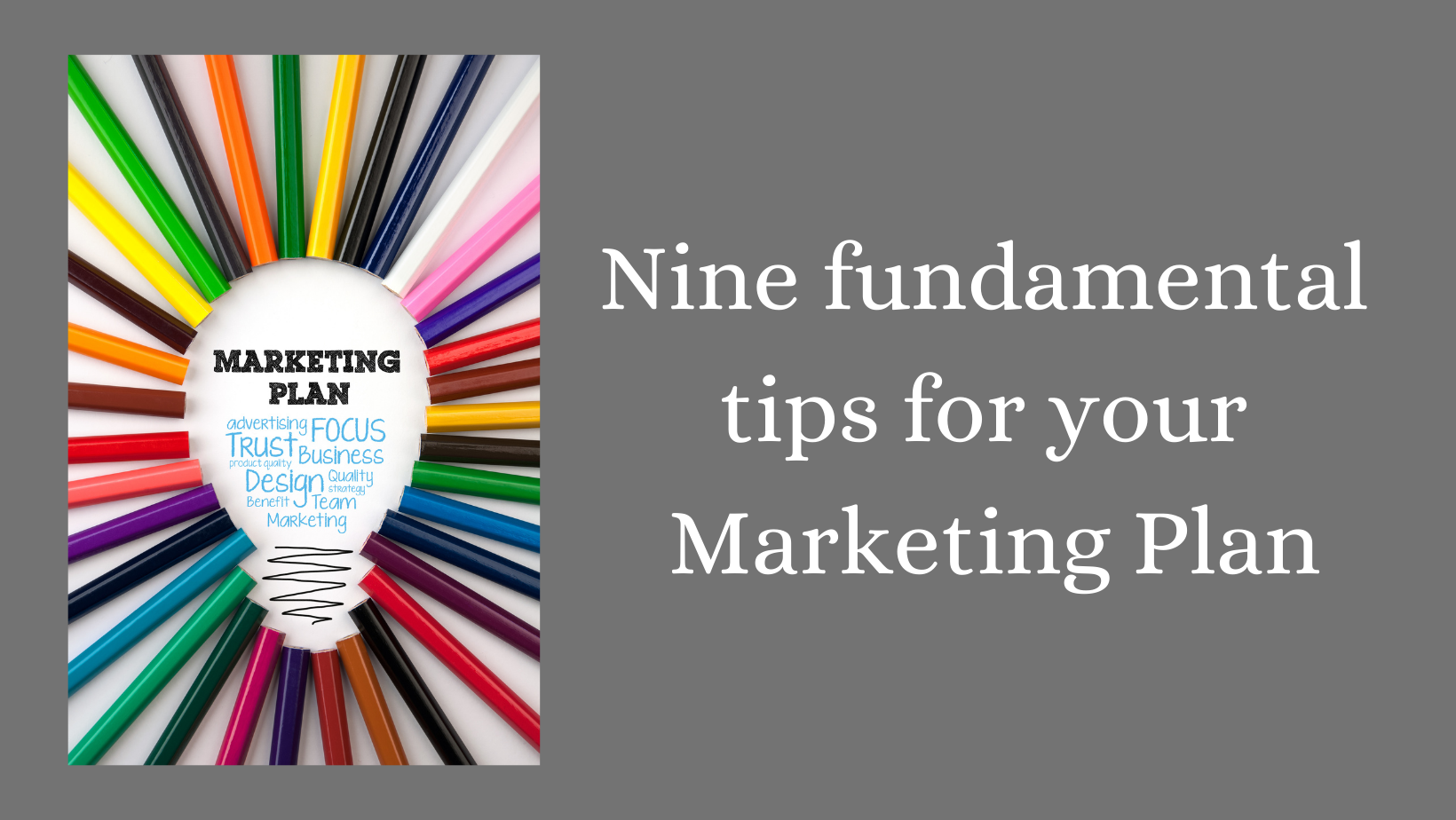
Nine fundamental tips for your marketing plan

If you think about marketing, advertising automatically springs to mind. However, marketing (or promoting) your business, is more than just advertising. It helps you to ascertain who your customers are, which customers you want to target and how to get them to choose your products above others in the marketplace.

A marketing plan will also include your existing customers – retention of customers is just as important as gaining new ones, so you need to look at continually reviewing and improving your offer to ensure you stand out from your competitors.

Here are nine fundamental tips on what to include in a marketing plan to ensure you cover the essentials…

  1. Executive Summary – Although the executive summary is at the beginning of the marketing plan, it should be written last. The summary will help you ensure that your plan makes sense and that you haven’t missed anything out.
    The summary should include details of your business, company name and contact details; what your business is about; your key objectives and your strategy for achieving your objectives.
    This helps you to ensure that your marketing plan, your marketing strategy and your overall business strategy all work together.
  2. Vision or Mission Statement – This is a statement that includes what your business is, who you’re selling to, what you’re selling and what is your unique selling proposition that makes you stand out from the crowd.
  3. The four Ps – once you know what your vision or mission is – your strategy – look at the four Ps…
    Product(s) – what is it about your product that makes your customers want to buy it? Do you need to change your products in any way to meet your customers’ needs?
    Pricing – how do you aim to compete with your competitor’s pricing – do you want to match it… undercut them… or do you want to charge more for a more quality product and service?
    Place – where and how are you going to sell your products? Do you sell them yourself or outsource them to retail outlets?
    Promotion – how are you going to let your existing and potential customers know about your products? This includes thinking about advertising, PR, direct mail and personal selling.
  4. Market Analysis – this is where you need to do copious research into what your competitors do and what the state of the marketplace is in relation to the products you sell.
    – Who are your competitors and how well are they doing?
    – What makes your competitors successful?
    – Who are your customers and potential customers – what are their geographic area and income levels?
    – What are your sales and distribution levels – what is your set up?
    – How well have your products sold in the past?
  5. Your target markets – it’s crucial to know exactly who your customers are and what they’re looking for. Take time to understand what your customers want and need and understand why they buy particular products. You’ll be able to target your market more easily if you know who you’re talking to, and what their problems are. Everyone buys products for different reasons.
    If you have an existing customer base, you can easily find out some of this information, by sending them a simple survey, asking them a few questions – maybe give them an incentive to reply, such as all replies will be put into a prize draw to win one of your popular products.
    If you’re not sure who your target market is – try this exercise. Write a description of one of your products – for example, if you were selling mobile phones, you might say it’s small and easy to use. Then write the features – in the case of a mobile, it might be that you can use it anywhere and it’s useful in a crisis. Then make a list of who needs this product – with a mobile it might be people under 20 to keep in touch with friends and parents/people in business to keep in touch with business partners when away from home or office/ for older people it’s good to have in case they have an accident in the home or need to keep in touch with relatives or carers…. You get the idea!
    Then try and decide which will be your target market and which will be your secondary markets…probably best not to have more than two or three secondary markets at most.
  6. Marketing objectives – In this section, you are planning the future of your business. What objectives do you want to achieve? Each objective should include a description of what you intend to achieve and should include numbers to aim for. For example you might want to sell more of a particular product, but just saying you want to sell more isn’t enough – you need to be precise, so you have something concrete to aim for, maybe sell 40% more of that product over the next 12 months. This gives you a solid objective.
    Pull together a timeline of your objectives – what you want to achieve and by when. This makes it easier for you to review at a later date.
  7. Promotion strategies – what tools will you use to promote your business? You could use:
    – Networking – join a business networking group and talk to people at
    every opportunity
    – Direct marketing – brochures, flyers, sales letters
    – Online – website, blogs, articles (give advice, become known as an
    expert).
    – Social media – Facebook, LinkedIn, Twitter etc.
    – Video – embedded into social media or via your own YouTube channel
    – Advertising – print media, business directories, ads in magazine and
    online
    – Press releases
    – Direct or personal selling
    – Trade shows/markets/craft fayres
  8. Budget – Along with promotion strategies comes budget. You need to know what you can and can’t afford to do and plan accordingly. Can you do some of the promotion yourself or do you need to outsource it?
  9. Measurement – you should aim to review your marketing plan every couple of months. Look at your various promotion methods and determine which ones work best for you and which don’t.
    You can survey existing customers for feedback; ask for feedback and recommendations; look at what your most popular products are and why. Then you will know what you need to do in future.

Pulling together a marketing plan isn’t something that can be done in just a few hours, it can take days – or even weeks – to ensure you have the right information and conduct the necessary research.

Now it’s time to take action!