

If you have your own business, your business goals for next year should already be set, so you’re ready to make a good start after the holiday season, but if you haven’t got round to it yet, maybe this will help you think about them!
A goal without a plan is just a wish
Every January, I used to set myself resolutions – the usual kind of thing, lose weight; get fitter.
But by the end of January, they were usually all but forgotten, so I don’t tend to do that any more. I’m still aware of the personal things I want to do, but I don’t put the pressure on like I used to.
But with business, I feel I can’t afford to be so blasé – a planned business with structured goals will always be more successful, and reviewing your plans on a regular basis gives you the chance to pick up on anything that is going wrong at an earlier stage.
So where do you start? There are 4 areas to think about….
What is your Mission Statement?
This is a statement that includes what your business is, who you’re selling to, what you’re selling and what is your unique selling proposition that makes you stand out from the crowd?
For example, if you run a dog sitting service in your own home, you might say…
“All dogs in our care live in our house in a safe and secure environment, and are treated as part of our family. We are happy to administer any medication and provide a loving and attentive service to your much loved pet.”
What are your business goals?
Think about where you want your business to be by this time next year. By which percentage do you wish to grow and how many customers do you expect to have? Make sure you have at least one goal that relates to your mission statement and one that links to the financial position of your business.

Goals need to be SMART….
Specific – for example, my New Year’s Resolution, “I want to get fitter.” This is too vague. Being more specific, I should say, “I will join a gym and go three times a week.”
Measurable – You need to be able to measure your goals – for example, you might want to increase your sales by 25% by this time next year. How would you measure this throughout the year to ensure you are on track? You could break down sales, so you know how many sales you need to make every month to make this happen.
Attainable – goals need to be achievable, so don’t set the bar ridiculously high, such as Del boy in ‘Only Fools and Horses’ – “This time next year, we’ll be millionaires.”
Realistic – in the same way as goals needing to be achievable, they also need to be realistic. You must be both willing and able to work towards them. Only you can decide what is achievable and realistic for you and your business.
Timely – it’s sensible to put a time-frame on each of your goals – this keeps you focused. If you don’t have a time-frame, there is no sense of urgency and you can keep putting off doing anything ‘until tomorrow’…and we all know that tomorrow never comes!
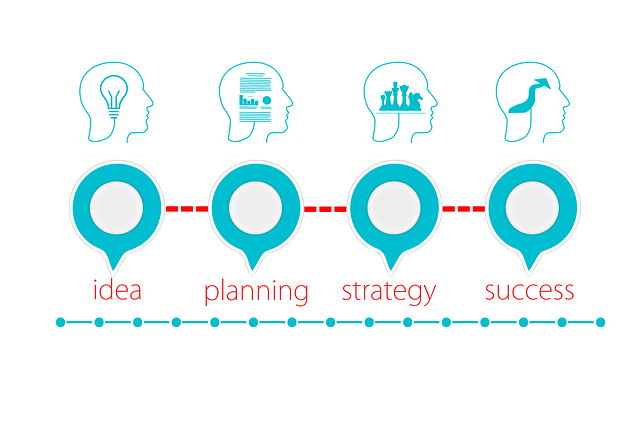
What are your business strategies?
Strategies are all about what are you going to do to achieve your goals.
Think about the four Ps…
Product(s) – what is it about your product that makes your customers want to buy it? Do you need to change your products in any way to meet your customers’ needs?
Pricing – how do you aim to compete with your competitor’s pricing – do you want to match it… undercut them… or do you want to charge more for a more quality product and service?
Place – where and how are you going to sell your products? Do you sell them yourself or outsource them to retail outlets? Do you sell online or face to face? You might do a little of everything.
Promotion – how are you going to let your existing and potential customers know about your products? This includes things like advertising, social media marketing, email marketing, PR and personal selling.

What action do you need to take to achieve your goals?
How are you going to achieve your goals? If we take the ‘I want to increase my sales by 25%’ scenario, how will you do that? You might decide to launch a new, attractive product…you might give a discount if customers spend over a set amount, or do a ‘Buy one, get one free’ offer for a specific week.
Another scenario might be that you want to re-brand your business to make you stand out from your competitors. This will have a financial implication, so that needs to be in the action plan – your goal would be to re-brand, your action would be around how you will afford to do that – how many products would you need to sell, for example, to cover the cost?
Once you have decided the action(s) for achieving each goal, you need to know how you can measure the success of each action. Measurement is very important as it gives you an insight into what works well for your business and what doesn’t.
If you plan ahead, you stand a much better chance of succeeding. So, give a little time to setting your goals and sorting out how you are going to achieve them.
One of my new online digital products is a workbook on goal setting, which takes you through each stage step-by-step, so saves you bundles of time and energy.
As always, if you have any questions, feel free to contact me.

 To ascertain your business goals or milestones. Your business plan will make you think about what you want to achieve with your business and where you see yourself in a year’s time… in five years’ time or more. You can plan not only your long-term goals, but also some quick wins and short term plans. They are significant events that you want to achieve, such as building a website, launching new products/services, producing a brochure and also things like getting your first 100 or 1000 followers on social media.
 To understand and know your customers. Planning makes you look at your customers; who are they? Why do they buy your products and why do they buy when they do? Do they belong to an average age group or geographic region? An in-depth customer analysis will help you understand what makes your customers tick and how you can better serve them and give them what they want.
 To determine your financial needs. Do you need to raise money to buy stock and how are you going to do this? Are there training opportunities for you, so you can learn more about what you do, that incur a cost? How will you factor this in? If you need a big financial injection, you will need to look at loans or investors…your plan will then need to be very specific around how you will be able to afford this kind of investment and what your return will be.
 To pinpoint your brand. Creating a business plan makes you focus on what your brand is; helps you describe your business succinctly and decide how you will position your brand to your customers and target market.
 We all want our businesses to stand out from the crowd. Although it takes some time and effort, it’s worth it to have a unique identity that is instantly recognisable. Here are a few ideas that can help you along your way to having your own brand identity.
 The first thing to do is to think about a mission statement for your business, which is a short sentence about what your purpose is. We all know Nike’s tagline, ‘Just Do It’ but did you know that their mission statement is ‘To bring inspiration and innovation to every athlete in the world’. So their mission statement encapsulates everything that the company is about and wants to achieve in one short sentence. This is no mean feat, but achievable for your business with a bit of thought. You could always get a few friends round and have a ‘get my mission statement’ party…but make sure you work on the statement before you start drinking…or you could have some very interesting stuff!
 Brand Colours – The colours you choose are more important than you might think – according to research by web design and marketing company, WebPageFX, people make a subconscious judgement about a product in less than 90 seconds of viewing, and a majority of these people base that assessment on colour alone. In fact almost 85% of consumers cite colour as the primary reason they buy a particular product and 80% believe that colour increases brand recognition. Wow! That’s quite powerful.
 Fonts – When looking at your brand for the first time, people will notice the colours and also the font – the way the brand name is written. There are so many different fonts, so try and choose one or two that enhance your business name…for example if you sell vintage jewellery, look at a vintage font.
 achieve them. Having a
  What do you your customers like about your products? What do they currently buy from you, why do they buy from you and do they give you repeat business? If you’re not sure of the answers to these questions, it might be worth conducting a short survey to your customers and asking them. Give an incentive to reply, such as 10% off their first order of 2016. And a further 10% off if they recommend a new customer who buys from you. The more you know about your customers, your competitors and the business you’re in, the more likely you are to be successful
 measure whether that particular goal and actions have been successful. By measuring as you go along, if you find something that is not quite working, you can tweak it so it works well. List what needs to be measured, for example, how many people read your Facebook posts or how many comment on a post. Then look at ways to improve this – it might be you monitor your posts and see what kind of post is the most successful and then figure out why. If you have success, shout about it! Your customers will feel reassured they are dealing with the right person
 what you can and can’t afford to do and plan accordingly. At the very least, it’s a good idea to have business cards – maybe flyers and definitely think about Social Media and your online presence, such as a website.
 experience for your customers; know what your customers want and give it to them; find solutions to your customers’ problems; position yourself as an expert; be different from your competitors and shout about how you are different; shout about your success; give excellent customer service; give special offers to customers who recommend someone new who buys something or uses your service….and above all, be yourself, smile and enjoy running your business – it will show!
 Measurable – to ensure that you attain your goals, they need to be measurable; then you can keep an eye on your progress and you will stay on track and reach your target dates. If you have a website for your business, one goal may be to push it further up search engines, so your business can be more easily found by potential customers. Questions you could ask yourself could be:
 Timely – Goals always need to have a timeframe – if you don’t have a timeframe, then there’s no sense of urgency and it’s easy to keep saying ‘I’ll start that tomorrow’…and we all know that tomorrow never comes! If we go back to the weight loss scenario, if you say ‘I want to lose a stone’, but don’t put a time limit on it, it’ll never happen. But, if you give yourself a date (a realistic and attainable date), for example, ‘I want to lose a stone in three months’ – it’s more likely that you’ll succeed.
 You could also consider performing a SWOT analysis on your competitors, as this will give you valuable insight into their strengths and weaknesses…and may identify opportunities for your business that they haven’t thought of.
 A SWOT analysis can be completed by you, but it’s always good to have another opinion, so draft in some help. Ask friends, employees (if you have them) and maybe even some of your customers – ask them what they think are your strengths and weaknesses. You may be surprised at the answers and it may help you to pull together a strategy to help you succeed further or improve an area of your business.



 choosing your products or services?
 – Are you likely to have cash flow problem – if so, how will you deal with it?
 necessary.
 The Write Way